NDA Examination 2026: UPSC Exam Pattern, SSB Interview, Cut-Offs, and Training at Khadakwasla
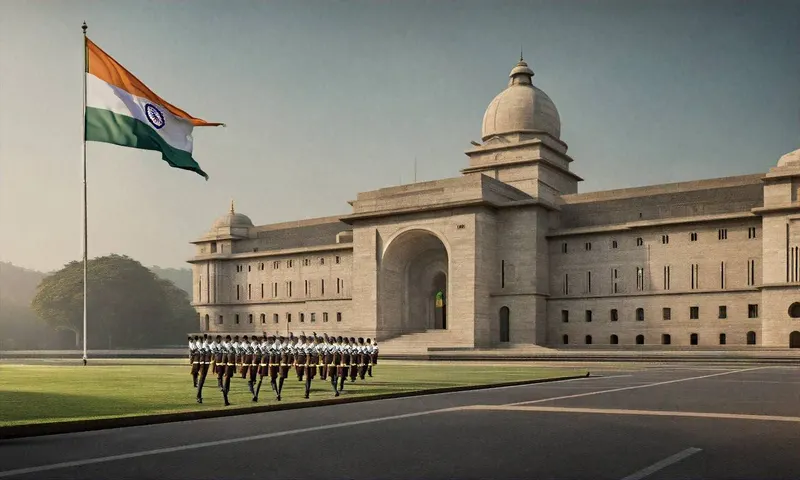
If you're in 11th or 12th right now and this is the first time you're hearing about NDA, you're not late. But you need to get moving.
The National Defence Academy exam, conducted by UPSC, is the one exam in India that can take a 17-year-old school student and put them on a path to becoming a commissioned officer in the Indian Army, Navy, or Air Force. Not after finishing college. Not after doing a Masters. Right after Class 12. That's what makes NDA different from every other defence entry. You start younger, you train longer, and by the time your school friends are finishing their engineering degrees, you're already a military officer with two years of real-world experience.
Parents, this part is for you: NDA is not a random competitive exam your child is chasing because their friends are. It's a pathway into a career that comes with job security, a good salary, respect, and a quality of life that most private sector jobs can't match -- especially in the early years. But it also means your child will be away from home for three years of intensive military training, followed by a career that involves postings across the country and, yes, the possibility of serving in dangerous areas. If your child is serious about this, support them. If you're unsure, keep reading. By the end of this article, you'll have enough information to have a real conversation about it.
Who Can Apply: Eligibility in Plain Terms
Age is the first filter. You must be between 16 and a half years and 19 and a half years old on the date the course commences, not on the exam date. For the NDA I 2026 course that would start around January 2027, candidates born roughly between July 2007 and January 2010 are eligible. The exact date range is specified in each UPSC notification. Calculate carefully. If you're even a month outside the window, UPSC will reject your application at the screening stage.
Educational qualification: for the Army wing, you need to have passed or be appearing in Class 12 from any recognised board. Any stream works. Science, commerce, arts -- doesn't matter. For the Navy and Air Force wings, there's an extra condition. You must have Physics and Mathematics in your Class 12 subjects. If you're an arts student or a commerce student without Maths and Physics, you can only apply for the Army wing. This is a firm rule with no exceptions.
Both male and female candidates can apply. This is a relatively recent development following a Supreme Court directive. Earlier, NDA was open only to male candidates. The change has been in effect since 2022.
You must be unmarried. You must remain unmarried throughout the entire period at NDA and during subsequent training. Indian citizenship is required -- though subjects of Nepal, Bhutan, and certain categories of Tibetan refugees are also eligible as per government rules.
Physical fitness matters but specific standards are tested later during the medical examination, not at the application stage. You don't need to submit fitness certificates when applying. But be aware that the medical standards are strict and you should know where you stand before investing months in preparation. More on that later.
The UPSC NDA Exam: Two Papers, One Day
UPSC conducts the NDA exam twice a year, typically in April (NDA I) and September (NDA II). The notification for NDA I usually appears in December or January of the preceding year. NDA II notification comes around May or June. The exam is conducted offline -- pen and paper -- at centres across India. Apply online at upsc.gov.in. Application fee is 100 rupees. SC, ST candidates and sons of JCOs/NCOs/ORs of the armed forces are exempt from the fee.
The exam has two papers written on the same day. Total marks: 900. Here's where I want to go into real detail, because the exam pattern is something students often misunderstand.
Paper I: Mathematics -- 300 Marks
This paper has 120 questions. Duration is 2 hours and 30 minutes. Each correct answer gets you 2.5 marks. Each wrong answer costs you 0.83 marks (one-third penalty). That penalty adds up fast if you guess randomly, so don't.
The syllabus is drawn from Class 11 and 12 Mathematics. Not Class 10. Not graduation level. But don't let "Class 11 and 12" fool you into thinking this is your board exam. NDA Maths questions are application-based, often combining concepts from different topics in a single question. The topics are:
Algebra covers sets, relations and functions, complex numbers, quadratic equations, sequences and series, permutations and combinations, binomial theorem, and logarithms. Complex numbers and quadratic equations appear in almost every NDA paper. Don't skip them.
Matrices and Determinants is a scoring section if you've practised enough. Types of matrices, operations, inverse, adjoint, and solving simultaneous equations using Cramer's rule and matrix methods. The questions are usually straightforward computation if you know the methods.
Trigonometry covers angles, identities, trigonometric equations, inverse trigonometric functions, and properties of triangles. This section has 15 to 20 questions in most papers. Heights and distances problems appear regularly. If you're weak in trigonometry, fix that before anything else -- the weightage is too high to ignore.
Analytical Geometry splits into two and three dimensions. In 2D: straight lines, circles, parabola, ellipse, and hyperbola. In 3D: coordinate geometry, direction cosines, planes, and straight lines in space. The 2D questions are generally easier. 3D questions can be tricky and time-consuming. Practise enough 3D problems to build speed.
Differential Calculus includes limits, continuity, differentiation rules, and applications of derivatives -- rate of change, maxima and minima, tangents and normals. Roughly 10 to 15 questions come from calculus (differential and integral combined).
Integral Calculus covers methods of integration, definite integrals, and area under curves. If you're comfortable with integration by parts and by substitution, you'll handle most of the questions here.
Vector Algebra covers addition, scalar and vector products, and applications to geometry. About 5 to 8 questions typically.
Statistics and Probability covers measures of central tendency, variance, standard deviation, and basic probability including conditional probability and Bayes' theorem. These tend to be relatively easier questions if you've practised the formulae.
Students -- and parents helping students plan -- here's the honest picture: Maths is the paper that separates serious NDA candidates from casual ones. Many candidates from non-science backgrounds struggle here because they haven't studied Maths at the 11-12 level. If your child is from a humanities stream and applying for Army wing, they still face this Maths paper. There's no getting around it. Start early. Work through NCERT Class 11 and 12 Maths textbooks thoroughly, then move to practice papers.
Paper II: General Ability Test (GAT) -- 600 Marks
The GAT paper has 150 questions. Duration: 2 hours 30 minutes. Each correct answer earns 4 marks. Each wrong answer costs 1.33 marks. The paper is divided into two sections: English (200 marks) and General Knowledge (400 marks).
The English section tests grammar, vocabulary, comprehension, and usage. You'll encounter questions on spotting errors, sentence completion, synonym-antonym selection, reading comprehension passages, ordering of sentences, and fill-in-the-blanks. This section is where candidates who read regularly in English have a clear advantage. The questions aren't obscure -- they test practical command over the language. If your reading habit is limited to social media posts, start reading a newspaper daily. The Hindu, Indian Express, or Hindustan Times. Read the editorials. Look up words you don't know. This simple habit, if sustained for three to four months, will significantly improve your English section score.
The General Knowledge section is broad. It covers Physics, Chemistry, General Science, History, Geography, Civics, and Current Affairs. Physics and Chemistry questions are at the Class 10 to 12 level and are fairly standard -- mechanics, optics, electricity, chemical reactions, elements and compounds, acids and bases. The science portion is often the easiest part for science-stream students and the hardest for others.
History covers ancient Indian civilisations, medieval history, the Mughal period, the freedom struggle, and post-independence India. Geography includes Indian and world geography -- rivers, mountain ranges, climate patterns, soil types, agricultural regions, and economic geography. Civics covers the Indian Constitution, fundamental rights, directive principles, the structure of Parliament, judiciary, and local government. Current affairs means events from the last 6 to 12 months -- international summits, government schemes, defence developments, space missions, sports tournaments, awards, and appointments.
The GAT paper rewards wide reading. There's no single textbook that covers everything. NCERT textbooks for Class 6 to 12 in Science, History, Geography, and Civics form the base. Current affairs come from newspapers and monthly magazines like Pratiyogita Darpan or competition-focused compilations. Defence-related current affairs -- new weapon inductions, military exercises, important appointments in the armed forces -- come up regularly and give you an edge because many candidates ignore this area.
The Numbers That Tell the Real Story
Out of 4 to 5 lakh applicants who register for NDA each cycle, roughly 4 lakh actually appear for the written exam. Of those, about 6,000 to 7,000 get called for the SSB interview based on their written exam score. Of those 6,000 to 7,000, roughly 400 to 500 make the final cut after SSB and medical examination.
Read those numbers again. 4 lakh sit. 500 get in. That's an acceptance rate of about 0.12 percent. This isn't to scare you. It's to make sure you understand that NDA is one of the most competitive exams in the country. Casual preparation won't work. If your child is serious, they need a structured plan, consistent study, and several months of dedicated preparation alongside their school studies.
The written exam cut-off for general category candidates has historically ranged between 340 and 370 marks out of 900. That's roughly 38 to 41 percent. Sounds low, right? It isn't, because the negative marking makes it very easy to score below 300 if you attempt too many uncertain questions. The safe strategy is to attempt only what you're reasonably confident about and leave the rest unanswered. An attempt rate of 80 to 85 percent with 80 percent accuracy is a good target.
For the final merit list, including SSB marks, the cut-off typically falls between 680 and 730 out of 1,800 (900 written plus 900 SSB). Reserved category cut-offs are lower, as per government reservation norms.
SSB: The Five Days That Terrify Most Candidates
The SSB interview carries 900 marks -- equal to the written exam. This is the part of NDA selection that most students and parents find intimidating because it's unlike any exam they've encountered. There are no textbooks for it. No answer keys. No fixed syllabus. The SSB is an assessment of your personality, and for a 17 or 18-year-old, that can feel overwhelming.
Let me walk through it in detail because understanding what happens takes away much of the fear.
SSB is conducted at centres in Allahabad, Bhopal, Bengaluru, and Mysuru. You report a day before testing begins. You'll be housed at the SSB centre along with other candidates. From the moment you arrive, the assessment has informally begun. How you interact with fellow candidates, how you carry yourself, even how you behave at dinner -- senior assessors at SSBs have mentioned in public talks that they form initial impressions from these informal observations.
Day 1: Screening. The Officer Intelligence Rating test is a verbal and non-verbal reasoning paper. Then the PPDT -- Picture Perception and Discussion Test. You see a blurry image for 30 seconds, write a story about it, and then discuss it in a group. The screening eliminates 50 to 60 percent of candidates. If you're screened out, you leave that day. It's abrupt and it's disheartening, but it's the system. Students who get screened out can and do succeed on subsequent attempts.
Day 2: Psychology Tests. These are the tests that feel strangest because there's no "correct" answer. The TAT shows you 12 images, one at a time, 30 seconds each. You write a story for each in 4 minutes. The characters, the conflict, the resolution -- all of it comes from your own mind and reveals your thought patterns, your values, your typical emotional responses. The Word Association Test flashes 60 words, 15 seconds each, and you write a sentence for each. Sixty sentences in fifteen minutes. There's no time to calculate what the psychologist wants to hear. You write what comes naturally. The Situation Reaction Test gives you 60 situations and asks how you'd respond. The Self-Description asks you to write about how your parents, teachers, and friends perceive you, and then how you see yourself.
For students: these tests are not about being heroic or selfless in every response. They're about being consistent and genuine. A psychologist who reads your TAT, WAT, SRT, and SD together is looking for a coherent personality. If your TAT stories show an aggressive, competitive character but your self-description says you're gentle and laid-back, the inconsistency raises a red flag. Be yourself. The military doesn't want only one type of personality. It wants people who are psychologically stable, self-aware, and capable of growth.
Days 3 and 4: Group Testing and Personal Interview. The GTO tasks are physical, intellectual, and social -- all at once. Group discussions test how you think on your feet and how you engage with opposing views. The Group Planning Exercise gives your group a complex scenario with multiple problems and limited resources. Progressive Group Tasks and Half Group Tasks are outdoor physical obstacles that your group solves together using ropes, planks, and drums. There are rules. Certain things can't touch the ground. Certain zones are off limits. You have to think and communicate and physically perform simultaneously.
Individual Obstacles test physical courage -- climbing, jumping, balancing. The Command Task puts you in charge of a small team with one specific obstacle to solve. The Lecturette asks you to speak for three minutes on a topic. The Final Group Task is one last chance for your group to work together.
The Personal Interview is a 45 to 60-minute conversation with a senior military officer. They'll ask about your family, your school, your hobbies, your achievements, your disappointments, why you want to join the military, what you know about current affairs and defence matters, and hypothetical situations to test your judgement. This is the most personal part of the assessment and it's where genuine preparation shows. Not rehearsed answers -- genuine preparation means knowing who you are, what you want, and being able to articulate it calmly.
Parents: the best preparation for SSB is a well-rounded upbringing. If your child reads newspapers, plays sports, has genuine hobbies (not just screens), participates in school activities, and can hold a conversation with adults -- they're already better prepared than most candidates who show up having memorized SSB coaching centre templates. Encourage real experiences. Travel. Responsibility. Reading beyond textbooks. These things show during the five days in ways that can't be faked.
Day 5: Conference. All assessors confer. Each candidate is called in briefly. Results are announced that afternoon. Recommended candidates proceed to a detailed medical examination at a military hospital, which takes another 5 to 7 days.
Medical Examination
The medical is thorough. Vision must be 6/6 in each eye for Army wing candidates. Navy and Air Force wing candidates face stricter vision standards -- 6/6 without correction, no colour blindness, and for Air Force specifically, no history of refractive surgery. Hearing, dental health, bone structure, flat feet, knock knees, varicose veins, heart function, blood pressure, mental health history -- everything is examined. The medical board's decision is tough to challenge, though candidates declared temporarily unfit can appear for a review medical.
Students, get an eye test done now. If you have refractive errors or colour vision deficiency, you need to know before you invest a year of preparation. An honest assessment of your medical fitness saves heartbreak later. Parents, take your child to a good ophthalmologist and specifically ask for an Ishihara colour vision test and a visual acuity check without correction. These are the two biggest medical reasons candidates get rejected at the NDA stage.
How to Apply
Applications are entirely online through upsc.gov.in or upsconline.nic.in. Registration opens when the notification is published and closes about three to four weeks later. You fill in personal details, educational qualifications, choose your preference (Army/Navy/Air Force -- you can choose multiple), upload a photograph and signature, pay the fee, and submit. The admit card is released about two weeks before the exam on the same UPSC portal. Download it, print it, and carry it to your exam centre along with a valid photo ID.
A small but important point: the exam is conducted in English and Hindi only. Choose the language you're more comfortable with for the GAT paper. The Maths paper is language-neutral in terms of content, but the question statements are in your chosen language.
Life at NDA Khadakwasla
If you clear the written exam, SSB, and medical, you receive a joining letter for the National Defence Academy at Khadakwasla, near Pune. What follows is three years that will change you in ways no other institution can.
NDA operates on a term system -- six terms over three years. The first term is universally described by cadets as the hardest period of their lives. You arrive as a civilian teenager and within days, you're waking up before dawn for physical training, marching in formation, learning to iron your uniform to razor-sharp creases, polishing boots till they reflect light, and being yelled at by seniors and instructors for every small mistake. The culture shock is extreme. Many cadets cry in the first week. Some consider leaving. Those who stay describe a transformation that begins in those very moments of discomfort.
The daily routine is regimented. PT at 0530. Shower and breakfast by 0730. Academic classes from 0800 to 1300 -- you're pursuing an actual university degree (BA, BSc, or BCA from JNU) alongside military training. Lunch. Afternoon is devoted to games and sports -- every cadet must participate in at least one sport, and NDA takes its inter-squadron sports competitions very seriously. Horse riding, sailing, swimming, boxing, football, hockey, athletics -- the options are extensive. Evening is drill, military training exercises, or study time. Dinner. Lights out by 2200.
The weekends are slightly relaxed but not free. There are parades, equipment maintenance, room inspections, and punishment details for cadets who've accumulated minor infractions during the week. Leave is granted a few times during each term, and those journeys home are cherished.
By the second year, things ease up. You become a senior to the new intake. The physical training is still demanding but your body has adapted. The academics get more specialised. Military training introduces weapons handling, map reading, tactics, and leadership exercises. The third year is about leadership appointments, advanced training, and preparing for the transition to your service-specific academy -- IMA Dehradun for Army cadets, INA Ezhimala for Navy, AFA Dundigal for Air Force.
Cadets graduate from NDA with a degree, a physical fitness level most civilians never achieve, friendships forged in shared hardship that last decades, and a sense of identity tied to something larger than themselves. Many NDA graduates describe their time at Khadakwasla as the best years of their lives. Not the easiest. The best. There's a difference, and it only makes sense once you've lived it.
After NDA, Army cadets spend one year at IMA for final pre-commission training and are commissioned as Lieutenants. Navy cadets go to INA for about one year and are commissioned as Sub Lieutenants. Air Force cadets go to AFA for flying or technical training and are commissioned as Flying Officers. From commission onward, you're a serving military officer drawing a full salary, posted to an active unit, and beginning a career that can span 30 or more years.
Source: This article is based on official UPSC notifications for the NDA and NA Examination available at upsc.gov.in and information from the National Defence Academy, Khadakwasla.
Comments 0
Leave a Comment