Indian Navy Recruitment 2026: Officer and Sailor Entry Schemes, SSB, Training and Careers
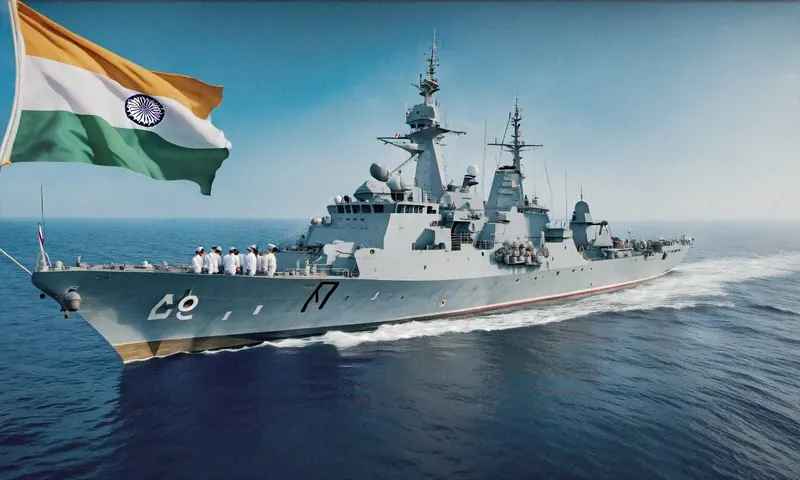
Most people think Indian Navy and picture a warship. The reality of Navy careers is wider than that.
The Indian Navy operates submarines, aircraft, helicopters, shore-based radar stations, dockyards, hospitals, communication centres, logistics networks that span the Indian Ocean, and training establishments scattered across the coastline from Kochi to Visakhapatnam to Mumbai. A career in the Navy could put you on the deck of an aircraft carrier, or it could put you inside a submarine 200 metres below the surface, or it could station you at a naval air station maintaining MiG-29K fighters, or it could have you managing supply chains for an entire fleet. Point is, when people apply to the Navy without understanding its breadth, they sometimes end up surprised by what the service actually involves -- and where they might end up serving.
I've been covering Navy recruitment for some years now and the one thing I notice each cycle is how differently the officer and sailor pathways work. They're not just different ranks -- they're different worlds with different entry points, different selection mechanisms, and different career trajectories. So let me lay them out separately, starting with the officer route.
Becoming a Naval Officer
The officer route in the Indian Navy has several doors. Which one you walk through depends on your age, your educational qualification, and what branch of the Navy you want to serve in.
National Defence Academy (NDA) stands as the youngest entry point. If you're an unmarried candidate who has passed or is appearing in Class 12 with Physics and Mathematics, you can write the UPSC NDA exam and, if selected, join the NDA at Khadakwasla, Pune. NDA is a three-year training programme followed by one year at the Indian Naval Academy in Ezhimala. You graduate as a Sub Lieutenant. NDA is a Permanent Commission entry, meaning you're in for the long haul -- a full career in the Navy. Age limit for NDA is 16 and a half to 19 and a half years at the time of joining. NDA is the route that produces most of the Navy's senior officers -- the Admirals and Vice Admirals of the future typically came through NDA or its predecessor institutions.
For graduates, the Navy offers entry through several schemes that open up twice a year. Notifications are published in Employment News and on joinindiannavy.nic.in. Each notification specifies which branches are open for that particular cycle, and the branches themselves deserve explanation because this is where candidates often get confused.
Executive Branch is the fighting arm. Executive officers handle navigation, gunnery, anti-submarine warfare, communications, and flight operations if you're selected as a pilot or observer. Engineering Branch handles propulsion systems, shipboard machinery, and marine engineering. Electrical Branch deals with weapons electronics, radar systems, and power systems aboard ships. Then there's Education Branch, Logistics Branch which manages supply chain and financial operations, and specialist entries for Law, Sports, and Naval Architecture.
Understanding Permanent Commission (PC) versus Short Service Commission (SSC) matters a great deal. PC is a career-length commitment. You serve until retirement age, you get pension, gratuity, and all the long-term benefits. SSC is an engagement of 14 years. After 14 years, some SSC officers may be granted Permanent Commission based on merit and vacancies. But this is not guaranteed. It depends on how many PC slots are open and how you compare against your peers. PC versus SSC affects everything -- your pension eligibility, your post-retirement identity as an ex-serviceman, and your long-term financial planning. Pick the right entry for your goals, not just the one that's currently open.
For SSC officer entries, you typically need a Bachelor's degree in the relevant discipline. Engineering branch wants a B.E. or B.Tech in mechanical, marine, or related streams. Electrical branch wants electrical, electronics, or IT backgrounds. Education branch looks for postgraduates. Logistics branch wants graduates with a management or commerce background in some cycles. Specific requirements change with each notification, which is why I keep saying: read the actual advertisement. Every single time.
Age limits for SSC and PC entries vary by branch and by notification. Typically, for graduate entries, you need to be between 19 and 25 years old. Some technical entries extend to 28. Women are eligible for SSC entries in several branches, which has opened up a meaningful path for female candidates who want to serve in the Navy.
The SSB Interview: What It Actually Feels Like
Here is where the Navy selection process diverges sharply from what most candidates expect. If you've only ever taken written exams for government jobs, the Services Selection Board interview is unlike anything you've experienced. Don't think of it as an exam. It's an assessment of who you are as a person -- your thinking, your behaviour under pressure, your ability to work with others and to lead them when required.
SSB runs across five days, split into two stages. It's conducted at one of the naval SSB centres, usually at Bengaluru (12 SSB), Bhopal (33 SSB), or Visakhapatnam. You report a day before the assessment begins, and from that point on, you're being observed almost constantly -- not just during the formal tests, but during meals, while waiting in the corridor, during casual conversations with other candidates. Assessors are trained psychologists and military officers who've done this hundreds of times. What they're looking for is officer-like qualities. Not textbook knowledge. Not how many GK questions you can answer. They want to see if you think clearly, if you can lead without being obnoxious, if you can follow when someone else is leading, if you stay calm when things don't go your way, and if you're the kind of person others would trust in a difficult situation at sea.
Day one is the screening test. An intelligence test and a Picture Perception and Discussion Test, known as PPDT. You're shown a blurry image for 30 seconds, asked to write a story about it, and then discuss your story with a group of other candidates. Assessors watch how you engage. Roughly 60 to 70 percent of candidates get eliminated at this stage. If you don't get screened in, you go home that same day. Fast and brutal is how most describe it.
For those who make it past screening, the remaining days are intense. Day two is the Psychology Tests. Thematic Apperception Test where you write stories based on images, Word Association Test where sixty words are flashed at you one at a time and you write the first sentence that comes to mind in fifteen seconds, Situation Reaction Test where you respond to sixty everyday and military situations, and a Self-Description Test where you describe how you think your parents, teachers, and friends see you. All four tests are designed to reveal your personality at a level deeper than conscious presentation. Trying to write what you think the assessors want to see almost always backfires because trained psychologists spot inconsistency across multiple tests very easily.
Days three and four belong to the Group Testing Officer. Group discussions on current topics. Group planning exercises where your team is given a military-style problem on a map with multiple emergencies happening at once and you have to plan a response. Then the outdoor tasks -- Progressive Group Task and Half Group Task, which are physical obstacles your group has to cross using planks, ropes, and drums with specific rules about what you can and can't touch. Individual obstacles that test your physical courage and fitness. A command task where the GTO puts you in charge of a small team and gives you a problem to solve. And a final group task.
The personal interview happens somewhere in between, usually day two or three. A senior naval officer sits across from you for 40 minutes to an hour. Expect questions about your family, your hobbies, your academic record, your failures, why you want the Navy specifically and not the Army or Air Force, what you know about India's maritime interests, what you'd do if you disagreed with a senior officer. Conversation flows naturally and reveals who you are far more than any written test could.
On the final day, the conference happens. All assessors sit together. Each candidate is called in individually and may be asked a few closing questions. Results are announced that afternoon. Recommendation rates at SSBs vary between 5 and 15 percent of screened-in candidates. Most people don't clear it on their first attempt. Some don't clear it after multiple attempts. That's not failure -- just the nature of a selection system designed to find a very specific personality type.
Sailor Entry Routes
The sailor pathway is entirely different from the officer route. No SSB interview. No five-day psychological assessment. Selection is based on a written exam, physical fitness test, and medical examination. Selection is more straightforward but no less competitive.
Under the Agniveer scheme, the Navy recruits sailors in three categories. The four-year engagement model applies, just like it does in the Army.
Agniveer SSR (Senior Secondary Recruit) requires Class 12 pass with Physics, Chemistry, and Mathematics at a minimum of 60 percent aggregate. Age window is 17 and a half to 23 years. SSR sailors work in technical and operational roles aboard ships and at shore establishments. They man weapons systems, operate radar and sonar equipment, maintain engines and generators, and handle electrical systems. SSR is a skilled role requiring genuine technical aptitude, not just passing marks.
Agniveer AA (Artificer Apprentice) is the elite sailor category. Same educational requirement as SSR -- Class 12 with PCM -- but with a higher aggregate cutoff, usually 65 percent or above. AA sailors become the technical backbone of the fleet. They strip down gas turbine engines, repair them, and put them back together. They troubleshoot electronic warfare systems. They maintain aircraft on carriers. The training is longer, the responsibilities are heavier, and the career progression for those who get retained is faster than in other sailor categories.
Agniveer MR (Matric Recruit) requires only a Class 10 pass. The roles include steward, cook, hygienist, and musician. Don't underestimate these positions. A cook on a submarine at sea for weeks is doing work that directly affects crew morale and operational effectiveness. Musicians in the Navy Band travel internationally and represent India at military tattoos and state ceremonies. These are real careers within the naval framework.
The written exam for sailor entries is conducted online at centres across the country. For SSR and AA, it covers Mathematics, Science, English, and General Knowledge at the Class 12 level. For MR, the exam tests Class 10 level content. Competition is steep -- lakhs apply and only a small fraction make it through to the physical and medical stages.
Physical standards for sailors include a minimum height of 157 cm, which is lower than Army requirements. But there's a swimming component that the Army doesn't have. Navy training will teach you to swim if you can't already, but you must be able to swim by the time you complete training. Non-negotiable. You're going to be at sea.
Physical and Medical Standards
For officer entries, male candidates need a minimum height of 157 cm. Female officer candidates need 152 cm. Weight must be proportional to height. Vision requirements vary by branch and this is where the Navy gets strict. Executive branch, especially pilot and observer entries, demands 6/6 vision in each eye without any correction. Engineering and electrical branches may allow corrected vision of 6/6 within certain limits. Colour vision must be CP-I normal, tested with Ishihara plates and the Martin Lantern Test. Hearing must be normal. Flat feet, varicose veins, and any condition that the marine environment might worsen will result in rejection.
A question that comes up regularly is about tattoos. Permanent tattoos are allowed only on the inner forearm (wrist to elbow) and the reverse side of the palm. Tattoos anywhere else on the body are not accepted. Tribal tattoos for candidates from tribal communities are an exception to this rule.
Salary Structure
For officers, the starting salary as a Sub Lieutenant sits at Level 10 of the 7th Pay Commission matrix -- 56,100 rupees basic pay per month. Add Military Service Pay of 15,500 rupees, Dearness Allowance, and applicable allowances. Officers on ships get Sea-Going Allowance. Officers flying aircraft get Flying Allowance. Officers in hardship areas get Special Area Allowance. Total monthly take-home for a new officer typically falls between 80,000 and 1,00,000 rupees depending on posting.
For Agniveer sailors, the salary mirrors the Army Agniveer structure. First year: 30,000 rupees monthly, with 30 percent going to the Corpus Fund, leaving about 21,000 in hand. Rises to 33,000 in the second year, 36,500 in the third, and 40,000 in the fourth. Free food, accommodation, clothing, and medical care are provided on top. The Seva Nidhi at the end of four years is approximately 11.71 lakh rupees for those not retained.
Sailors who get retained and continue in regular service see a substantial jump. A regular Leading Seaman draws around 29,200 rupees basic in the 7th CPC matrix, plus DA, MSP, and allowances. A Chief Petty Officer with 15 years of service can take home upwards of 60,000 to 70,000 rupees monthly.
Where to Apply
All Navy recruitment -- officer and sailor -- goes through joinindiannavy.nic.in. For officer entries, register when the notification for your branch appears, fill the application, upload documents, and wait for shortlisting. If shortlisted, you'll receive an SSB call letter. For sailor entries, register when the SSR/AA/MR notification is published, appear for the online exam, and progress through physical and medical testing if you qualify on the written.
Officer notifications typically come out twice a year -- around June/July for courses starting the following January, and around December/January for July courses. Sailor notifications also arrive twice yearly, usually around August and February. But these timelines shift. The application windows are short, sometimes just two to three weeks. If you miss one, you wait six months for the next. Set a reminder or bookmark the page.
Training at INA Ezhimala
The Indian Naval Academy at Ezhimala, Kerala, is where most Navy officers receive their training. Perched on a cliff above the Arabian Sea, people who've trained there describe it as one of the most stunning military training campuses in Asia -- and one of the most demanding.
For NDA-entry cadets, the naval training at Ezhimala comes after three years at NDA Khadakwasla. You arrive at Ezhimala for your final year, which focuses on naval subjects: navigation, seamanship, marine engineering principles, weapons systems, naval tactics, and extensive time at sea on training ships. For direct-entry SSC and PC officers, the entire training happens at Ezhimala and lasts between 22 and 44 weeks depending on the branch.
A training day starts before dawn. Physical training on the parade ground or on the beach below the academy. Swimming is a daily feature -- not in a pool, but in the sea itself. Classroom instruction covers navigation charts, ship stability calculations, weapons engagement theory, damage control procedures. Practical sessions involve boat pulling -- rowing heavy whalers through ocean swells -- sailing, navigation exercises on training ships, and weapons drills on deck. Sea sorties on training vessels take cadets into actual open-ocean conditions where the classroom theory meets the reality of a rolling deck and salt spray.
What surprises most cadets is the loneliness of the first weeks. Ezhimala is relatively remote. Training tempo leaves almost no personal time. Phone access is restricted. Seniors enforce discipline in ways that civilian institutions never do. Food is good by military standards -- the Navy has traditionally eaten better than the other two services -- but you eat when you're told, what you're told. All of this has a purpose. It builds a person who can function under pressure, who can go days without proper sleep and still make correct decisions, who can manage a team of sailors on a warship in conditions where wrong calls cost lives.
Sailor training happens at INS Chilka in Odisha for most categories. Duration is shorter than officer training but the physical demands are just as high. Basic military drill, physical fitness, swimming, branch-specific technical training, and seamanship. After completing basic training, sailors are assigned to a ship, submarine, or shore establishment.
One thing about naval life that doesn't always get mentioned: you will be at sea for extended periods. Deployments of 30 to 45 days at a stretch are routine. Longer deployments happen during exercises or operational taskings. You won't see land for weeks. You won't talk to your family except through occasional satellite phone calls or brief email windows. The sea is monotonous and beautiful and dangerous, sometimes all at once. If that sounds like something you'd want to experience rather than endure, the Navy might be where you belong.
Source: This article is based on official information available on joinindiannavy.nic.in and notifications from the Integrated Headquarters of the Ministry of Defence (Navy).
Comments 0
Leave a Comment