Agniveer Indian Army Recruitment 2026: Categories, Physical Standards, CEE Exam, Salary and How to Apply
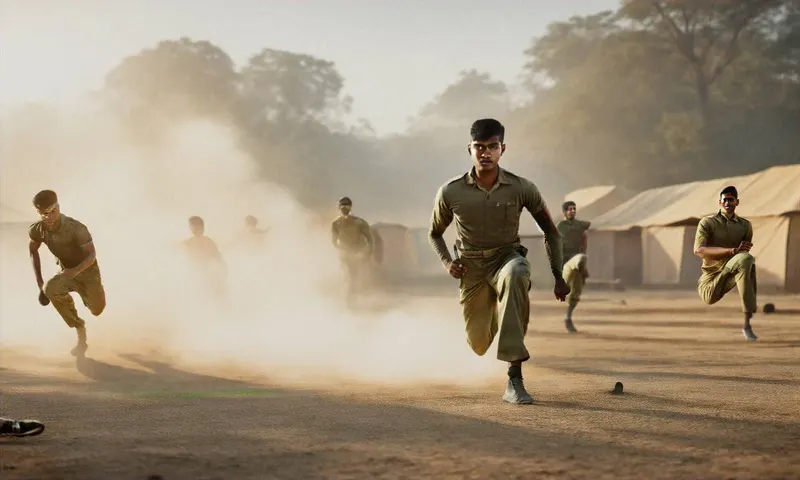
The Army's put out its Agniveer notification. 80,000-odd seats. That's the headline. But the details matter more than the number.
I've been covering defence recruitment cycles since before the Agnipath scheme even existed, back when rally-based recruitment was the only game in town and candidates would show up at grounds with nothing but a folder full of photocopies and hope. The system has changed a lot since 2022. Some of those changes are good. Some are still being figured out. What hasn't changed is that most candidates go in without really understanding the process, and that costs them.
So here's what you actually need to know about the Agniveer Indian Army Recruitment 2026.
The Four Categories: Pick the Right One
The Army recruits Agniveers under four categories. Sounds straightforward, but every cycle I see candidates who applied for the wrong one because they didn't read the fine print on educational requirements. Don't be that person.
Agniveer General Duty (GD) is the most popular category and also the most competitive by raw numbers. This is the fighting arm. Infantry, armoured corps, artillery support roles. If you've passed Class 10 from a recognised board with at least 45 percent aggregate, you qualify on the education front. Boards that use grading systems need a minimum D grade in individual subjects and an overall C2 grade. The work is physical. The training is physical. If you're someone who'd rather be outdoors than behind a desk, this is the track.
Agniveer Technical is for candidates who've done 10+2 with Physics, Chemistry, and Mathematics. Not just passed it -- you need 50 percent aggregate with at least 40 percent in each subject. Technical Agniveers get placed in corps like EME (Electronics and Mechanical Engineers), Signals, Army Air Defence, and similar arms where the job involves maintaining equipment, operating communication systems, and working on weapons electronics. If you scraped through PCM with 42 percent overall, you're not eligible. Check your marksheet before you apply.
Agniveer Clerk and Store Keeper Technical has the highest education bar. Class 12 pass with 60 percent aggregate. That's not all. You need to have studied English and Mathematics (or Accounts or Book Keeping) in Class 12, and you need at least 50 percent in each of these subjects individually. The role involves administrative work, documentation, inventory management, and unit-level accounting. People sometimes look down on the clerk category. They shouldn't. It's one of the hardest to get into and the skills transfer well to civilian life after four years.
Agniveer Tradesman covers a range of support roles -- cook, mess keeper, house keeper, washer man, barber, tailor, cobbler, and others. Educational requirements vary by trade. Some trades need only Class 8 pass. Others require Class 10. The specific trade you're applying for will determine which qualification applies, so check the notification carefully for your trade.
Age: The Non-Negotiable Window
You must be between 17 and a half years and 23 years old. The exact date cutoff is mentioned in the notification for each recruitment cycle. Miss it by a day and you're out. There is no relaxation. Not for SC/ST, not for OBC, not for anyone. The Agnipath scheme treats the age limit as absolute.
Also: you must be unmarried. Not just at the time of application. You have to remain unmarried for the entire four-year service period. If you get married during service, that's grounds for discharge. This catches some people off guard, so I'm putting it plainly.
Indian citizenship is required. No dual nationals. No one with pending criminal cases. No one who's been dismissed from any government service. These are standard conditions but worth stating.
Physical Standards: Where Most People Actually Fail
Look, the 1.6 km run in under 5 minutes 30 seconds trips up more candidates than the written exam does. I've watched recruitment rallies where half the crowd gets eliminated at the running stage alone. And these are young men who think they're fit. Running 1.6 km on a measured track in front of timekeepers is different from running around your village ground.
Here's the full breakdown of what you'll face.
The running test is first. Complete the 1.6 km run within 5 minutes 30 seconds and you get 60 marks in the Group I timing bracket. Come in between 5 minutes 31 seconds and 5 minutes 45 seconds and you get 48 marks. Anything slower and you're done. This isn't negotiable. Start practising at least three months before your rally date. Run on a measured track if you can. Treadmill running does not prepare you for outdoor running in heat and dust.
Height requirements are 170 cm for General Duty and Technical categories. If you belong to hilly regions -- Garhwal, Kumaon, Himachal Pradesh, Jammu and Kashmir, or the North-Eastern states -- the minimum drops to 165 cm. Tradesman posts also generally require 170 cm. These are measured barefoot, standing straight, first thing in the process.
Weight has to be proportional to your height and age. The Army uses a standard chart. As a rough guide, 170 cm height means you should be at least 50 kg. Underweight candidates get rejected. Overweight candidates also get rejected. The Army wants you in a specific range.
Chest measurement is 77 cm unexpanded with a minimum 5 cm expansion. They'll ask you to breathe in fully and measure the difference. If you can't show that 5 cm expansion, you fail. This is where skinny candidates who can run fast sometimes get tripped up. Breathing exercises and chest-expanding workouts help.
Pull-ups on a beam need a minimum of 6 to qualify. Each pull-up earns marks, going up to a maximum at 10 pull-ups. These are proper pull-ups -- chin above the bar, arms fully extended at the bottom. No kipping, no half reps. If you can currently do 3 pull-ups, you need to train. Hard.
Then there's a 9-feet ditch jump and a balance beam walk. The ditch jump is pass or fail. You either clear 9 feet or you don't. The balance beam tests coordination -- you walk across a narrow beam without falling. These two don't carry separate marks in most rally formats but failing either one disqualifies you.
My advice after watching dozens of these rallies: the running eliminates the most people. Pull-ups eliminate the second-most. Train for these two things above everything else.
Medical Examination: The Hidden Eliminator
You've cleared the running, the pull-ups, the measurements. You think you're through. Then comes the medical exam, and this is where candidates who are otherwise perfectly fit learn things about their own bodies they didn't know.
The military medical exam is not like a civilian health checkup. Military doctors are looking for specific conditions that would affect your ability to serve in combat zones with limited medical support. They're not being harsh for the sake of it. They're being practical.
Your distant vision needs to be 6/6 in both eyes without glasses or contact lenses. Colour vision is tested using Ishihara plates -- if you have any form of colour blindness, even mild red-green deficiency, you'll be rejected. Hearing must be normal in both ears. Flat feet are a rejection criterion. So are knock knees. Varicose veins, even mild ones, lead to rejection.
LASIK or PRK eye surgery? The Army does not accept candidates who've had refractive surgery. This surprises a lot of people. If you've had LASIK done thinking it would help you meet the vision standard, it actually disqualifies you.
Any bone fractures where metal implants (rods, plates, screws) are still inside your body will get you rejected. If you've had a fracture treated with metalwork and the hardware hasn't been removed, get it removed well in advance -- at least 6 months before the medical, ideally a year -- so the bone heals cleanly.
Candidates declared temporarily unfit at the medical stage are given a chance to appear for a review medical. This is usually for minor or correctable conditions -- slightly high blood pressure due to nervousness, a small skin infection, things like that. But if you're rejected on a permanent condition like flat feet or colour blindness, there's no review. That's final.
The Common Entrance Examination: What to Expect
The CEE is the written test and it's conducted online at designated centres. The format and syllabus depend on your category.
For General Duty, the exam covers General Knowledge, General Science, and Mathematics at the Class 10 level. Now, "Class 10 level" sounds easy. It isn't, or at least it isn't easy under timed exam conditions when you've been through physical testing and your body's tired. The questions aren't tricky but they require you to actually know the material, not vaguely remember it from school. GK covers Indian history, geography, current affairs, and general awareness. Science covers physics, chemistry, and biology basics. Maths covers arithmetic, algebra, geometry, mensuration. If you haven't opened a textbook since you passed Class 10, start now.
For Technical candidates, the exam adds Physics, Chemistry, and Mathematics at the Class 12 level. This is a big step up. You're being tested on topics like mechanics, thermodynamics, electromagnetic induction, organic chemistry, matrices, integration, and vector algebra. If you coasted through your 12th boards, the CEE will test whether you actually understood what you studied.
Clerk and Store Keeper Technical candidates face a paper that tests General Knowledge, English, Mathematics, and Computer Science at the Class 12 level. The English section tests grammar, comprehension, and vocabulary. The Computer Science section covers basic computer hardware, software, internet, and MS Office concepts. The Maths section is Class 12 level. This is arguably the broadest syllabus among all categories.
The CEE is competitive. The number of candidates who clear the physical and medical stages is still far more than the number of seats available. Your CEE score determines your rank in the merit list. A high score can compensate for an average physical fitness score. A low CEE score, even with a perfect physical performance, will keep you out.
Study properly. Use NCERT textbooks as your base. Solve previous years' papers if available. Take online mock tests to get used to the computer-based format. Don't walk into this exam thinking you'll wing it.
The Rally Day: What Actually Happens
Let me walk you through how a typical recruitment rally day goes, because knowing this in advance reduces a lot of confusion and anxiety.
You'll arrive at the rally ground early morning. 5 AM or 6 AM depending on the instructions on your admit card. Carry the original admit card, all original documents (Class 10 marksheet, Class 12 marksheet if applicable, domicile certificate, Aadhaar card, caste certificate if applicable), and a set of photocopies of everything. Carry water. Wear running shoes and comfortable clothing.
The first thing that happens is document verification. Officials check your admit card, verify your identity, and confirm your documents match what you filled in the online application. Any mismatch -- wrong name spelling, wrong date of birth, missing certificate -- and you could be turned away before you even start.
After document verification comes the physical measurement. Height, weight, chest. This is quick. You either meet the standard or you don't. There's no argument or second chance at this stage.
Then the physical fitness test. Running first. Pull-ups next. Ditch jump. Balance beam. The whole thing is done in batches. You'll wait your turn. It can take hours. Stay hydrated but don't overeat. A heavy stomach before the run is a bad idea.
If you clear everything, you're directed to the medical examination area. This can happen the same day or the next day depending on the rally schedule and numbers.
Medical examination is thorough. Strip down to your undergarments. Eyes, ears, teeth, skin, spine, feet, knees -- everything checked. Blood pressure measured. Urine sample collected for testing. The medical takes about 30 to 45 minutes per candidate but with queues you could be waiting much longer.
Candidates who pass the medical are then given a date for the CEE, which is usually held within a few weeks at a nearby computer centre.
Training: The First Weeks in Uniform
If your name appears on the final merit list after the CEE, you'll receive an appointment letter directing you to report to a regimental training centre. Where you go depends on which regiment or corps you've been allotted.
Training duration varies. GD Agniveers undergo roughly 31 weeks of training. Technical Agniveers get additional weeks for their specialisation. Tradesman training can be shorter, around 10 to 14 weeks for some trades. Clerk training falls somewhere in between.
The first few weeks are the hardest. Your body is being pushed beyond what even physically fit candidates are used to. Waking up at 5 AM for PT, drill sessions lasting hours, weapons training, field craft, cross-country runs in full gear. You'll be tired in a way you've never been tired before. This is normal. Every soldier who's served has been through it. The training is designed to break civilian habits and build military ones.
During training, you're subject to the Army Act, 1950. That means military discipline, military law, and military punishment for infractions. This isn't college. Absence without leave is a serious offence. Insubordination is a serious offence. You're expected to follow orders, maintain your equipment, keep your barracks clean, and perform to standard every day.
After training, you're posted to a unit. Could be a forward area near the LAC or LOC. Could be a peace station in the plains. You don't get to choose. The posting is based on the regiment's requirements.
Salary and the Seva Nidhi Package
Here's what you'll earn as an Agniveer in the Indian Army.
In your first year, the monthly package is 30,000 rupees. But 30 percent of that -- 9,000 rupees -- goes into the Agniveer Corpus Fund. So your in-hand salary is around 21,000 rupees per month. On top of this, you get free food, free accommodation, free clothing, free medical care. So that 21,000 is genuinely disposable income with no major expenses to pay from it.
In the second year, you get 33,000 rupees monthly. In-hand comes to about 23,100 rupees after the 30 percent deduction.
Third year: 36,500 rupees per month. About 25,550 in hand.
Fourth year: 40,000 rupees. Roughly 28,000 in hand.
You also get risk and hardship allowances depending on where you're posted. A posting in Siachen or a forward area near the border carries additional allowances that can significantly increase your take-home pay. These aren't fixed amounts -- they depend on the specific location classification.
Now, the Seva Nidhi. At the end of four years, if you're among the 75 percent who are not retained for permanent service, you receive the Seva Nidhi package. This is the accumulated total of your 30 percent monthly contributions plus a matching contribution from the government, with interest. The estimated total comes to about 11.71 lakh rupees. This amount is tax-free.
11.71 lakh rupees sounds like a lot. It also doesn't sound like a lot, depending on your perspective. It's meant to be a starting fund for your civilian career. Some former Agniveers use it to start small businesses. Others put it towards higher education. The government has announced preferential hiring for former Agniveers in CAPFs (CRPF, BSF, CISF, ITBP, SSB), state police forces, and some public sector companies. How much that preference actually translates into jobs is still playing out in real time.
The 25 Percent Retention Question
Every batch, up to 25 percent of Agniveers can be selected for permanent enrolment in the regular Army. This is the big prize for many candidates. Permanent enrolment means you continue in the Army with full career progression, pension, gratuity, ex-serviceman status -- the whole package.
Selection for retention is based on your performance during the four-year period. Professional competence. Physical fitness maintenance. Discipline record. Internal assessments and merit rankings. It is competitive. You're being compared against your entire batch.
I'll be honest -- the retention rate is the most debated aspect of the Agnipath scheme. Twenty-five percent means seventy-five percent go home after four years. Whether you see that as an opportunity or a risk depends on your own situation. For some candidates, four years of military training and the Seva Nidhi is genuinely a springboard into something better. For others who wanted a full military career, the uncertainty is a real concern.
How to Actually Apply
The application is entirely online through joinindianarmy.nic.in. Here's the sequence.
Go to the website and look for the Agniveer Registration section. Create an account with your name, date of birth, email, and mobile number. Use a mobile number you have regular access to -- OTPs and notifications will come on it throughout the process.
Fill the detailed application. Personal details, educational qualifications, physical details, domicile information. Upload your photograph, signature, and educational certificates. The photograph should be recent, passport-sized, with a white background. The signature should be on white paper with a black pen. Scanned copies of marksheets should be clear and legible. Blurry uploads can cause problems during document verification at the rally.
Select your preferred rally centre or examination centre from the list available for your zone. Submit the application and save your registration number. Write it down somewhere. Screenshot it. Don't lose it.
When the admit card is released on the portal, download and print it. Carry it to the rally along with all original documents.
One thing I keep telling candidates: double-check every detail before submitting. Your name should match your Class 10 marksheet exactly. Your date of birth should match your Aadhaar and birth certificate. Your caste certificate details should match what you've entered. I've seen candidates get rejected at document verification for a middle name mismatch. It's entirely avoidable if you just take ten extra minutes during the application.
Keep checking the website regularly after applying. Dates change. Rally centres sometimes shift. Medical review dates get announced separately. The notification page on joinindianarmy.nic.in is where all official updates appear. Don't rely on WhatsApp forwards or YouTube channels for dates -- go to the source.
Some Honest Preparation Advice
Start running today. Not tomorrow, not next week. The single biggest reason for rejection in Agniveer recruitment is failing the 1.6 km run. Three months of dedicated running practice is the minimum. Start at whatever pace you can manage and build up. Aim to consistently run 1.6 km in under 5 minutes 15 seconds in practice -- give yourself a 15-second buffer for rally-day nerves and conditions.
Work on pull-ups. If you can't do any right now, start with dead hangs. Then negative pull-ups. Then assisted pull-ups. Build up to 8 to 10 clean pull-ups over 2 to 3 months. This is doable for almost anyone who trains consistently.
For the CEE, use NCERT textbooks. Not coaching material, not random PDFs from the internet. NCERT Class 10 textbooks for GD. NCERT Class 12 for Technical and Clerk. Solve the exercises at the end of each chapter. Take timed practice tests. The exam is not exceptionally hard but it demands that you know the basics thoroughly.
Get your documents in order well before the rally date. Visit your school and get extra copies of marksheets if needed. Get your domicile certificate and caste certificate (if applicable) issued fresh if your existing ones are old or damaged. Carry original documents and two sets of photocopies to the rally.
Visit an eye doctor and get your vision checked. If you need glasses, the Army won't accept you for Agniveer positions that require unaided 6/6 vision. Know where you stand before you invest months of physical preparation. Same goes for colour vision -- get an Ishihara test done privately so there are no surprises at the medical.
Whether this is the right move for you depends on what you're after. Four years of military service, a Seva Nidhi payout, possible permanent retention, or just the experience and skills that come with wearing the uniform -- talk to people who've done it, not just people who have opinions about it.
Source: This article is based on official notifications from joinindianarmy.nic.in and information released by the Directorate General of Recruiting, Integrated Headquarters of Ministry of Defence (Army).
Comments 0
Leave a Comment