Indian Air Force AFCAT 2026: Flying, Technical and Ground Branches - Exam Pattern, AFSB, CPSS, Training and Salary
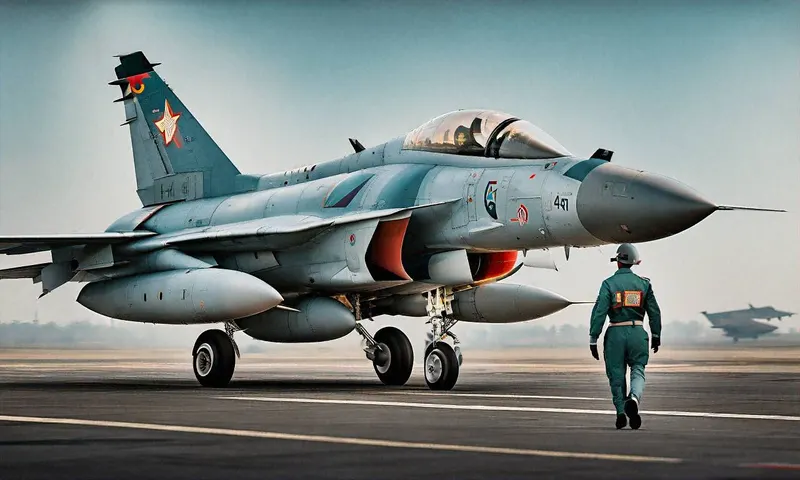
So you want to fly fighter jets. Or maybe you're more interested in the technical side -- keeping those jets in the air, working on radar systems, managing weapon stores. Either way, AFCAT is your way in.
The Air Force Common Admission Test is the Indian Air Force's primary recruitment exam for officers. It happens twice a year. AFCAT 2026 is open and if you've got the qualifications and the ambition, this is worth your attention. But let me be upfront: the IAF is selective. Really selective. The acceptance rate for flying branch is in the single digits as a percentage. Even technical and ground duty branches reject the vast majority of applicants. This isn't meant to discourage you. It's meant to make sure you go in prepared instead of blindsided.
The Three Branches: Which One Fits You
Flying Branch is the glamour posting. Fighter pilots, transport pilots, helicopter pilots. This is the branch where you'll find the Rafale and Su-30MKI cockpits, the C-17 Globemaster cargo holds, the Apache attack helicopter controls. The eligibility is specific. You need a Bachelor's degree in any discipline with a minimum of 60 percent marks in aggregate, or a B.E./B.Tech degree with 60 percent marks. Here's the catch that trips up many candidates: for flying branch, you also need to have passed Class 12 with Physics and Mathematics. If you didn't study Physics and Maths in 12th, flying branch is closed to you through AFCAT. Period. Age limit is 20 to 24 years for graduates and 20 to 26 years for those with post-graduation or integrated course backgrounds. Both men and women are eligible -- a relatively recent change that has opened up fighter pilot roles to women officers.
Technical Branch splits into two sub-branches: Aeronautical Engineering (Electronics) and Aeronautical Engineering (Mechanical). AE(E) officers handle avionics, radar, communication systems, electronic warfare suites, and weapon delivery systems. AE(M) officers deal with airframe, engines, fuel systems, hydraulics, and everything that makes the aircraft physically fly. You need a B.E. or B.Tech in a relevant discipline. For AE(E), accepted streams include electronics, electrical, telecommunication, instrumentation, computer science, and information technology. For AE(M), it's mechanical, industrial, aeronautical, and production engineering. Minimum 60 percent aggregate. Age limit 20 to 26 years. Technical branch officers don't fly, but they keep aircraft flying. In the IAF, the tech branches carry serious respect because a fighter is only as good as its maintenance crew.
Ground Duty Branches cover everything else. Administration handles air base management and personnel matters. Logistics manages supply chains and equipment procurement. Accounts deals with financial management and audits. Education runs training programmes and instructional design. Meteorology forecasts weather for flight operations -- which, in military aviation, can be the difference between launching a sortie and cancelling it. Educational requirements vary across these sub-branches. Admin, logistics, and accounts accept graduates from any discipline with 60 percent marks. Education branch requires a post-graduate degree with 50 percent marks and graduation with 60 percent. Meteorology needs a post-graduate in science or a B.E./B.Tech with specific science subjects at graduation level. Age 20 to 26 years for most. If you want to be part of the Air Force without flying or engineering, ground duty is a legitimate and rewarding career path. Don't let anyone tell you otherwise.
The AFCAT Exam: What the Paper Looks Like
The AFCAT exam is an online test lasting 2 hours. There are 100 questions, 3 marks each, total 300 marks. Wrong answers cost you 1 mark as penalty, so random guessing is a bad strategy. The paper tests four areas, and I'm going to describe them in paragraphs rather than tables because the weightage and question style matter more than neatly boxed numbers.
General Awareness tests your knowledge of current events, Indian and world history, geography, politics, sports, art, culture, defence developments, and basic science. You'll see questions about recent military exercises, newly inducted weapon systems, international relations, government schemes, and notable appointments. History questions lean towards the Indian independence movement, major wars, and ancient civilisations. Geography covers physical features and climate patterns, both Indian and global. This section has around 25 questions. If you've been reading a newspaper daily for three months, you'll handle most of it. If you haven't, this section will expose that gap fast.
Verbal Ability in English tests comprehension, grammar, vocabulary, and error detection. Reading passages with questions. Sentence completion. Synonyms and antonyms. Correct usage of words and phrases. About 25 questions. If your English is strong, this is your scoring section. If it isn't, this is where others pull ahead of you. The fix is simple: read English newspapers daily, not just headlines, but editorials and opinion pieces. Do this for three months and your vocabulary and comprehension improve naturally.
Numerical Ability covers decimal fractions, simplification, averages, profit and loss, percentage, ratio and proportion, simple and compound interest, time and work, time and distance, and basic algebra. About 18 questions. The difficulty level is comparable to banking exams -- applied arithmetic requiring speed and accuracy, not Class 12 calculus. If you've prepared for SSC or bank exams before, this territory is familiar.
Reasoning and Military Aptitude tests verbal and non-verbal reasoning -- series completion, analogy, classification, coding-decoding, direction sense, blood relations, and figure-based pattern recognition. About 32 questions. The military aptitude portion includes spatial reasoning and basic mechanical comprehension. This section rewards people who think logically and see patterns quickly under time pressure.
At 100 questions in 120 minutes, you have about 1 minute and 12 seconds per question. You can't afford to get stuck. The winning strategy: sweep through the paper and answer everything you're confident about first. Mark uncertain questions for review. Come back to them only if time allows. Never leave easy marks on the table while wrestling with a hard question.
For Technical branch candidates, there's an additional paper called the EKT -- Engineering Knowledge Test. It's 45 minutes, 50 questions, testing knowledge from your specific engineering stream. Flying branch and ground duty candidates don't take the EKT.
The AFSB: Five Days That Decide Everything
You've cleared the AFCAT written. You've got your call letter for the Air Force Selection Board. You report to one of the AFSB centres -- Dehradun (1 AFSB), Mysuru (2 AFSB), or Gandhinagar (3 AFSB). Here's what the next five days actually look like, not from a textbook, but from talking to candidates and officers who've been through it.
Day One -- Reporting and Screening. You arrive the evening before or morning of. You're given a chest number and placed in a group. First comes the Officer Intelligence Rating test -- verbal and non-verbal reasoning, timed. Then the Picture Perception and Discussion Test. A hazy, ambiguous photograph flashes on screen for 30 seconds. You write a story about what you see in four minutes. Then your group of 15-odd candidates sits in a circle and tries to build a common story from everyone's individual versions. The assessors watch. They don't care who speaks loudest. They're watching for clarity of thought, how you communicate, whether you actually listen when someone else speaks, and whether you can help a group of strangers converge on a shared narrative. Results come that evening. Typically 40 to 50 percent get screened out. If you don't make it, you pack up and leave.
Day Two -- Psychology Tests. This is the day that gets inside your head. You walk into a hall with a projector. The Thematic Apperception Test begins. Twelve images are flashed, one at a time, each for 30 seconds. You write a story for each in four minutes -- who are the characters, what's happening, what led to this, how does it end. The stories you write reveal your personality, your values, the way you see the world. Then comes the Word Association Test. Sixty words, one at a time, 15 seconds each. You write the first sentence that comes to mind for each word. This moves fast and you cannot overthink it. Then Situation Reaction Test -- 60 scenarios, how would you respond. And finally the Self-Description Test, where you write how your parents, teachers, friends, and you yourself would describe you.
There's no way to game these tests. People try. They write heroic stories and selfless WAT responses thinking that's what assessors want. But a trained psychologist cross-references your TAT stories with your WAT responses, your SRT answers, and your self-description. Inconsistencies jump out. The best advice anyone ever gave me about psychology tests at AFSB: just be yourself, and be yourself quickly, because you don't have time to be anyone else.
Days Three and Four -- GTO Tasks. This is where things get physical and tactical. Group discussions start it off -- two topics, usually one current affairs and one social or abstract. Then the Group Planning Exercise. A model or map shows a scenario with several emergencies happening at once: a flood, a derailed train, a militant sighting, a medical emergency, all in the same geographical area with limited resources. Your group plans a response. Individual proposals first, then group discussion to find a common solution.
The outdoor tasks are what people remember years later. Progressive Group Task: your group faces a series of physical obstacles -- walls, ditches, water features -- that you cross using planks, ropes, and drums. Specific rules apply. Certain materials can't touch the ground. Certain zones are out of bounds. You solve it together, under time pressure, and the GTO watches how each person contributes. Then Half Group Task splits your group for a tighter, harder obstacle. Individual Obstacles is a ten-obstacle course -- climbing ropes, leaping across gaps, balancing on beams, crawling through confined spaces -- three minutes to attempt as many as possible. Command Task puts you in charge of two helpers and gives you one obstacle to solve while the GTO watches your leadership. The Lecturette is a three-minute solo talk to the group on a topic you pick from four options. Final Group Task closes out the GTO sequence.
The Personal Interview runs on day two or three, depending on scheduling. A senior IAF officer spends 45 minutes to an hour with you one-on-one. The conversation covers your family, your education, your interests, your failures, your knowledge of the Air Force, your understanding of current events, and hypothetical situations. It's not an interrogation. It's a conversation. But it's a conversation designed to test whether what you say holds up under gentle pressure. If you wrote on your PIQ form that you enjoy playing chess, the interviewing officer might ask about your Elo rating or your favourite opening. If you can't answer, your credibility takes a hit across the board.
Day Five -- Conference. All three assessors -- Psychologist, GTO, and Interviewing Officer -- sit together. Each candidate is called in briefly. Maybe one question. Maybe none. Then you wait. Results come that afternoon. Recommended candidates stay for the medical. The rest receive a travel warrant and head home.
CPSS: The Pilot-Specific Test That Gets One Shot
This section is for flying branch aspirants only, and it deserves its own space because the stakes are unlike anything else in the selection process.
If you're recommended at AFSB for flying branch, you face the Computerised Pilot Selection System before the medical. CPSS is designed to test whether your brain and body are wired for flying military aircraft. And here is the fact you need to absorb before you walk in: you get one attempt at CPSS in your entire lifetime. Fail it, and you can never attempt flying branch again. Not through AFCAT. Not through CDS. Not through NDA. Not through any entry, ever. One shot.
Let that settle for a moment.
CPSS is conducted at AFSB Dehradun or the designated testing centre. The test battery includes instrument comprehension tests, spatial orientation tests, memory tests, and the INSB -- Innate Sensory Battery. The INSB is what makes CPSS different from every other military selection test in India. You sit in front of a screen with a joystick in one hand and rudder pedals at your feet. The test asks you to track a moving target on screen by coordinating joystick movements in two axes while simultaneously controlling a separate element with your feet. The difficulty increases progressively. It measures whether your brain can handle multiple simultaneous inputs and translate them into coordinated physical outputs -- which is exactly what flying an aircraft demands.
You can't study for the INSB. Not in the traditional sense. Some people's psychomotor coordination is naturally suited to piloting. Others' isn't. Candidates who are brilliant academically and articulate at SSB sometimes fail CPSS because their hand-eye-foot coordination doesn't match what the system requires. That's not a reflection of intelligence or character. It's a specific aptitude, like having perfect pitch in music. You either have it or you don't, to a degree.
That said, some preparation helps build the neural pathways CPSS tests. Play video games that demand hand-eye coordination. Drive a manual transmission car or motorcycle regularly. Try juggling. Do activities that force your brain to process multiple input streams at once. These won't guarantee a pass but they exercise the right circuits.
The cognitive portion tests spatial reasoning, pattern recognition, and information processing speed. This part responds better to preparation. Practice spatial reasoning questions. Get enough sleep the night before. Don't show up exhausted or anxious.
If you pass CPSS, you proceed to the flying branch medical, which is the most stringent medical in the Indian armed forces. If you fail CPSS, your flying branch candidacy ends permanently. You may still be considered for ground duty based on your AFSB performance. But you will never fly military aircraft. Every flying branch aspirant needs to sit with that reality before they decide to attempt it.
Medical Examination
The medical for AFCAT-selected candidates is conducted at the Air Force Central Medical Establishment in New Delhi or at designated military hospitals.
Flying branch medical standards are the strictest in the armed forces. Vision must be 6/6 in each eye -- not corrected to 6/6, actually 6/6 without glasses, contacts, or surgery. Colour vision must be perfect, tested with Ishihara plates and the Martin Lantern Test. Hearing must be perfect. Blood pressure, cardiac function, pulmonary function, neurological responses, and musculoskeletal integrity are all examined in detail. There's a decompression chamber test to check how your body handles rapid air pressure changes. Your ENT examination is especially thorough because sinus problems and eustachian tube issues can be dangerous at altitude and during rapid altitude changes. A history of epilepsy, kidney stones, or psychiatric conditions leads to rejection. The minimum height for flying branch is 162.5 cm with a minimum leg length of 99 cm for cockpit fitment.
Technical and ground duty branches have slightly relaxed vision standards -- corrected vision of 6/6 is acceptable within defined limits. But flat feet, varicose veins, and colour blindness remain automatic rejection criteria for all branches.
Training at Air Force Academy, Dundigal
Selected officers report to the Air Force Academy at Dundigal, near Hyderabad. Training duration varies by branch: flying branch gets about 74 weeks, technical and ground duty about 52 weeks each.
The initial phase is common across branches. Drill, physical training, weapons handling, IAF history and traditions, leadership theory. The discipline is tight. You're a trainee officer, not a student. Early mornings, hard training, long study hours, very little personal time. The first weeks test resolve more than ability.
For flying branch, the real thing begins with Stage I flying on the Pilatus PC-7 MkII basic trainer at AFA itself. You learn takeoff, straight-and-level flight, turns, climbs, descents. Gradually you move to aerobatics -- loops, rolls, stall recovery, spins. Your first solo flight is a milestone every pilot carries with them forever. Stage II moves to the Hawk Advanced Jet Trainer at a fighter training establishment. Formation flying, instrument flying, night flying, navigation exercises, weapons delivery -- the pace intensifies. After Stage II, if you're selected for fighters, you proceed to an Operational Conversion Unit to learn your specific aircraft type: Su-30MKI, Rafale, MiG-29, Tejas, or whatever platform the IAF assigns you.
Transport and helicopter stream pilots follow a different path after Stage I, moving to respective training establishments. The aircraft change but the skill demands are equally intense. Putting a C-130J onto a short tactical strip or holding a Mi-17 steady in Himalayan crosswinds requires immense precision.
Technical branch officers at AFA go deep into their engineering specialisations. AE(E) officers study avionics systems, radar theory, electronic warfare, and hands-on maintenance procedures for IAF aircraft. AE(M) officers study propulsion, structures, and airframe systems. After graduating from AFA, you're posted to a squadron or base repair depot where you're responsible for aircraft worth hundreds of crores. The pressure is different from a pilot's but it's no less real.
Salary: The Numbers
From what the data shows, a newly commissioned Flying Officer in the IAF starts at Level 10 in the 7th Pay Commission matrix. Basic pay: 56,100 rupees per month. Military Service Pay: 15,500 rupees. Dearness Allowance at the prevailing rate. Transport Allowance. Flying branch officers get Flying Allowance of around 25,000 rupees per month for those holding a valid flying category.
Based on the figures available, total monthly take-home for a Flying Officer in flying branch: roughly 1,00,000 to 1,20,000 rupees, varying with posting and allowances. By the time you reach Squadron Leader at 8 to 10 years of service, you're looking at 1,50,000 to 1,80,000 per month. Wing Commander crosses 2,00,000. Group Captain and above are in the 2,50,000 plus range.
Technical branch officers earn the same basic pay minus the Flying Allowance. Instead, forward-base postings bring their own area allowances. Ground duty follows the same structure without specialisation-specific extras.
Non-monetary benefits don't show on the pay slip but they add up fast. Free housing or HRA. Free medical care for you and your family at military hospitals. Canteen facilities at discounted rates. Leave Travel Concession. 60 days annual leave, 20 days casual leave, 30 days half-pay leave. Subsidised education for children at Kendriya Vidyalayas and military schools.
SSC officers who leave after 14 years without Permanent Commission get a gratuity and provident fund balance. PC officers serve till retirement with pension, gratuity, and ECHS medical coverage for life.
As things stand right now, for comparison: a software engineer at a mid-level IT company starts at 6 to 8 lakh per annum. A starting IAF officer earns around 12 to 14 lakh per annum. By the 10-year mark, the gap widens in the officer's favour once you account for housing, medical, and other benefits. But the IT professional doesn't face CPSS, doesn't spend five days at AFSB, and doesn't live on remote air bases away from family for months. Different lives, different trade-offs, different rewards.
Source: This article is based on official AFCAT notifications from the Indian Air Force recruitment website careerindianairforce.cdac.in and information from the Air Force Selection Board.
Comments 0
Leave a Comment