Defence Civilian Posts 2026: MTS, LDC, Steno, Fireman, Tradesman and Technical Vacancies
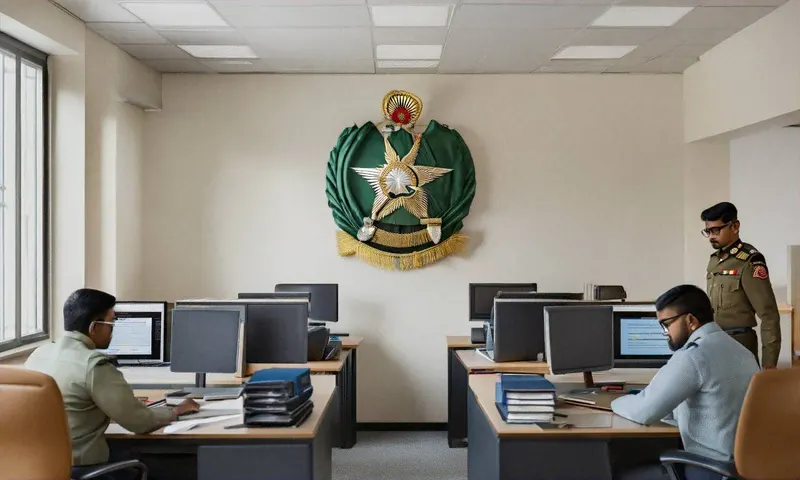
Not everyone who works for the Ministry of Defence wears a uniform. There are lakhs of civilian positions across defence establishments in India, and for someone looking for a stable government job with reasonable pay and benefits, these posts are worth serious attention.
The defence civilian workforce keeps military installations running. Clerks process service records and pay slips at regimental headquarters. Storekeepers manage ammunition inventories at ordnance depots. Firemen protect air bases and ammunition dumps. Mechanics maintain vehicles at Army workshops. Lab technicians work at DRDO research facilities. Stenographers take dictation at command offices. None of these people carry weapons or go to the border. They are central government employees, drawing salaries under the 7th Pay Commission, with standard government benefits. And yet most job seekers don't think about defence civilian posts because the recruitment process is scattered and the notifications don't always get the visibility they deserve.
This article covers the main types of posts, who recruits for them, what you need to qualify, and -- just as importantly -- where to actually find the notifications when they come out.
Multi-Tasking Staff (MTS)
MTS is the most basic entry-level position in the defence civilian structure. The job involves maintenance of office premises, carrying files and papers, photocopying, cleaning, and general support work. You need a Class 10 pass from a recognised board. That's it for the educational qualification. The age limit is generally 18 to 25 years, with standard relaxations for SC (5 years), ST (5 years), OBC (3 years), and PwBD (10 years).
From what the data shows, mTS falls in Level 1 of the 7th CPC Pay Matrix with a starting basic pay of 18,000 rupees per month. With Dearness Allowance, HRA, and Transport Allowance, the gross monthly salary comes to roughly 22,000 to 28,000 rupees depending on the city of posting. That may not sound like a lot. But consider what comes with it: job security, government medical facilities at military hospitals, access to CSD canteen, and eventual pension or NPS benefits. For someone with a Class 10 qualification in a tier-2 or tier-3 city, that package is competitive.
MTS positions exist in virtually every defence office -- station headquarters, command headquarters, unit offices, depot offices, and base workshops. They are recruited either through the Staff Selection Commission (SSC MTS exam) or directly by individual military units through local advertisements.
Lower Division Clerk (LDC) and Upper Division Clerk (UDC)
Based on the figures available, lDC handles typing, data entry, file management, and basic administrative support. The qualification is Class 12 pass plus a typing speed of 35 words per minute in English or 30 words per minute in Hindi on a computer. The pay is Level 2 -- basic of 19,900 rupees per month. Gross monthly salary ranges from 25,000 to 32,000 rupees.
As things stand right now, uDC is a step above. The work involves drafting correspondence, noting on files, handling section-level financial matters, and supervising LDCs. UDC is usually filled through promotion from LDC. But direct recruitment happens too, and for that you need a Bachelor's degree plus typing proficiency. UDC sits in Level 4 -- basic of 25,500 rupees. Gross comes to about 32,000 to 42,000 per month.
Both LDC and UDC positions are available in army, navy, and air force offices as well as defence research labs and ordnance establishments. SSC conducts the Combined Higher Secondary Level (CHSL) exam for LDC posts across all central government departments including MoD. Defence-specific LDC vacancies are also sometimes advertised by individual units separately.
Stenographer
If the current trend holds, stenographers work in the offices of senior officers -- commanding officers, brigadiers, major generals, and above. The job involves shorthand dictation, transcription, and general secretarial functions. Grade II requires Class 12 pass with a shorthand speed of 80 WPM in English or Hindi and typing speed of 40 WPM English or 35 WPM Hindi. The pay is Level 4 (25,500 basic). Grade I stenographers draw Level 6 pay.
Steno positions in defence establishments are recruited partly through SSC (the Stenographer exam) and partly through direct recruitment by individual military formations. The skill test for steno is a real filter. Many candidates clear the written exam but fail the shorthand test because they haven't practised enough under timed conditions. If you're preparing for a steno vacancy, practise dictation daily. Not once a week. Daily.
Fireman and Defence Fire Service
This is one of the more interesting civilian positions in defence because it involves genuine physical work and real operational duties. Defence firemen protect military installations -- ammunition depots, aircraft hangars, fuel dumps, ordnance factories, and naval dockyards. These are high-risk environments where fire can mean not just property damage but explosions.
The qualification is Class 10 pass with a valid heavy vehicle driving licence. Physical standards are strict: minimum height of 165 cm, chest of 81 cm, and you must be able to run 1.6 km in 6 minutes. The selection includes a physical endurance test, a written exam, and a driving test. Fireman posts are in Level 2 of the Pay Matrix (19,900 basic) with an additional risk allowance for firefighting duties.
Fireman recruitment is typically done directly by the specific defence establishment -- an ordnance factory, an air force station, or a naval base. The advertisements appear in Employment News and sometimes in local newspapers. If you live near a military installation, watch for these notifications at the station notice board as well.
Tradesman and Tradesman Mate
Tradesmen are the hands-on workers in defence workshops and factories. Fitter, turner, welder, electrician, carpenter, painter, mason, plumber -- these are the trades that keep military equipment maintained and military infrastructure standing. You need an ITI certificate in the relevant trade. Tradesman Mate is the helper category and requires only Class 10 pass.
Pay for tradesmen is Level 2 or Level 3 depending on the trade and establishment -- basic pay of 19,900 to 21,700 rupees. The work is physical and practical. If you have an ITI diploma and you're looking for a government job that uses your skills, defence tradesman positions are ideal. They're available at Army base workshops, ordnance depots, MES construction units, and defence PSU factories.
Selection usually involves a written test on general subjects plus a trade test -- a practical demonstration of your skills in the relevant trade. In some cases, ITI certificate holders are exempt from the trade test.
Technical Posts: Lab Assistants, Store Keepers, Draughtsmen
Defence establishments also recruit for several technical positions that don't fall neatly into the categories above. Laboratory Assistants work in DRDO labs and military hospitals, assisting scientists and doctors with research and testing. Store Keepers manage inventories at ordnance depots and supply depots, tracking everything from spare parts to rations to ammunition. Draughtsmen work in MES offices and design departments, preparing technical drawings for military construction projects.
These posts typically require Class 12 with Science or a diploma in the relevant discipline. The pay varies -- mostly Level 2 to Level 4 depending on the specific post and organisation. Selection involves a written test and sometimes a practical or skill assessment.
The Recruiting Bodies: Where These Jobs Come From
One of the frustrating things about defence civilian recruitment is that there's no single portal or agency that handles everything. The jobs are spread across multiple organisations, each with its own recruitment process and timeline. Here's where to look.
Individual Military Units and Formations recruit directly for many posts -- MTS, LDC, Fireman, Tradesman. The notification appears in Employment News and sometimes in regional newspapers. It names the specific unit (for example, "Station Headquarters, Meerut Cantt" or "HQ Central Command, Lucknow"). You apply by post or online as specified in the advertisement, directly to that unit. These notifications are easy to miss because they don't get the same publicity as large national exams. If you're serious about defence civilian jobs, subscribe to Employment News (available in print or at employmentnews.gov.in).
DRDO is a separate world. The Defence Research and Development Organisation operates over 50 labs across India, doing everything from missile development to food technology. DRDO recruits scientists through its own entrance exams, but it also hires technicians, lab assistants, administrative staff, and support workers. Scientific positions (Scientist B and above) are recruited through DRDO RAC (Recruitment and Assessment Centre). Technical positions like STA-B (Senior Technical Assistant), Technician-A, and similar roles are recruited through the DRDO Entry Test. Administrative positions -- stenographers, LDC, admin officers -- come through separate notifications. Check drdo.gov.in and the DRDO RAC portal regularly.
Bharat Electronics Limited (BEL) is a Navratna defence PSU based in Bengaluru that makes radar systems, communication equipment, electronic warfare systems, and avionics. BEL recruits engineers, technicians, and support staff for its units in Bangalore, Ghaziabad, Pune, Hyderabad, Chennai, Kotdwara, Panchkula, Navi Mumbai, and Machilipatnam. Graduate engineer trainees, diploma technicians, ITI tradesmen, and experienced professionals are hired through notifications on bel-india.in. BEL jobs are competitive -- the brand carries weight and the salaries for a defence PSU are good. Keep an eye on the careers page of bel-india.in.
Hindustan Aeronautics Limited (HAL) is a Maharatna defence PSU that designs and builds military aircraft, helicopters, engines, and avionics. HAL divisions are in Bangalore, Nashik, Koraput, Kanpur, Lucknow, Korwa, and Hyderabad. The company recruits management trainees, design trainees, graduate apprentices, diploma technicians, and skilled workers. Notifications appear on hal-india.co.in. If you're an aerospace engineering graduate, HAL should be on your radar as a primary career target.
The restructured Ordnance Factories now operate under seven new defence PSUs created after the corporatisation of the Ordnance Factory Board in 2021. These entities make everything from small arms ammunition to tanks. They recruit industrial workers, chargemen, store keepers, and clerks. Notifications appear on the respective company websites and sometimes through common recruitment portals.
Military Engineering Services (MES) is the construction wing of the armed forces. MES builds and maintains military infrastructure -- cantonment buildings, airfields, roads, and installations. MES recruits civilian engineers, supervisors, draughtsmen, and works staff. Some positions are filled through SSC exams. Others are direct recruitment. The MES website and Employment News are the main sources for these notifications.
Staff Selection Commission (SSC) handles several defence-relevant exams. The SSC MTS exam covers Multi-Tasking Staff posts across central government departments including MoD. The SSC CHSL exam covers LDC, Postal Assistant, and similar posts. The SSC Stenographer exam covers steno Grade C and Grade D. If you clear the SSC exam for one of these posts, your allocation might be to a defence establishment depending on vacancies and your preference. Check ssc.nic.in for notification schedules and apply through the SSC portal.
The Selection Process
There's no single selection format. It varies by post and recruiter.
For posts recruited through SSC (MTS, CHSL, Steno), the selection involves the SSC exam -- an objective-type computer-based test covering reasoning, numerical aptitude, English, and general awareness. This is followed by a skill test for typing or shorthand as applicable. SSC exams are large national competitive exams with their own preparation requirements and timelines. The syllabus and pattern are well documented on ssc.nic.in and covered extensively in competition magazines and coaching material.
For posts recruited directly by military units, the process usually involves a written test conducted by the unit or formation. The test is simpler than SSC exams -- general knowledge, basic maths, English, and reasoning at the 10th or 12th standard level. For Fireman posts, a physical test comes first. For Tradesman posts, a practical trade test is part of the selection. Document verification and medical examination follow for shortlisted candidates.
For DRDO, BEL, and HAL, the selection involves their own entrance exams followed by interviews. DRDO's Scientist B exam (called GATE-based since the organisation uses GATE scores for engineering positions) is competitive at a national level. BEL and HAL conduct their own online tests for various categories. The syllabus and difficulty level are comparable to other PSU recruitment exams.
Practical Tips for Tracking Notifications
Defence civilian notifications don't always trend on social media. They appear in Employment News, which is published every Saturday, and on individual organisation websites. Here's a workable system for staying informed.
Subscribe to the digital edition of Employment News at employmentnews.gov.in. It costs a nominal amount and gives you access to every notification published by the Government of India, including unit-level defence vacancies that don't appear anywhere else.
Bookmark the careers or recruitment pages of drdo.gov.in, bel-india.in, hal-india.co.in, and ssc.nic.in. Check them once a week. Set a specific day -- say, every Monday -- and go through each site. Most notifications give at least two to three weeks for application. A weekly check ensures you don't miss anything.
If you live near a cantonment or military station, visit the station notice board periodically. Unit-level recruitment for MTS, Fireman, and Tradesman posts is sometimes advertised only on the unit notice board and in the local newspaper, not online. A physical visit once a month can turn up opportunities that internet searches miss entirely.
Be cautious about information from unofficial sources. WhatsApp groups and YouTube channels often circulate defence recruitment information with wrong dates, inflated vacancy numbers, or entirely fabricated notifications. Always verify by going to the official source before applying. If a notification asks you to send money to a personal bank account or pay a "processing fee" through an unofficial channel, it is a scam. Defence recruitment does not work that way.
Posting Locations and Transfers
Defence civilian employees can be posted at any military station in the country, though the initial posting is usually near the establishment that recruited you. Major cantonments like Delhi, Pune, Secunderabad, Ambala, Jalandhar, Jaipur, Kolkata, Lucknow, Chennai, Mhow, and Jammu are common posting locations. Employees at DRDO labs are posted at the lab location -- Hyderabad, Pune, Bangalore, Dehradun, Chandigarh, and several smaller cities. BEL and HAL employees are posted at the specific factory or unit they were recruited for.
Transfers within the defence civilian system are less frequent than transfers for uniformed personnel, but they do happen. An LDC recruited by a unit in Western Command could potentially be transferred to another establishment within the same command. Inter-command transfers are possible but rare. Employees posted in remote or hardship areas (like certain northern border stations) receive additional allowances.
The salary for defence civilian employees follows the same 7th Central Pay Commission structure as all central government employees. Beyond the basic pay and allowances discussed above for each post type, employees receive Dearness Allowance (revised twice a year based on the Consumer Price Index), House Rent Allowance (10 to 30 percent of basic pay depending on city classification), and Transport Allowance. Those with pre-2004 joining dates may be on the Old Pension Scheme. Post-2004 employees fall under the National Pension System. All employees and their families have access to medical care at military hospitals, which is a significant benefit given the quality of healthcare available at service hospitals and the cost savings compared to private medical care. CSD canteen access provides discounted consumer goods. Leave Travel Concession and group insurance are standard.
For someone looking for government employment within the defence establishment without the rigours of military life, these positions offer a genuine path. The work is regular, the pay follows a predictable increment structure, and the benefits -- particularly medical care and job security -- are difficult to match in the private sector at equivalent qualification levels.
Source: This article is based on official information from the Ministry of Defence, Employment News (Government of India), and the recruitment portals of DRDO (drdo.gov.in), BEL (bel-india.in), HAL (hal-india.co.in), and the Staff Selection Commission (ssc.nic.in).
Comments 0
Leave a Comment