Union Budget 2026-27: Key Highlights and Impact on Common Citizens of India
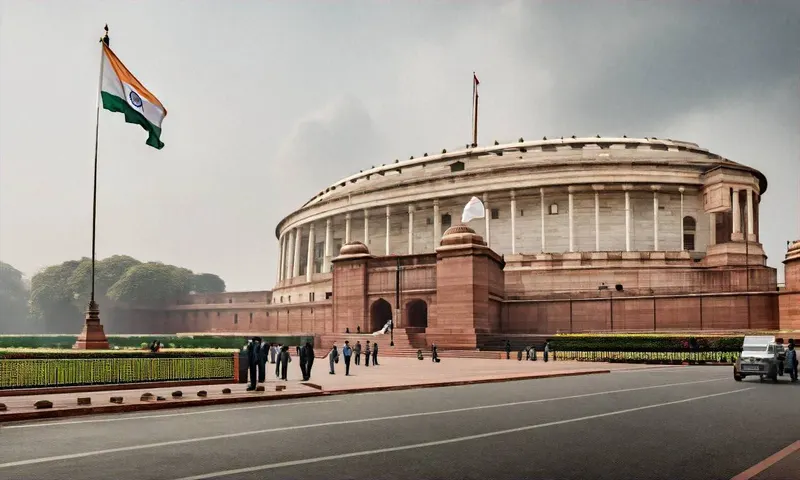
Budget day in India has its own rhythm. The Finance Minister walks into Parliament carrying the bahi-khata, television anchors spend all morning speculating about what might be announced, and roughly 140 crore people wait to hear whether their taxes go up, their subsidies get cut, or something actually changes for the better. On 1 February 2026, Finance Minister Nirmala Sitharaman presented the Union Budget 2026-27 -- her eighth consecutive budget, a record in itself. And this time, honestly, there were some genuine surprises buried between the expected announcements.
I sat through the full speech. Nearly two hours. My notes ran to eleven pages. What follows is my attempt to pull out everything that actually matters for ordinary people -- salaried workers, farmers, students, retirees, small business owners, job aspirants. Not the macroeconomic abstractions. The stuff that affects your bank account, your hospital visit, your child's school fees.
Infrastructure: 12 Lakh Crore and What It Actually Means
The headline number is staggering. Twelve lakh crore rupees for capital expenditure on infrastructure. That's a 15 percent jump from last year, and to put it in perspective, India's entire GDP was around 300 lakh crore in FY25. So roughly 4 percent of the total economy is being pumped into building things -- roads, railways, metros, ports, airports, power grids.
Sounds impressive on paper. But where does the money actually go?
Railways got the biggest single-sector allocation at 2.8 lakh crore rupees. Track expansion, electrification of the remaining diesel routes (they're targeting full electrification by March 2027 now), and a fresh order of Vande Bharat Express trainsets for regional routes. If you've taken a Vande Bharat, you know they're genuinely good -- clean, fast, comfortable. Extending that experience to more tier-2 and tier-3 city routes is welcome. Whether the railways can actually absorb this much capital spending without bottlenecks in execution is another question. They've struggled with land acquisition delays and contractor capacity in the past. More money doesn't automatically mean faster delivery.
NHAI gets enhanced funding for 25,000 kilometres of new national highways. I'll be watching the Bharatmala Pariyojana progress here because the first phase was supposed to be done by 2022 and it's still not complete. New highway allocations mean nothing if the completion rate doesn't improve. That said, the pace has genuinely picked up in the last two years. India built over 28 kilometres of national highway per day in FY25 -- a real number, not a target on a slide.
Urban infrastructure got two major allocations. Smart Cities Mission 2.0 received 18,000 crore rupees, which I think will generate debate because the first Smart Cities Mission had a pretty mixed track record -- some cities used the funds well, others barely spent them. Metro Rail expansion across 27 cities got 45,000 crore, with new corridors approved for Lucknow, Patna, and Bhopal. For people living in these cities, that's potentially life-changing. A working metro cuts commute times by 40-60 percent in most cases. But again, metro construction takes five to seven years from approval to operation, so don't expect to ride these anytime soon.
"This budget lays the foundation for India's infrastructure to match global standards by 2030. Every rupee invested in infrastructure today will generate multiple returns in economic growth and employment creation." - Finance Minister's Budget Speech, 2026
Standard budget speech stuff, but she's probably right about the employment part. Infrastructure projects are the single largest generator of blue-collar jobs in the country. Every crore of road construction spending creates roughly 30-35 direct jobs. Multiply that by 12 lakh crore and you get a sense of the employment potential, even after accounting for the fact that not all of it goes to labour-intensive projects.
Income Tax Changes: The Part Everyone Actually Cares About
Let's be real. Most people skip the infrastructure section and jump straight to taxes. And this year, the tax section delivered.
Under the new tax regime -- which is now the default for everyone, remember, you have to actively opt into the old regime -- here's what changed:
- The basic exemption limit went up from 3 lakh to 4 lakh rupees. If you earn under 4 lakh a year, you pay zero income tax.
- Standard deduction for salaried people jumped from 75,000 to 1 lakh rupees. That's 25,000 more of your income that isn't taxed.
- The 5 percent slab now covers income from 4 lakh to 8 lakh. Previously, income between 6 lakh and 9 lakh was taxed at 10 percent. Big difference.
- The 30 percent surcharge threshold was raised to income above 5 crore rupees -- only affects the very wealthy, but still worth noting.
So what does this translate to in actual rupees saved? If you earn 12 lakh per year, your total tax saving compared to last year's structure is roughly 25,000 rupees. That's about 2,000 per month. Not life-changing, but not nothing either -- it covers a couple of months of cooking gas or a decent chunk of your phone and internet bills for the year.
For people earning between 8 and 15 lakh -- which is a huge chunk of the urban salaried class -- the savings range from 15,000 to 30,000 rupees annually. Above 15 lakh, the marginal benefit tapers off because the higher slabs weren't touched much.
One thing I want to flag. The new regime still doesn't allow most deductions -- no 80C, no HRA, no home loan interest deduction under Section 24. So if you have a home loan, heavy insurance premiums, or significant PPF/ELSS investments, do the math before defaulting to the new regime. For some people, the old regime with its deductions still works out better. I ran the numbers for a few scenarios: if your total deductions under the old regime exceed about 4 lakh rupees, you might still want to stick with it. Your CA can tell you for sure.
Healthcare: 98,000 Crore for Health -- But Is It Enough?
The Ministry of Health and Family Welfare got 98,000 crore rupees. Sounds like a lot until you realise that India's total public health spending is still under 2.5 percent of GDP, well below the 3 percent target the government itself set in the National Health Policy. Most developed countries spend 6-10 percent. We're nowhere close.
That said, some specific announcements are genuinely significant.
The expansion of Ayushman Bharat PM-JAY to cover all citizens above 70, regardless of income, is probably the single most impactful welfare announcement in this budget. Previously, Ayushman Bharat only covered families identified through the SECC 2011 database -- roughly the bottom 40 percent by income. Now every senior citizen over 70 gets Rs 5 lakh health cover per year. India has roughly 10.4 crore people above 70. That's a lot of new beneficiaries, and hospital costs for this age group are the highest. I'm curious how the government plans to fund the increased claims, because the budget document doesn't spell out the additional premium outlay very clearly.
1,500 new Health and Wellness Centres in underserved rural areas, all with telemedicine facilities. India already has about 1.65 lakh HWCs operational. Adding 1,500 is incremental, not transformational, but telemedicine is the interesting part. If a village HWC can connect a patient to a specialist in a district hospital via video call, that genuinely reduces the need for long, expensive trips. Whether the broadband connectivity in these areas can actually support video consultations is the practical question nobody in Parliament asked.
The National Cancer Grid Programme with 200 new district-level cancer care centres is new. Cancer treatment in India is overwhelmingly concentrated in metro cities. If you get diagnosed in a district like Guna or Deoghar, your options are basically to travel to Delhi, Mumbai, or another big city -- and most families can't afford that. Bringing at least basic cancer screening and early-stage treatment to district level could save lives. But 200 centres across the country, planned over three years, means roughly 65-70 per year. India has 780 districts. So full coverage is still far away.
Mental health got 2,500 crore rupees with a focus on school and workplace counselling. I'm glad this is even in the budget because five years ago, mental health didn't appear in the budget speech at all. Whether 2,500 crore is enough for a country of 140 crore people is debatable -- probably not -- but it's a start. The school counselling component matters because early intervention in adolescence can prevent a lot of chronic mental health issues later.
And 40 new government medical colleges in underserved districts. India currently has around 780 medical colleges total (government and private). Adding 40 more government ones, specifically in districts that don't have any, will increase MBBS seats and eventually improve doctor availability in those areas. The "eventually" is important. A medical college takes 3-5 years to build, and a doctor takes 5.5 years to produce. So the impact of this announcement will show up around 2034-2035. Long game.
Education: 1.25 Lakh Crore and the Skills Push
Education got 1.25 lakh crore. The NEP 2020 implementation continues to be the framework, though honestly, implementation has been slower than the policy document suggested it would be.
The research push is interesting. 100 Centres of Excellence across universities for research. India's problem with research isn't really funding at the top -- IITs and IISc do fine. The problem is that the average state university has almost zero research infrastructure. If these Centres of Excellence actually go to state universities and not just the usual suspects, that could change things. The budget document doesn't specify which universities. I suspect IITs and central universities will grab most of them. Hope I'm wrong.
Skill India 2.0 will train 10 lakh youth in emerging technologies -- AI, quantum computing, semiconductor design. On paper, this is exactly what the job market needs. India's IT sector is moving towards AI-driven services, and there's a genuine skills gap. The semiconductor push ties in with the fab projects at Dholera and elsewhere. Training people now means they'll be ready when the fabs start operating in 2027-28. The execution question is the usual one: who does the training, what's the quality, and do employers actually recognise these certifications?
The Digital University expansion and 50,000 additional scholarships through the National Scholarship Portal are both incremental improvements. Not dramatic, but useful. The scholarship expansion specifically targets economically weaker sections, which should help some first-generation college students who would otherwise drop out over fees.
Agriculture: MSP, PM-Kisan, and the Natural Farming Bet
Agriculture got 1.32 lakh crore. MSP for major kharif and rabi crops goes up by 5-8 percent. That's roughly in line with cost increases, so farmers aren't really gaining ground -- they're keeping pace. The PM-Kisan amount stays at Rs 6,000 per year. I know many farmers were hoping for an increase to Rs 8,000 or Rs 10,000. It didn't happen. Six thousand a year works out to Rs 500 a month. With current fertiliser and diesel prices, that covers maybe two days of operational costs per month for a marginal farmer. Not nothing, but not much either.
The Agricultural Infrastructure Fund expansion -- additional 20,000 crore for cold storage, warehousing, and food processing -- is where the real long-term value is. India wastes an estimated 15-20 percent of its fruit and vegetable production because of inadequate cold chain infrastructure. If even a fraction of this money creates functioning cold storage at the mandi level, it could reduce post-harvest losses and give farmers better prices for perishable produce. I've visited a few of the AIF-funded cold storage units in Madhya Pradesh, and they're well-built and actually being used. Scale is the issue -- there aren't enough of them yet.
The Natural Farming Mission is the wildcard. Converting 1 crore hectares to natural farming by 2028 is ambitious. Natural farming means no chemical fertilisers, no pesticides -- essentially organic but with specific Indian practices like jeevamrit and beejamrit. Andhra Pradesh has been running a large-scale natural farming pilot, and the results are mixed. Yields drop initially before stabilising, and the transition period is financially painful for farmers who depend on every harvest. If the government provides adequate transition support and guaranteed procurement for naturally farmed produce, this could work. Without that support, many farmers will quietly go back to chemicals.
Crop insurance premium subsidies under PM Fasal Bima Yojana were enhanced, though the budget didn't specify by how much. PMFBY has been controversial since launch -- insurance companies have made healthy profits while many farmers report that claims take months to process and payouts are often less than expected. More premium subsidy is helpful, but the real fix needs to be in claims processing and payout timelines.
Digital Economy: Where India Wants to Go Next
Digital India 2.0 got 15,000 crore. India Semiconductor Mission got 10,000 crore. National AI Mission got 5,000 crore. These are the three tech bets in this budget.
The semiconductor money is part of the larger story I covered in my Make in India manufacturing piece. India is building its first commercial semiconductor fab at Dholera in Gujarat. Ten thousand crore this year probably goes towards the fab construction, clean room equipment, and the training infrastructure around it. Whether India can actually manufacture chips competitively is still an open question, but the investment is being made and the geopolitical window for it is real.
The AI Mission at 5,000 crore seems small compared to what the US and China are spending, but India's advantage isn't in building foundation models from scratch -- it's in deploying AI across government services, agriculture, healthcare, and education at scale. If this money goes toward practical deployment rather than vanity research projects, it could have outsized impact. Think AI-assisted crop disease detection for farmers, AI-driven diagnostic support at rural health centres, automated document processing for government services. India has the data and the use cases. Funding is the part that's been missing.
The unified digital identity system expansion is less exciting to read about but probably more impactful than anything else in this section. The idea is that your Aadhaar, PAN, driving license, voter ID, and various government scheme registrations all become accessible through one platform. If this actually works -- and that's a genuine "if," because past attempts at interoperability between government databases have been patchy -- it could drastically reduce the paperwork and running around that citizens currently endure for basic government services.
What This Means for Different People
If you're salaried and earning 8-15 lakh per year, this budget is reasonably good for you. Tax savings of 15,000-30,000 rupees annually, plus the potential benefit of improved healthcare coverage for your elderly parents through the expanded Ayushman Bharat. Check whether the new regime or old regime works better for your specific situation before filing your returns.
If you're a farmer, the MSP hike keeps you roughly at par with rising costs but doesn't improve your position. PM-Kisan staying at Rs 6,000 is disappointing. The cold storage and food processing infrastructure push could help over the next 2-3 years if you grow perishable crops. Keep an eye on AIF-funded facilities coming up in your district.
If you're a student or job aspirant, the Skill India 2.0 programmes in AI and semiconductor design are worth looking into -- these are high-demand fields. The 50,000 new scholarships through NSP are relevant if you're from an economically weaker background. For government job aspirants specifically, the massive infrastructure spending means continued recruitment in railways, NHAI, power sector, and construction-adjacent departments. The 40 new medical colleges will generate teaching and administrative positions over the coming years.
If you're a senior citizen, the Ayushman Bharat expansion to all citizens over 70 is the biggest news. Get enrolled. Rs 5 lakh of hospital cover per year, completely free, regardless of your income level. That's genuine financial protection against catastrophic medical bills.
If you run a small business, the budget didn't have much specifically for MSMEs this time, which some industry groups have criticised. The broader infrastructure spending creates downstream opportunities for contractors, suppliers, and service providers. But direct MSME credit support or tax relief was missing from this budget.
The Bigger Picture
I think this is a workmanlike budget. Not flashy, not dramatic, but solid in most areas. The tax relief is real, the infrastructure spending is massive, the healthcare expansion is meaningful. Where I'm less convinced is on the agriculture side -- Rs 6,000 PM-Kisan just isn't enough anymore, and MSP hikes that merely match cost increases don't improve farmer income in real terms.
The fiscal deficit target is 4.5 percent of GDP. Whether the government can hit that while spending 12 lakh crore on infrastructure depends heavily on tax collection growth, which has been strong recently but isn't guaranteed. If revenue falls short, something has to give -- either the deficit widens or spending gets quietly curtailed in the second half of the year. That's happened before.
For most of us, the immediate impact is the tax change. You'll see it in your next salary slip. Everything else -- the highways, the hospitals, the metros, the cancer centres -- takes years to materialise. But the money has been earmarked, and in government spending, the allocation is the first step. Execution is the hard part, and that's where we'll need to keep watching.
Source: This article is based on information from the Union Budget 2026-27 documents presented in Parliament and the Press Information Bureau (PIB) official release dated 1 February 2026.
Comments 0
Leave a Comment