Make in India 2026: India's Manufacturing Sector Growth, PLI Scheme Impact, and New Industrial Corridors
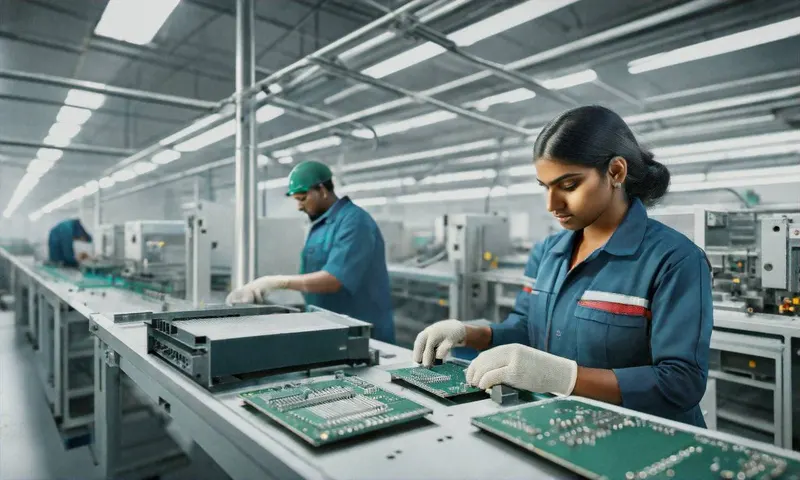
I spent the better part of January and February visiting factories. Not the kind you see in government brochures -- the gleaming, freshly painted ones with ministers cutting ribbons. I went to the ones that smell like solder flux and machine oil, where the floor vibrates under your feet from the conveyor lines running three shifts, where the canteen chai is always too sweet and the parking lot is full of worker buses at 6 AM.
The DPIIT annual review came out on 20 February. Manufacturing growth at 12.3 percent for FY 2025-26. Highest in a decade. I believe the number. But I also know that a number on a government PDF does not tell you what it actually feels like when a country tries to industrialize at speed. For that, you have to go stand on the factory floor.
So that is what I did. Four states, nine factories, dozens of conversations with line workers, floor managers, company directors, and one very frustrated PLI applicant whose story I will get to later.
Inside the Noida-Greater Noida electronics belt
Last month I was in Noida's electronics corridor -- the stretch along the Yamuna Expressway between Sector 63 and Greater Noida -- and if you have not been there recently, you would not recognize it. What used to be mostly real estate showrooms and half-built apartment towers five years ago is now a dense cluster of electronics manufacturing units. You can see it from the expressway: company after company, their logos on identical-looking factory buildings, separated by service roads packed with cargo tempos.
I spent a full day at a Dixon Technologies plant in Sector 63. Dixon is not a brand most consumers know, but they are one of India's largest contract electronics manufacturers. They make phones for Samsung and Xiaomi, LED TVs, washing machines, LED bulbs -- basically, if an Indian brand sells electronics and does not have its own factory, Dixon probably makes it for them.
The phone assembly floor is loud. Not deafening, but a constant hum -- the whir of pick-and-place machines placing tiny components on PCBs, the click-hiss of soldering stations, the beep of quality testing rigs at the end of each line. The air has that particular warm, slightly acrid smell that comes from solder paste being heated. If you have ever been inside a phone repair shop, multiply that smell by a thousand.
Ramesh, a line supervisor who has been with Dixon for four years, walked me through the SMT (surface mount technology) line. He pointed at a row of machines from Yamaha and Fuji -- Japanese equipment, each one costing several crores. "Pehle yahan pe sirf assembly hoti thi," he told me. "Phone ka board bahar se aata tha, hum bas usko case mein fit karte the. Ab hum board yahan bana rahe hain. SMT se lekar testing tak, sab idhar." (Earlier, only assembly happened here. The phone board came from outside, we just fit it in the case. Now we make the board here. From SMT to testing, everything is done here.)
That shift -- from screwdriver assembly to actual PCB manufacturing -- is the real Make in India story in electronics. India now manufactures over 320 million smartphones a year. We are the second largest mobile phone manufacturer in the world. Exports crossed 1.6 lakh crore in FY 2025-26. These are facts.
But here is what the numbers do not capture. I asked Ramesh how many of the components on that PCB were actually made in India. He laughed. "Chipset? Taiwan. Memory? Korea. Display driver IC? China. Camera sensor? Japan or Korea." He ticked them off on his fingers. "Passive components -- resistors, capacitors -- kuch Indian hain, kuch nahi. Battery cell is Chinese. The display panel comes from Vietnam or China."
So what is Indian? "Assembly. Testing. The PCB itself -- we do the bare board here now, that is new. The plastic casing, the packaging, the charger, the cable. Maybe 15-20 percent by value is Indian."
This matches what industry analysts have been saying. India's electronics manufacturing output has crossed 12 lakh crore -- double what it was five years ago. But the domestic value addition in smartphones is still only about 15-20 percent. The component ecosystem is growing, with over 200 component manufacturers now operating in India, but the high-value parts -- the semiconductors, the display panels, the memory chips -- are still imported.
What the PLI actually did for electronics
The 47,000 crore electronics PLI worked. I am not going to hedge on this. It pulled Apple's supply chain into India. Foxconn's Sriperumbudur plant, Tata Electronics (which absorbed the old Wistron operation), Pegatron -- none of them would have come without PLI incentives making the math work against Chinese costs. About 20 percent of global iPhones now ship from Indian factories.
But PLI worked for the big boys. I talked to Anil Mehta, who runs a mid-sized electronics firm in Noida that makes set-top boxes and smart meters. He applied for PLI in 2021.
"I spent fourteen months just on the application," he told me over lunch at a dhaba near his factory. "The documentation they wanted -- three years of audited financials in a specific format, technology transfer agreements, investment commitment schedules broken down by quarter. I hired a consultant for eight lakhs just to fill the forms. Then it went to a committee. Then another committee. Then they asked for revised projections. By the time I got approved, the investment timeline they had given me was already half over."
He paused, stirring his dal. "Bade companies ke paas dedicated teams hoti hain yeh sab karne ke liye. Mere paas accounts mein teen log hain." (Big companies have dedicated teams for all this. I have three people in my accounts department.)
Mehta eventually got his PLI approval and has been meeting targets. But his story is common. The PLI scheme, for all its success, was designed for companies doing hundreds of crores in revenue. The mid-tier manufacturer -- the kind that actually forms the backbone of industrial ecosystems in China, Taiwan, and South Korea -- found the paperwork brutal.
I walked through Samsung's plant in Sriperumbudur
The Sriperumbudur corridor outside Chennai is different from Noida. Where Noida is a jumble of factories mixed in with commercial buildings, Sriperumbudur is purpose-built industrial. Wide roads between factory compounds, proper drainage, dedicated power feeders. The Tamil Nadu government invested heavily in this infrastructure years ago and it shows.
Samsung's plant here is massive. I was not allowed to photograph much of the production floor -- they are particular about that -- but what struck me was the scale of the operation. Row after row of assembly lines stretching into the distance, each one staffed by workers in blue uniforms and anti-static wristbands. The plant makes Samsung phones for the Indian market and for export to the Middle East and parts of Africa.
Fatima, who operates a pick-and-place machine on the SMT line, is 24 and from Kancheepuram. She told me she earns about 18,000 rupees a month after overtime. "Yahan pe 3 shift chalti hai," she said. "Main second shift pe hoon, dopahar 2 se raat 10." (Three shifts run here. I am on the second shift, 2 PM to 10 PM.) She completed an ITI course in electronics before joining. I asked if the training had prepared her for this work. She shrugged. "Kuch toh kaam aaya. Baaki sab yahan seekha." (Some of it was useful. Learned the rest here.)
Fatima's story is repeated across tens of thousands of workers in Sriperumbudur. The corridor employs over a lakh people directly across Foxconn, Samsung, Tata Electronics, Pegatron, and the component manufacturers clustered around them. Many are young women from nearby towns. The work is repetitive but steady. The factories are air-conditioned -- not for the workers' comfort but because electronics assembly needs controlled temperature and humidity. Still, the workers benefit.
The factory that shut down
Not every Make in India story is a success story, and I think it is important to talk about the failures because they tell you as much as the wins.
In 2022, a company I will call Vikrant Electronics -- I am not using the real name because the promoter asked me not to, and the matter involves ongoing bank disputes -- set up a charger and cable manufacturing unit in Bhiwadi, Rajasthan. The promoter, a first-generation entrepreneur named Suresh who had previously run a small trading business in Jaipur, saw the Make in India push and decided to get into manufacturing. He invested about 7 crores, mostly borrowed from a public sector bank and from family.
The factory started production in early 2023. Twenty workers. Making USB cables and phone chargers for third-tier phone brands and the replacement market.
"First six months were okay," Suresh told me when I visited the now-shuttered factory. The building is still there, on an industrial plot off the Bhiwadi-Alwar road. The equipment is inside, covered in dust sheets, locked up because the bank has a lien on it. "Orders were coming. Quality was acceptable. I was even talking to a Korean company about becoming a supplier for their cables."
Then a few things happened at once. The price of copper wire -- a major raw material for cables -- jumped 30 percent because of global commodity movements. His biggest customer, a Chinese phone brand's Indian distributor, switched to a cheaper supplier in Guangdong. "They told me straight -- Vikram bhai, aapka cable 22 rupaye ka hai, China se 14 mein aa raha hai." (Your cable is 22 rupees, it is coming from China for 14.) And his bank loan EMI, which had a floating rate, went up after the 2023 rate hikes.
He held on for a year, burning through whatever cash he had. Applied for an MSME emergency credit line under one of the government schemes. Got approved, but the disbursement took four months. By then, two more customers had left. He shut the factory in March 2024.
"Make in India is real for Foxconn and Tata," he said. "Mere jaise chhote aadmi ke liye? Subsidy milti nahi, loan mehnga hai, customer ko sirf price chahiye. Aur China se sasta kaise banayein?" (For small people like me? Subsidies do not come, loans are expensive, customers only want price. And how do I make it cheaper than China?)
Suresh's factory is a reminder that the Make in India story has casualties. The PLI helped the top tier. The credit guarantee schemes helped some of the middle tier. But the small manufacturer competing directly against Chinese imports on price -- that person is still struggling. The government's BIS quality control orders, which mandate Indian standards for imported goods, have helped by blocking the cheapest Chinese junk. But for standardized commodities like cables and chargers, the price gap is still too wide for many small Indian manufacturers to survive.
Pharma -- what I saw in Hyderabad and what the numbers say
I did not spend as much time on pharma as I did on electronics, so I will be upfront about that. I visited one bulk drug facility near Visakhapatnam -- one of the three government-backed bulk drug parks -- and spoke to a couple of pharma industry contacts in Hyderabad by phone.
The headline numbers are solid. India's pharma output is around 5.5 lakh crore this year. Exports crossed 2.3 lakh crore. The API dependency on China has dropped from 68 percent to about 42 percent. That last number matters more than the others because it is about supply chain survival. During COVID, when Chinese supply chains locked up, Indian pharma companies were scrambling. That cannot happen again.
The Visakhapatnam bulk drug park is operational and it is producing key intermediates -- the chemical building blocks for APIs -- that India used to import from Wuhan and Zhejiang. I talked to one plant manager there, Venkat, who walked me through a production line making para-aminophenol, a precursor for paracetamol. The plant smelled strongly of chemicals -- a sharp, clinical smell that sticks to your clothes. Workers wore full PPE, which is good, though I noticed some of the safety signage was in English only, not Telugu, which seemed like an oversight for a workforce that is mostly local.
"Three years ago, only Chinese companies made this at scale," Venkat said. "Ab hum bana rahe hain. Cost thoda zyada hai, 8-10 percent maybe, but the government is absorbing some of that through PLI." (Now we are making it. Cost is slightly higher, 8-10 percent maybe.)
That cost gap is the thing to watch. Government incentives are bridging it now, but PLI is time-limited. If domestic API manufacturers cannot reach cost parity with China by the time incentives expire, we could slide right back to dependency. Some pharma executives I talked to are confident they will get there through scale. Others are less sure.
Defence production -- the sector I know least about
I am going to be honest: I did not visit any defence manufacturing facilities for this piece. Access is difficult, the clearance process takes weeks, and my focus this time was electronics and pharma. So what I have on defence is from the DPIIT data, official releases, and conversations with two industry contacts.
The numbers are impressive on paper. Defence production at 1.5 lakh crore. Exports at 25,000 crore, up from 1,500 crore five years ago. BrahMos being exported to the Philippines and Indonesia. The Tejas Mark 1A being inducted by the Indian Air Force. Private sector players like Tata Advanced Systems, L&T, Bharat Forge, and Adani Defence all building real capacity.
What I find credible about these numbers is that they come with specific, verifiable products. A BrahMos missile that gets shipped to Manila is a real thing you can track. A Tejas aircraft flying in IAF service is not a PowerPoint slide. And the government's mandate that 75 percent of defence procurement must be domestic has created a captive market that gives manufacturers revenue certainty -- which is what you need to justify capital expenditure on facilities.
What I am less sure about is the depth of indigenous technology. A lot of what gets counted as "Made in India" in defence involves foreign design, licensed production, or assembly of imported subsystems. That is still better than outright import, because it builds capability and creates jobs. But it is not the same as designing and building from scratch. The true test will be programs like Tejas Mark 2, the Advanced Medium Combat Aircraft, and the indigenous submarine projects. Those are still years away from operational status.
The semiconductor question
I did not visit Dholera for this trip. The Tata-PSMC semiconductor fab is under construction, and construction sites do not tell you much about whether the fab will actually work. I have been to the site once before, in mid-2025, and it was enormous -- hundreds of acres being leveled and built up, a dedicated water treatment plant going in, power infrastructure being laid. The scale of investment is genuine. 76,000 crore for the India Semiconductor Mission overall, with the Dholera fab being the centerpiece.
They are building a 28nm/40nm fab. Not the most advanced by global standards -- TSMC is at 2nm now -- but suitable for automotive chips, industrial controllers, IoT devices, and other applications where you do not need the latest node. The plan is production by late 2026 or early 2027.
Will it work? I genuinely do not know. Nobody does. Semiconductor fabrication is probably the hardest manufacturing process on earth. The clean rooms need to be a thousand times cleaner than a hospital operating theatre. The equipment comes from a handful of global suppliers -- ASML, Applied Materials, Lam Research, Tokyo Electron -- and lead times are long. The talent pool for running a fab does not exist in India today; it has to be trained, partly by Taiwanese engineers from PSMC.
Micron's OSAT (assembly and testing) facility in Gujarat is less risky and closer to completion. Assembly and testing is a known quantity -- India has the skills for it. But it is also lower in the value chain than fabrication.
I am cautiously hopeful about semiconductors but I would not bet my house on the Dholera fab hitting its timeline. If it does, it will be a genuinely historic achievement. If it slips by a year or two, that would still be within normal range for fab construction globally.
What PLI paperwork actually looks like
I want to spend some time on this because I think the bureaucratic reality of Make in India gets glossed over in the success stories.
I got my hands on a PLI application package from a mid-sized auto components manufacturer. The company applied under the auto PLI and was eventually approved. The application alone ran to over 400 pages. I am not exaggerating -- I held the printed copy. It included:
- Three years of audited financial statements with specific formatting requirements
- A detailed project report with year-by-year production projections for five years
- Technology transfer documentation and equipment procurement plans
- Land ownership or lease documents, environmental clearances, state government NOCs
- Employment generation projections broken down by skill category
- Bank sanction letters for the proposed investment
- A "detailed incremental investment plan" that had to be submitted in a specific Excel template that kept crashing because it had macros incompatible with newer versions of Excel
The company's CFO told me that preparing this took a team of three people about five months, plus a consulting firm they paid 12 lakhs. "And this is just the application," he said. "The quarterly compliance reporting is another headache. Every quarter, we have to submit production data, investment proof, employment records, all in their format. If there is any discrepancy, the incentive disbursement gets delayed."
He mentioned that one quarter, the disbursement was delayed by three months because a junior official found a discrepancy between their GST filing and their PLI production report. The discrepancy was because the GST system categorizes certain products differently than the PLI guidelines. "Same product, different classification. It took two months of back-and-forth with letters and clarifications to resolve." The company eventually got its incentive, but the cash flow gap hurt.
This is what it is like for a company with a finance team and consultants. Imagine what it is like for Anil Mehta with three people in accounts.
The ground-level numbers
Here is a summary of where things stand across the sectors I have been tracking, based on DPIIT data and my own reporting:
| Sector | PLI Outlay | Investment So Far | FY26 Output | Direct Jobs Created |
|---|---|---|---|---|
| Electronics / IT Hardware | 47,000 Cr | ~6,500 Cr | 12 Lakh Cr+ | ~2.5 Lakh |
| Pharma / Bulk Drugs | 21,940 Cr | ~18,000 Cr | 5.5 Lakh Cr | ~75,000 |
| Automobiles / Auto Components | 25,938 Cr | ~25,000 Cr | N/A (multi-segment) | ~90,000 |
| Textiles (MMF / Technical) | 10,683 Cr | ~12,500 Cr | N/A | ~2.4 Lakh |
| Defence | Various (Buy Indian mandate) | Major pvt sector entry | 1.5 Lakh Cr | Not separately tracked |
| Food Processing | 10,900 Cr | ~8,500 Cr | Growing 15-18% YoY | ~60,000 |
| Semiconductors | 76,000 Cr (ISM) | Under construction | Zero (pre-production) | ~5,000 (construction phase) |
Total PLI-linked direct jobs across all 14 sectors: roughly 8 lakh. Indirect jobs in supply chains, logistics, canteens, transport, security: maybe 25 lakh. These are government estimates and I think the direct number is roughly right, though indirect job claims are always fuzzy.
FDI and the corridor story -- briefly
FDI into India hit roughly 108 billion dollars in FY 2025-26. More important than the headline number is where the money went. A decade ago, most foreign investment went into services -- IT, telecom, banking. Now, manufacturing accounts for about 35 percent of total FDI. That is a real shift.
The industrial corridors are the infrastructure backbone making this possible. The Delhi-Mumbai Industrial Corridor is the most developed, with four operational nodes including Dholera. The Chennai-Bengaluru corridor is growing fast. The Amritsar-Kolkata corridor is still early-stage but the planning is in place.
I do not have much original reporting to add on corridors because I did not visit any of the newer nodes this time. What I can say from my Noida and Sriperumbudur visits is that infrastructure quality makes a visible difference to manufacturing clusters. Sriperumbudur, where Tamil Nadu invested early in roads, power, and water, has attracted bigger and better factories than areas where manufacturers have to arrange their own infrastructure. This should be obvious, but it is worth stating because some states still expect factories to set up in places with 6-hour power cuts and unpaved approach roads.
Land, labour, and the stuff nobody wants to talk about
I asked nearly every factory manager and company director I met the same question: what is the single biggest problem you face? The answers clustered around three things.
Land. Getting industrial land in India remains a slow, expensive, and often corrupt process outside of government-developed industrial areas. One manufacturer in Greater Noida told me he spent two years getting a plot allotted by GNIDA, during which time the price went up 40 percent. A pharma company near Vizag said their environmental clearance took 14 months. The industrial corridors and government-built industrial parks help, but they cannot accommodate everyone, and the land available in them is not always where companies want to be.
Skilled labour. This one came up in every single conversation. Ramesh at Dixon said they train new hires for three weeks before they can work on the SMT line. Fatima at Samsung said her ITI training was partially useful. The HR head of an auto components firm told me they need CNC operators and cannot find enough. "ITI se jo aate hain, unko basic CNC nahi aata. Hum khud train karte hain, phir woh 6 mahine mein kisi aur company mein chale jaate hain. Poaching bahut hai." (The ones who come from ITI do not know basic CNC. We train them ourselves, then they leave for another company in 6 months. There is a lot of poaching.)
The government says the four labour codes passed in 2020 have simplified things. Most factory managers I spoke to said they have not noticed much difference on the ground because state-level implementation has been patchy. The codes exist on paper. On the factory floor, it is still the same inspectors, the same forms, the same compliance requirements in most states.
And then there is the China question. Nearly every manufacturer I met depends on Chinese imports for something -- raw materials, components, equipment, or tooling. The government talks about self-reliance, but the factory floor reality is that cutting off China tomorrow would shut down half of Indian manufacturing within weeks. This is not a criticism of policy -- reducing China dependency takes time and the progress from 68 to 42 percent on pharma APIs shows it can be done. But anyone who tells you India is close to self-sufficient in manufacturing inputs is not telling the truth.
The jobs picture -- my honest reading
Manufacturing employment is around 6.2 crore, up about 80 lakh from 2019-20. PLI has contributed about 8 lakh direct jobs. These are meaningful numbers.
But I walked through factories where automation is visibly replacing workers. At one electronics plant, a robotic arm was doing conformal coating that used to be done by three workers with spray guns. At a pharma packaging line, automated inspection cameras had replaced a row of human quality checkers. This is normal industrial evolution. It is also a warning that manufacturing job creation will slow as Indian factories modernize.
The bigger issue, which Fatima's story illustrates, is job quality. An 18,000 rupee salary for shift work in Sriperumbudur is better than unemployment, and I do not want to be dismissive of that. But it is not middle-class income. It does not buy you a house in Chennai. The workers I met were mostly young, mostly from small towns, mostly sending money home. They were not complaining -- they were grateful for steady work. But the Make in India dream of creating a large manufacturing middle class is still distant. For that, you need workers moving up into supervisory and technical roles, which requires sustained skilling investment that is not happening fast enough.
Here is what I actually think
After spending weeks in factories, here is my unvarnished take.
Make in India is working. Not in the way the government press releases suggest -- we are not about to replace China, and the 25 percent of GDP target by 2030 is probably not going to be hit on time. But the direction is right and the velocity is real. Electronics manufacturing doubling in five years is not spin. A 16x increase in defence exports is not spin. Chinese API dependency dropping from 68 to 42 percent is not spin. These are measured, verifiable changes backed by physical factories that I have walked through.
PLI is the most effective industrial policy India has implemented in my lifetime. It is not perfect -- the paperwork is excessive, it favours large companies, and the compliance burden is heavy. But it changed the incentive structure from "invest and hope" to "produce and get paid." That simplicity is why it worked.
The semiconductor bet is the biggest risk. I think it is worth taking because the geopolitical window is real -- the world wants alternatives to Taiwan for chip manufacturing, and India is one of very few countries with the scale, the engineering talent, and the government willingness to spend. But I will not be shocked if the Dholera fab is a year late and over budget. That is the norm for fab construction globally.
The biggest gap in Make in India is at the bottom of the pyramid. Suresh in Bhiwadi, with his shuttered cable factory, is not an outlier. Thousands of small manufacturers who tried to ride the Make in India wave have been crushed by Chinese import competition, expensive credit, and an incentive structure that does not reach them. The government has schemes for MSMEs -- CGTMSE, MUDRA, emergency credit lines -- but they are slow, bureaucratic, and the amounts are small. If India wants a Chinese-style manufacturing ecosystem with thousands of small suppliers feeding into large assemblers, it needs to make it cheaper and easier for the Sureshes to survive.
Land acquisition reform is overdue. This is a state subject and politically toxic, but every manufacturer I met mentioned it. You cannot have world-class factories sitting on a two-lane road with irregular power supply. The industrial corridors are the right answer but they need to scale much faster.
Finally -- and this is the thing nobody in government wants to hear -- Chinese manufacturing is not standing still while India catches up. China is moving up into EVs, advanced materials, robotics, AI-integrated manufacturing. The gap India is closing is with the China of 2020, not the China of 2026. We are building 28nm chip fabs while China builds 7nm ones. We are doing phone assembly while China does phone design. This is fine as a starting point. It is not fine as a permanent position.
What happens next
The government's target is manufacturing at 25 percent of GDP by 2030. We are at 17.5 percent. Getting to 25 in four years would require manufacturing to grow significantly faster than the rest of the economy, consistently, without a single global shock disrupting supply chains. I do not think it will happen by 2030. Maybe by 2033.
But the trajectory matters more than the timeline. I have been covering Indian industry for over a decade, and this is the first time the growth is coming from actual factory output rather than government spending or creative accounting. The factories I visited are real. The workers are real. The production lines are running. The exports are shipping.
Is it enough? Not yet. Is it more than India has ever achieved before in manufacturing? Yes, by a wide margin.
I will be back on the factory floors in six months. I want to see if the Dholera fab is on track. I want to check whether Anil Mehta's set-top box business survived another quarter. I want to ask Fatima if she got the shift change she was hoping for. I want to find out if Suresh managed to reopen his cable factory or if the bank finally seized the equipment.
That is where the Make in India story actually lives. Not in the DPIIT annual review. On the floor, in the noise, in the smell of solder and machine oil.
Source: This article is based on factory visits conducted in January-February 2026 across Uttar Pradesh, Tamil Nadu, Andhra Pradesh, and Rajasthan, supplemented by official data from DPIIT, the Make in India portal (makeinindia.com), the India Semiconductor Mission, NITI Aayog industrial reports, and Press Information Bureau releases dated February 2026. Some names have been changed at the request of individuals quoted.
Comments 0
Leave a Comment