UPSC NDA I Result 2026: Written Exam Result Declared, SSB Interview Dates, and Preparation Guide
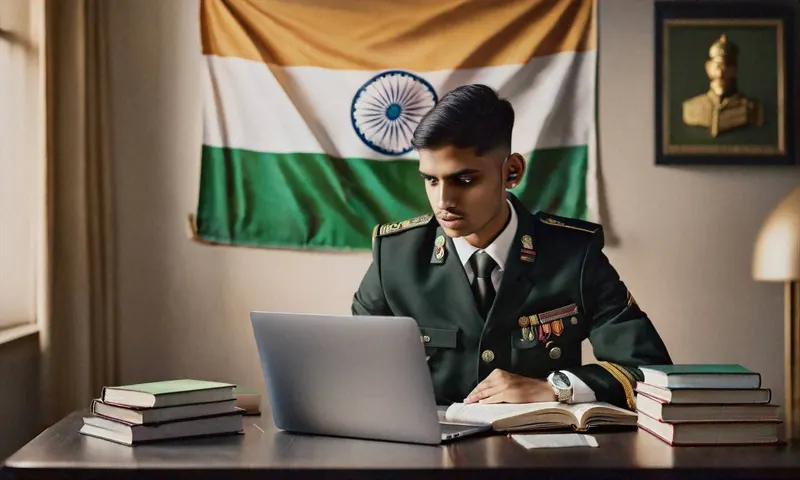
Congratulations. You cleared the NDA written exam.
Take a moment to feel that. You are among roughly 6,500 candidates out of several lakhs who wrote the exam, and UPSC picked your roll number for the next round. That is an achievement, and you should be proud of yourself.
Now take a deep breath. Because the real test starts here.
The written exam tested your academics -- Maths and General Ability. The SSB interview that is coming next? That tests you. Not what you know, but who you are. Your personality, your leadership, your ability to think on your feet, your character under pressure. People who scored brilliantly in the written exam get screened out at SSB on Day 1. People who barely scraped through the written exam go on to get recommended. The SSB does not care about your marks. It cares about whether you have the qualities to become an officer in the Indian Armed Forces.
I say this not to scare you, but to prepare you. I have been mentoring NDA aspirants for six years now, and the single biggest mistake I see is candidates walking into SSB thinking it is just another exam where mugging up answers will work. It will not. SSB is a personality test. And you cannot fake a personality for five days.
This article is going to cover everything you need to know from this point forward: how to check the result, what the SSB process looks like day by day, how to actually prepare for it, the medical examination, and what happens once you get recommended. I am going to be direct and specific. No vague advice like "be confident." I am going to tell you exactly what to do.
Check Your Result: Here Is How
The result was published on 28th February 2026 on upsc.gov.in. If you have not checked yet:
- Go to upsc.gov.in
- Click on "Written Results" in the left sidebar under the "Examination" section
- Find the link: "National Defence Academy and Naval Academy Examination (I), 2026 - Written Result"
- A PDF opens. Your roll number should be there in ascending order. Use Ctrl+F to search.
If your number is there, you are through. UPSC does not release individual marks at this stage -- those come later, after the final result. For now, all you need to know is that you qualified.
Within the next few weeks, you will get a communication from the Directorate General of Recruiting (DGR) at Integrated Headquarters, Ministry of Defence, about your SSB interview date and centre. Make sure your postal address and phone number registered with UPSC are correct. If you have moved or changed your number since the application, contact UPSC immediately.
The Numbers Behind This Result
Quick context. NDA I 2026 was conducted on 13th April 2025. The exam had about 400 vacancies across Army, Navy, and Air Force wings. The written exam was worth 900 marks total -- Maths paper (300 marks) and General Ability Test (600 marks).
UPSC qualified about 6,500 candidates for SSB. That is roughly 16 times the number of vacancies. Why so many? Because the SSB recommendation rate is very low. Typically, only 15 to 20 percent of candidates who appear for SSB get recommended. And from those recommended, after the medical exam, the final selection is about 400 candidates.
So of the 6,500 candidates called for SSB, roughly 1,000 to 1,200 might get recommended, and after medical fitness checks, about 400 will join NDA. The funnel is narrow. Knowing this should not discourage you -- it should motivate you to prepare seriously.
SSB Interview: When and Where
SSB interviews for NDA I 2026 are expected to begin in May 2026 and run through August 2026. The centres are:
- Army candidates: SSB Allahabad, Bhopal, Bengaluru, Dehradun, Mysuru, Varanasi
- Navy candidates: SSB Bengaluru, Visakhapatnam
- Air Force candidates: SSB Dehradun, Mysuru, Varanasi
Your SSB call letter will specify which centre you have been allocated and the date you need to report. You do not get to choose the centre. The call letter typically arrives four to six weeks before your interview date.
When you get the call letter, note these things immediately: reporting date, reporting time, the railway station where military transport will pick you up (if applicable), and the list of documents and items to carry.
What to Carry to SSB
Pack smart. You will be at the SSB centre for five to six days. Here is what you need:
Documents (originals + photocopies):
- UPSC admit card for the written exam
- SSB call letter
- Class 10th and 12th mark sheets and certificates
- Photo ID proof (Aadhaar, passport, or voter ID)
- 20 recent passport-size photographs (same as application photo)
- NCC certificate if applicable
- Any sports certificates, extracurricular achievement certificates
Personal items:
- Five to six sets of comfortable casual clothing (you will be doing outdoor activities -- do not pack only formal wear)
- One set of formal clothes for the personal interview day
- Good quality sports shoes (you will need them for outdoor tasks and obstacles)
- Formal shoes for the interview
- Toiletries, towel, basic medicines (paracetamol, ORS, bandages)
- A water bottle -- stay hydrated throughout
- A simple watch (phones are usually not allowed during testing hours)
Do not carry anything fancy. Do not carry expensive gadgets. The accommodation is basic military-style barracks with bunk beds. You are there to be assessed, not to show off.
The Five Days of SSB: What Actually Happens
Let me walk you through this day by day. I am going to be specific because I know how confusing the SSB process sounds when you first hear about it.
Day 1: The Screening Test
This is the filter. Roughly 40 to 60 percent of candidates get eliminated on Day 1. Yes, on the first day itself.
The screening has two parts:
OIR Test (Officer Intelligence Rating): This is basically a verbal and non-verbal reasoning test. Think of it like a speed-based aptitude test. You get a booklet with questions -- analogies, series, coding-decoding, spatial reasoning. Time is tight. This is not the part where most people fail -- it is more of a baseline check.
PPDT (Picture Perception and Description Test): This is where it gets interesting. You are shown a hazy, ambiguous picture on a screen for 30 seconds. In those 30 seconds, you need to observe the picture and identify: how many characters are there, what is their age, gender, and mood, and what action is taking place. Then you get four minutes to write a story based on what you perceived in the picture.
After everyone writes their story, you are divided into groups of 15-20. Each group sits in a circle and discusses their stories. This is not a formal debate. It is a narration and discussion. Each person narrates their story briefly, and then the group tries to arrive at a common story.
What are they assessing here? Your perception (did you see the picture accurately?), your imagination (is your story logical and interesting?), your communication (can you express yourself clearly?), and your group behaviour (do you dominate, participate constructively, or sit quietly?).
My advice for PPDT: Write a simple, positive story. Do not make it a Bollywood thriller. Your main character should take some positive action to solve a problem. In the group discussion, speak early -- do not wait for others to finish. But do not shout over people either. Make your point, listen to others, and try to build a common narrative. If someone's story is different from yours, acknowledge it and suggest a way to combine elements. This shows maturity.
After the PPDT and group discussion, results are announced within a few hours. If you are screened in, you stay for four more days. If you are screened out, you are released that evening. Screened-out candidates get their travel fare reimbursed.
Day 2: Psychology Tests
This day is entirely with the psychologist. No outdoor tasks. You sit in a hall and write. A lot. The tests are:
TAT (Thematic Apperception Test): You are shown 12 pictures (11 actual pictures + 1 blank slide) one at a time, each for 30 seconds. For each picture, you write a story in four minutes. The stories should have a central character (preferably someone your age), a conflict or challenge, and a resolution through positive action. For the blank slide, you imagine any scene and write a story.
Here is what most coaching centres will not tell you: the psychologist is not grading your creative writing skills. They are looking at the themes, the characters, and the resolutions in your stories to understand your personality. If all your stories have a hero who fights alone and does not trust anyone, that reveals something. If your stories have characters who collaborate, lead teams, and solve problems constructively, that reveals something else. Write stories that reflect a balanced, socially responsible, action-oriented personality. Not because you are "faking it" -- but because these are the qualities you genuinely need to develop if you want to be an officer.
WAT (Word Association Test): 60 words are flashed on the screen, one at a time, 15 seconds per word. For each word, you write the first sentence or thought that comes to your mind. This is rapid-fire. You do not have time to overthink. If the word is "failure," your response might be "Failure teaches us lessons that success cannot." If the word is "blood," your response might be "I donated blood at the camp organised in college last month."
The key here: respond with positive, action-oriented, socially relevant sentences. Avoid negative, violent, or passive responses. And be natural. Do not try to write philosophical quotes for every word. That looks fake.
SRT (Situation Reaction Test): 60 situations are presented in a booklet, and you write your response to each in about 15-20 seconds. The situations are everyday dilemmas. Example: "You are travelling in a train and notice someone stealing from another passenger's bag. What do you do?" Your answer should be practical, brave but not reckless, and show initiative. "I would alert the passenger and confront the thief, and if needed, pull the chain and inform the TTE." Not a hundred-word essay. Short. Decisive. Practical.
SD (Self Description): You write about what your parents think about you, what your teachers think about you, what your friends think about you, and what you think about yourself. Also, what qualities you want to improve. This is checked against your TAT stories and your interview answers for consistency. Do not write a self-description that makes you sound like a saint if your TAT stories reveal someone with a temper. Be honest. Be self-aware. The psychologist will spot inconsistencies across tests.
Day 3: Group Testing (Part 1)
Now it gets physical and intense. The Group Testing Officer (GTO) runs the show for the next two days.
Group Discussion: Two topics, roughly 20 minutes each. One is usually a current affairs topic (India-China relations, climate change, digital education), the other is a social issue (women's safety, rural-urban divide, reservation policy). You sit in a group of 8-10 candidates and discuss.
Do not just study -- develop opinions. When I say develop opinions, I mean this: read an article about, say, India's defence budget. Do not just memorise the number. Ask yourself -- is it enough? Compared to what? What should the priorities be? What would you do if you were the Defence Minister? Having your own reasoned position on issues is what separates candidates who clear SSB from those who just recite facts.
GPE (Group Planning Exercise): You are given a map or a model showing a situation with multiple problems happening simultaneously. A flood here, a fire there, a VIP visit, a medical emergency -- all at once. As a group, you discuss and prepare a combined plan to address all the problems with the available resources. Then the group nominates someone to present the plan.
This tests your planning ability, prioritisation, and teamwork. Always prioritise life-threatening situations first. Be vocal in the discussion but not dominating. Offer solutions, not just problems.
PGT (Progressive Group Task): This is an outdoor obstacle course. Your group has to cross a series of physical obstacles using wooden planks, ropes, and a "balli" (a heavy log). There are rules -- you cannot step on certain areas marked as "out of bounds," and the materials have specific usage restrictions. The obstacles get progressively harder.
What they are looking for: teamwork, initiative, helping others, coming up with ideas, and physical effort. Even if you cannot solve the obstacle, try. Suggest ideas. Carry the balli. Help a struggling group member. Effort and attitude matter as much as success.
HGT (Half Group Task): Same as PGT but with only half the group, so your individual contribution is more visible.
Lecturette: You pick one topic from a set of four cards and deliver a three-minute talk to your group. The topics range from current affairs ("Digital India") to abstract ("The colour blue"). Do not try to memorise speeches. Structure your talk: opening statement, two or three main points, conclusion. Speak clearly, make eye contact, and do not fidget. Three minutes passes quickly. Practice timing yourself at home.
Day 4: Group Testing (Part 2) and Personal Interview
Individual Obstacles: Ten obstacles of varying difficulty. You attempt each one within a time limit. These are physical tasks -- climbing ropes, jumping gaps, balancing on beams. Each obstacle has a point value based on difficulty. This is individual -- no group help. Give every obstacle a genuine attempt. Even if you fail a hard one, the GTO notices that you tried. Do not stand in front of an obstacle looking scared and walk away. Attempt it.
Command Task: This is important. The GTO appoints you as the commander of a small sub-group (two or three other candidates). You are given a practical obstacle to solve. As the commander, you direct your group, make decisions, and lead them through the task. This directly tests your leadership. Be clear in your instructions. Involve your group members. If your plan is not working, adapt. Do not freeze.
FGT (Final Group Task): One more group obstacle course, similar to PGT. Last chance to show group effort and initiative.
Personal Interview: The interview happens over Day 3 and Day 4 -- you will be called at your allocated time. It lasts 40 minutes to an hour. The Interviewing Officer (IO) is a senior military officer, usually a Colonel or equivalent rank.
The interview covers everything. Your family background, your education, your hobbies, your friends, your views on current issues, why you want to join the forces, your strengths and weaknesses, what you do in your free time, your knowledge of the force you want to join, your knowledge of your home state and country, and anything else the IO wants to explore.
Here is the thing about the NDA interview that most people get wrong: it is not a GK quiz. The IO does not care if you can name all the Chief Ministers of India. They care about how you think. If they ask you about the India-Pakistan border situation, they want your analysis, your opinion, your reasoning -- not a textbook answer. If they ask about your favourite book, they want to know why you liked it, what you took from it, not just the title and author.
Prepare for the interview by doing three things:
One: Know yourself thoroughly. Your family history, your school and college, your achievements and failures, your hobbies (be genuine -- if you say cricket is your hobby, know the rules, the recent matches, your favourite players, and ideally, play regularly). The IO can smell a fake hobby in ten seconds.
Two: Read newspapers for at least a month before SSB. Not just headlines -- read editorial pages, opinion columns, defence news. When a topic comes up in the interview, you should be able to say something original. "Main, sir, I read an interesting analysis about this in the Indian Express last week..." That is the kind of response that impresses.
Three: Develop a clear answer to "Why do you want to join the Armed Forces?" This question comes up in every single NDA interview. And "because I want to serve my country" is not good enough -- everyone says that. Why specifically the military? Why not civil services, or teaching, or business? What is it about military life that draws you? Be honest. If it is the discipline, say that. If it is the adventure, say that. If it was your grandfather's stories from the 1971 war, say that. Authenticity wins.
Day 5: The Conference
This is the last day. You appear before the full board -- the Board President, Deputy President, GTO, Psychologist, and IO. All of them are in one room. You walk in, sit down, and they ask you a few questions. Sometimes many questions, sometimes just two or three. Sometimes they ask you to clarify something from your interview. Sometimes they ask a new question to see your reaction.
The conference is short -- five to fifteen minutes per candidate. After all candidates have appeared, the board deliberates behind closed doors. They compare notes from the psychology tests, the GTO tasks, and the interview. Each assessor gives their independent assessment, and then they reach a consensus.
After deliberation, the results are announced. You are called into a room. "Recommended" or "Not recommended." Simple as that.
If you are recommended -- celebrate. You earned it. But your journey is not over. Medical examination is next.
If you are not recommended -- it is not the end. Many successful officers were not recommended in their first SSB attempt. Some cleared it on their third or fourth try. The SSB tests maturity, and maturity develops with time and experience. Come back stronger.
Preparing for SSB: A Practical Plan
You have roughly two to three months between now and your SSB date. Here is what I tell every NDA aspirant I mentor:
Week 1-2: Self-assessment. Write down your life story in detail. Your childhood, school days, family, friends, achievements, failures, hobbies, interests. Know your story inside out. The entire SSB is essentially testing whether you know yourself and whether that self is officer material.
Week 3-4: Current affairs, seriously. Read The Hindu or Indian Express editorial page every single day. Follow WION or DD News for defence and international news. Make notes. Not just facts -- write your opinions. After reading about India's space programme, ask yourself: "What do I think about ISRO's budget priorities?" After reading about the Agnipath scheme, ask yourself: "Do I think it is good for the forces?" Have answers. Have reasons for those answers.
Week 5-6: Physical fitness. SSB has outdoor group tasks that need stamina, flexibility, and basic athleticism. Run three to five kilometres daily. Do push-ups, pull-ups, and squats. Practice jumping and climbing. You do not need to be a gym freak, but you should not be gasping for breath after climbing one rope. Also, individual obstacles require basic physical courage -- jumping across gaps, balancing on narrow beams. If you are not used to physical activity, start now.
Week 7-8: Practice tests. Do mock TAT, WAT, and SRT at home. Show a random picture to yourself (use Google Images -- search for "ambiguous situations"), start a 30-second timer, observe, then write a story in four minutes. Practice writing WAT responses in 15 seconds per word. Practice SRT by writing responses to random situations from SSB preparation books.
Throughout: Join a GD group. Find three or four friends or fellow aspirants and practice group discussions twice a week. Pick a topic, set a timer for 15 minutes, and discuss. This is not about winning the argument -- it is about learning to express yourself clearly, listen to others, and build on other people's points. If you do not know anyone preparing for SSB, join an online group. There are several on Telegram and Reddit.
One more thing: develop at least one hobby seriously. If you say "reading" is your hobby, read at least two books in the next two months and be ready to discuss them in detail. If you say "cricket," know the current Indian team, the ICC rankings, the difference between DRS and UDRS. If you say "painting" or "photography," carry a few samples in your phone to show. Hobbies reveal personality. A candidate with genuine passions outside academics stands out.
Medical Examination: The Final Gate
SSB recommended candidates are sent for a thorough medical examination at a military hospital. The NDA medical is strict because cadets will be training in physically demanding conditions for three years, and officers serve in all kinds of terrain and climate. Here is what gets checked:
Vision: This is where a lot of candidates get caught. Standards vary by service entry:
- Army: Corrected vision 6/6 in better eye, 6/18 in worse eye. Myopia should not exceed -3.5D, hypermetropia not exceeding +3.5D.
- Air Force (Pilot entry): 6/6 in each eye WITHOUT glasses. Yes, you need perfect uncorrected vision for the flying branch. This is non-negotiable. If you have even mild refractive error, you will not make it to the flying branch. You may be considered for ground duty or re-allocated to Army/Navy.
- Navy: 6/6 in better eye, 6/9 in worse eye without glasses for executive branch. Slightly relaxed for other branches.
If you wear glasses, get your eyes checked now. Know your uncorrected vision and your refractive error numbers. If you are borderline, consult a military-experienced ophthalmologist who understands the specific armed forces vision standards.
Hearing: Normal hearing in both ears. No hearing aid allowed. Tested through whispered voice test and sometimes audiometry.
Orthopaedic check: They check for flat feet (wet footprint test), knock knees, bow legs, spinal deformities (scoliosis, kyphosis), old fractures that may limit mobility, and joint flexibility. If you have had any previous orthopaedic surgery, carry the medical records.
Cardiovascular and general: ECG, blood pressure, heart murmur check. Blood tests including haemoglobin, blood sugar, liver and kidney function. Urine analysis. Chest X-ray. Dental check (minimum 14 dental points required -- missing teeth, cavities, and fillings all affect the score). Complete physical examination for hernia, varicocele, and other conditions.
Preparing for the medical:
- Get a full health check-up now from a civilian doctor. Know your numbers -- BP, blood sugar, haemoglobin, vision.
- If you have dental issues, get them fixed now. Fillings, extractions, scaling -- do it all before the medical.
- If you have mild flat feet, consult an orthopaedic doctor. In some cases, arch-support exercises done consistently can improve the footprint.
- Stop smoking and alcohol (if applicable) at least a month before the medical. Seriously. This affects your blood work, BP, and chest X-ray.
- Eat healthy. Exercise. Get enough sleep. Your body should be in its best condition on medical day.
Candidates found unfit can appeal for a Review Medical Board within the specified period. The Review Board re-examines the specific parameters on which you were declared unfit. Their decision is final.
After the Medical: Merit List and Final Selection
The final merit list is prepared by UPSC based on the combined marks of the written examination (900 marks) and the SSB interview (900 marks). Total: 1,800 marks. Candidates are ranked separately for Army, Navy, and Air Force based on their preferences and merit.
The final result usually comes by October or November 2026 for NDA I. UPSC publishes the list on upsc.gov.in with the names and roll numbers of selected candidates.
Once your name is on the final list and you are medically fit, you receive an appointment letter from the Ministry of Defence. You are assigned to the National Defence Academy, Khadakwasla, Pune. The joining date for NDA I 2026 selected candidates is expected to be January 2027.
Life at NDA Khadakwasla: What Awaits You
NDA training is three years long. Three years of academic study, military training, and character building. Here is a taste of what to expect:
Academic education: You get a degree from Jawaharlal Nehru University (JNU). The course includes science, arts, and technology subjects depending on your wing (Army, Navy, or Air Force). Yes, you come out of NDA with a legitimate university degree plus military training. Double benefit.
Military training: Drill, weapons training (rifle, light machine gun), map reading, field craft, tactics, physical training every single day, cross-country runs, swimming, horse riding. First-termers (freshers) go through an adjustment period that is physically and mentally demanding. But ask any NDA alumnus and they will tell you those three years shaped them more than any other experience in their lives.
Outdoor activities: Sailing at Peacock Bay (NDA has its own lake), rock climbing, trekking, boxing, basketball, football, hockey, athletics. NDA produces some of India's finest sportspeople alongside its military officers.
Character building: NDA is not just about physical and academic training. It is about developing integrity, courage, leadership, and camaraderie. The friendships you make at NDA last a lifetime. The discipline you learn stays with you forever. Many NDA graduates say the academy taught them what it means to put others before themselves.
After NDA, you move to your respective service academy -- Indian Military Academy (IMA) Dehradun for Army, Indian Naval Academy (INA) Ezhimala for Navy, and Air Force Academy (AFA) Dundigal for Air Force. Pre-commissioning training lasts about a year. Then comes the proudest day: the Passing Out Parade, where you are commissioned as a Lieutenant (Army), Sub Lieutenant (Navy), or Flying Officer (Air Force) in the Indian Armed Forces.
Final Words: Some Honest Advice
I want to end with some advice that does not come from a textbook.
Do not try to be someone you are not at SSB. The assessors at SSB are experienced military psychologists and officers who have interviewed thousands of candidates. They can tell when someone is putting on an act. Be yourself, but be the best version of yourself. If you are naturally introverted, you do not need to become the loudest person in the room. Be the one who makes a quiet but sharp point in the group discussion. If you are not a great runner, try your hardest at the obstacles and show determination. Authenticity counts for more than performance.
Do not just study -- develop opinions. I keep saying this because it is the most common gap I see in NDA aspirants. You can rattle off GDP numbers and defence budget figures, but when the IO asks "Do you think India spends enough on defence?", you have nothing original to say. Read, think, form opinions, and be ready to defend them with reasoning. An officer who cannot think independently is not an officer.
Talk to people who have been through SSB. If you know anyone who has attended SSB -- recommended or not -- talk to them. Ask about the food, the barracks, the atmosphere, the testing process, the waiting, the tension. Knowing what to expect reduces anxiety. Many NDA alumni are very generous with their time and advice. Reach out to NDA communities on social media. Most will help you.
Stay physically fit and mentally calm. The SSB is five days of constant assessment. It is tiring. You are being watched from the moment you arrive to the moment you leave. Stay in good physical shape so you do not run out of energy on Day 4. And keep your nerves steady. Some candidates perform brilliantly in the psychology tests but fall apart in the personal interview because of anxiety. Practice relaxation techniques. Deep breathing helps. Getting a good night's sleep helps. Reminding yourself that the worst outcome is "I try again next time" helps.
Do not spend money on expensive SSB coaching unless you genuinely need it. There are good SSB coaching institutes, and there are expensive ones that teach you to "crack" SSB by memorising model answers. The latter will hurt you more than help you. SSB coaching can be useful for mock interviews, group discussion practice, and understanding the test format. But no coaching can manufacture Officer Like Qualities that do not exist. Your real preparation is the life you have lived -- your experiences, your character, your decision-making in real situations. Build on that.
You cleared the NDA written exam. That means you have the academic ability. Now show them you have the personality, the courage, and the heart to lead soldiers. That is all SSB is looking for.
Jai Hind. See you on the other side.
Source: This article is based on information from the official Union Public Service Commission website (upsc.gov.in), UPSC notification dated 28 February 2026, Directorate General of Recruiting (Indian Army), NDA official guidelines, and the author's experience mentoring NDA aspirants through the SSB process.
Comments 0
Leave a Comment