Tamil Nadu Government Welfare Schemes 2026: Complete Guide to Key Schemes for Students, Women, Farmers and Senior Citizens
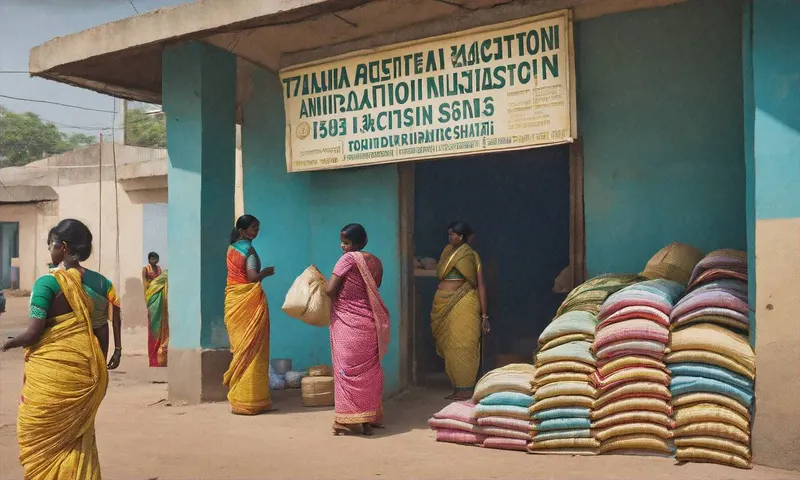
I was standing in line at an Amma Unavagam in T. Nagar, Chennai, last week. It was 12:30 in the afternoon, and the queue stretched out the door. Construction workers. Auto drivers. College students. Office-goers in tucked-in shirts who clearly had desk jobs but still came here for the Rs 5 sambar rice because, well, why would you not? The food was fresh, hot, and filling. A full meal for the price of a single biscuit packet.
The man behind me, a painter named Shanmugam, was telling his friend about the new Kalaignar Magalir scheme. "Yen pondhati-ku maasamaa thousand rubaa varudhu," he said. His wife gets Rs 1,000 every month. He seemed genuinely happy about it, not in a political way, but in a "this makes our life a little easier" way.
That interaction captured something I have been thinking about for years as a journalist covering Tamil Nadu politics and governance: this state does not just talk about welfare. It does it. It has been doing it since before most other states even thought about it. The mid-day meal scheme that the entire country now follows? Tamil Nadu started that in 1925. Free bus travel for women? Tamil Nadu. Subsidised canteens serving meals at Rs 5? Tamil Nadu. Free laptops for students? Again, Tamil Nadu.
I know that sounds like chest-thumping, and maybe it is. But the data backs it up. Tamil Nadu consistently ranks among the top three states in India on the Human Development Index, has one of the lowest poverty rates, one of the highest literacy rates, and the lowest infant mortality rates. The welfare model has something to do with that. Not everything, obviously -- industrialization, remittances, urbanization all play their part. But the welfare foundation laid over decades by successive governments, regardless of which party was in power, has created a baseline of social security that most Indian states simply do not have.
So let me take you through the major welfare schemes running in Tamil Nadu in 2026. Not just the what, but the why, the how, and the how much.
Amma Unavagam (Amma Canteens): Nobody Goes Hungry
Let us start with the canteens because they are the most visible symbol of Tamil Nadu's welfare approach. You cannot walk through any town in the state without seeing one. The blue and green signboards. The stainless steel plates. The long queues at mealtimes.
Amma Unavagam was launched in 2013 by the AIADMK government under J. Jayalalithaa. The idea was radical for its time: the government would run canteens in every urban area, serving freshly cooked food at prices that even the poorest person could afford. Idli for Rs 1. Sambar rice for Rs 5. Curd rice for Rs 3. Pongal for Rs 5. Chapati with daal for Rs 3.
No other state runs subsidised canteens at this scale. As of 2026, there are over 700 Amma Unavagam outlets spread across all municipal corporations, municipalities, and town panchayats in Tamil Nadu. They serve approximately 8 lakh meals every single day. That is 8 lakh people who eat at least one hot, nutritious meal regardless of what their financial situation is on that particular day.
The cost to the government is about Rs 450 crore per year. The canteens are operated by women's self-help groups (SHGs), which means the scheme also creates employment for thousands of women. Each canteen employs 8-12 women who cook, serve, and clean. They earn about Rs 8,000 to Rs 10,000 per month from this work.
Who eats at these canteens? Everyone. I have seen auto rickshaw drivers eating alongside software engineers. College girls sharing a table with elderly pensioners. The food is basic but well-made -- the sambar has actual vegetables in it, the idlis are fluffy, and the portions are generous. There is no income verification, no ID check, no registration needed. You walk in, pay, eat, and leave.
Critics say the canteens run at a loss. Of course they do. That is the entire point. They are not a business. They are a social safety net. The Rs 450 crore the government spends on Amma Unavagam probably prevents more human suffering per rupee spent than any other programme in the state.
I remember speaking to a migrant worker from Bihar who had come to Chennai for construction work. He had been eating at an Amma Unavagam for three months. "Humara Bihar mein koi neta aise sasti roti deta?" he asked me. Fair question.
Kalaignar Magalir Urimai Thogai: Rs 1,000 Per Month for Women
Named after M. Karunanidhi, the late DMK patriarch and former Chief Minister, this scheme puts Rs 1,000 per month directly into the bank accounts of eligible women. It was launched in September 2023 and is now one of the largest cash transfer programmes in south India, covering roughly 1.06 crore women as of early 2026.
The eligibility criteria are pretty straightforward. You must be a woman who is the head of a family or the wife of the family head. Annual family income must be under Rs 2.5 lakh. Age between 21 and 60. You need a ration card from the Tamil Nadu government. And no family member should be a government employee or income tax payer.
The application process is tied to the ration card system, which is smart because the ration card infrastructure already exists, is well-maintained, and covers almost the entire below-poverty-line population. You go to your nearest ration shop or taluk office with your ration card, Aadhaar, bank passbook, and a photograph. The dealer or official processes your application. You can also apply online at magalirurimaithogai.tn.gov.in.
Payment hits the account on the 10th of every month. I checked with a few beneficiaries in Madurai and Tiruchirappalli, and they confirmed the payments have been regular, with maybe a 1-2 day delay occasionally, but no missed months.
Now, Rs 1,000 is less than what Maharashtra (Rs 1,500) and Madhya Pradesh (Rs 1,250) give under their women's cash transfer schemes. People point this out, and it is a valid comparison. But here is what they miss: Tamil Nadu's Rs 1,000 comes on top of an enormous existing welfare base. A Tamil Nadu woman with a ration card already gets rice at Rs 1 per kg, free bus travel, subsidised canteen food, free healthcare at government hospitals, and free education for her children with free uniforms, textbooks, and mid-day meals. Stack all of that together, and the effective value of being a low-income woman in Tamil Nadu is likely higher than in any other state, even before you add the Rs 1,000 monthly transfer.
The annual cost of this scheme is approximately Rs 12,720 crore, which is about 4.2 percent of the state budget. Tamil Nadu can afford it -- the state has one of the highest GSDPs in India and reasonably healthy finances.
Free Bus Travel for Women: The Scheme That Changed Mobility
This one does not get enough national attention, and I genuinely think it should be studied by every state government in India. Since 2021, all women in Tamil Nadu travel for free on government-operated TNSTC and MTC buses. Not some women. All women. No age limit, no income criterion, no registration, no pass, no card. Just get on the bus and travel.
Think about what that means practically. A woman in a village in Villupuram district who needs to get to the district hospital 30 kilometres away? Free. A college girl in Coimbatore commuting daily to her engineering college? Free. A grandmother in Kanyakumari going to visit her daughter in the next town? Free. A domestic worker in Chennai taking three buses to get to work every day? Free.
The financial impact for individual women is significant. Before the scheme, a daily bus commuter in Chennai would spend Rs 30-50 per day on ordinary bus tickets. That is Rs 900 to Rs 1,500 per month. For a domestic worker earning Rs 8,000-10,000 per month, transport costs were eating up 10-15 percent of income. Now it is zero.
For the state, this costs about Rs 3,200 crore per year in subsidies to transport corporations for lost ticket revenue. The bus corporations were already running losses before the scheme, so the government essentially increased the subsidy to compensate for the additional revenue foregone.
What are the measurable results? Women's ridership on government buses increased by 38 percent in the first year of the scheme. Female workforce participation rate in Tamil Nadu rose from 28.7 percent in 2020-21 to 33.4 percent in 2024-25 -- among the highest increases in any state. Girls' college enrollment in rural areas increased by about 6 percent. These numbers cannot be attributed entirely to the free bus scheme, but researchers at the Madras Institute of Development Studies who studied the scheme's impact concluded that free transport "removed one of the most significant barriers to women's economic participation and educational access in semi-urban and rural Tamil Nadu."
The scheme covers ordinary and express buses only. AC buses and premium Volvo services are not included, which is fine -- the people who need free transport are not usually the ones taking AC buses anyway.
Naan Mudhalvan: Making Students Job-Ready
Naan Mudhalvan -- meaning "I am the First" in Tamil -- is the state's big push to make sure college graduates do not end up with degrees that mean nothing in the job market. I know that sounds harsh, but anyone who has looked at the employability statistics of Indian graduates knows the problem. A large percentage of engineering and arts graduates cannot get hired because their college curriculum did not teach them what companies actually need.
The Naan Mudhalvan programme, launched in 2022 and significantly expanded in 2026, provides free training in industry-relevant skills to college students across Tamil Nadu. The training covers software development, data analytics, artificial intelligence, machine learning, cloud computing, cybersecurity, digital marketing, communication skills, and entrepreneurship. The courses are delivered through a mix of online modules on the Naan Mudhalvan portal and in-person sessions conducted with industry partners -- big IT companies, startups, and industry associations.
Every student enrolled in a government or government-aided college, polytechnic, or university can register for free at naanmudhalvan.tn.gov.in. Recent graduates (within two years of passing out) are also eligible. In 2025, over 8 lakh students signed up for various courses. The placement conversion rate -- meaning students who got a job offer after completing a Naan Mudhalvan course -- was about 35 percent.
Thirty-five percent may not sound spectacular, but consider this: the general employability rate of Indian graduates is estimated at around 45-50 percent by various industry surveys. Among students who did NOT take any skill training, the placement rate in tier-2 and tier-3 colleges is often below 20 percent. So Naan Mudhalvan is roughly doubling the job prospects for students who would otherwise graduate with no practical skills.
I visited the Thiagarajar College of Engineering in Madurai last month, where a batch of 120 final-year students was going through a Naan Mudhalvan data analytics course. The instructor was from a Bangalore-based analytics firm. The students were working on actual datasets -- sales data from an FMCG company, hospital patient data (anonymized), and weather data. "This is the first time we are doing something practical," a student named Kavitha told me. "In our regular syllabus, everything is theory." She already had two interview calls from companies that specifically recruited from the Naan Mudhalvan placement pool.
CM's Breakfast Scheme: Feeding Children Before Class
This scheme hits me on a personal level because I grew up in a family where breakfast was not always guaranteed. The Chief Minister's Breakfast Scheme, launched in 2022, gives free breakfast to children in classes 1 to 5 in government and government-aided primary schools across Tamil Nadu.
Starting at 8 AM, before classes begin, children get a hot, freshly cooked breakfast. The menu rotates through the week: upma with sambar on Monday, pongal with sambar on Tuesday, rava kitchadi on Wednesday, semiya upma with vegetable kurma on Thursday, and lemon rice with sambar on Friday. Each meal is designed by nutritionists to give adequate calories, protein, iron, and other micronutrients that growing children need.
The scheme started in 1,545 schools and has expanded to over 31,000 schools by 2026. The annual cost is about Rs 500 crore. This comes on top of the mid-day meal programme that already provides lunch to the same children. So government school children in Tamil Nadu get two nutritious meals at school -- breakfast and lunch. That is an enormous thing for families where food insecurity is a reality.
The impact data is encouraging. School attendance in the first two hours of the school day (8 AM to 10 AM) increased by 12 percent in schools where the breakfast scheme operates, compared to the pre-scheme period. Teachers reported that children were more attentive and less restless during morning classes. The dropout rate in classes 1-5 in government schools declined from 1.8 percent in 2021-22 to 0.9 percent in 2024-25.
I asked a headmistress at a government school in Dharmapuri district about the scheme. "Sir, some of these children come from families where the parents leave for work at 5 AM," she said. "The child wakes up alone, gets ready alone, and comes to school on an empty stomach. Now at least they know that the moment they reach school, they will get food. That alone is enough reason for them to come every day."
No application needed from parents. If your child is enrolled in an eligible school, they get the breakfast automatically.
Free Laptops: A Decade-Long Investment in Digital Access
Tamil Nadu has been giving free laptops to students who pass class 11 and class 12 in government and government-aided schools since 2011. That is fifteen years of continuous distribution. Over 75 lakh laptops have been given out since the scheme began. Seventy-five lakh. Let that number register.
In 2026, the laptops have been upgraded to modern specifications: a decent processor, 4 GB RAM, 256 GB SSD, 14-inch display, and pre-loaded educational software including the Tamil Nadu education portal, coding tools, and digital literacy applications. Each laptop comes with a bag and a one-year warranty.
There are no income criteria. No application process. If you pass 11th or 12th standard in a government or government-aided school in Tamil Nadu, you get a laptop. Period. The school distributes them after results are announced.
I am sometimes asked by people from other states: "Does giving laptops to students actually help?" Let me answer with what I have seen. In rural Tamil Nadu, particularly in districts like Dharmapuri, Krishnagiri, Ramanathapuram, and Virudhunagar, the free laptop was the first computer many students ever touched. For a farmer's daughter in a village with no internet cafe and no family computer, that laptop is her window to the world. She uses it for competitive exam preparation, for learning English on YouTube, for coding tutorials, for accessing NPTEL courses, and yes, for entertainment too -- and there is nothing wrong with that.
A study by the Tamil Nadu government's evaluation department found that 72 percent of laptop recipients used the device for educational purposes at least three times a week, and 34 percent used it for some form of skill building or online course. Among recipients who went on to college, 68 percent said the laptop helped them with their studies, and 41 percent said it helped them prepare for competitive exams.
The annual cost of the laptop scheme varies based on the number of students passing and the procurement price. In recent years, it has been in the range of Rs 1,200-1,500 crore per year.
Marriage Assistance and Gold: The Moovalur Ramamirtham Scheme
Named after the social reformer Moovalur Ramamirtham Ammaiyar, this scheme provides 8 grams of gold (worth approximately Rs 50,000 at current prices) plus Rs 25,000 cash assistance to women from economically weaker families at the time of their marriage. It is run by the Social Welfare and Women Empowerment Department.
The eligibility is: bride must be at least 18, must have completed class 10, family income should not exceed Rs 72,000 per year (or hold a ration card), and must be a Tamil Nadu resident. The bride or her parents apply to the District Social Welfare Officer with age proof, educational certificate, income certificate, ration card, and marriage invitation at least 40 days before the wedding date. The gold coin and cheque are given to the bride at a district-level ceremony.
Now, the politics of this scheme are complicated. Critics -- including some feminist commentators -- argue that the government should not be spending money on weddings and that the gold coin reinforces the dowry culture. I understand that argument, and it has some merit. But here is the other side. In communities where a girl's family is expected to provide gold for the wedding and cannot afford it, this government assistance prevents families from going into debt. I have reported on families in delta districts who took loans at 48 percent annual interest from local moneylenders for wedding expenses. If the government gold coin prevents even some of that predatory borrowing, it serves a purpose.
The educational qualification of class 10 is also a smart incentive. Families that might have pulled their daughter out of school now have a concrete financial reason to keep her enrolled at least until 10th standard. Whether that was the original intention or not, it works as an education incentive.
Chief Minister's Health Insurance (CMCHIS): Healthcare Without Bills
Tamil Nadu's Chief Minister's Comprehensive Health Insurance Scheme, now integrated with Ayushman Bharat PM-JAY, provides up to Rs 5 lakh per family per year for hospital treatment. All families holding ration cards are eligible, which covers the vast majority of the below-poverty-line population.
The scheme covers over 1,500 procedures: surgeries, cancer treatment, cardiac procedures, organ transplants, dialysis, orthopaedic surgeries, and more. Treatment is cashless at empanelled hospitals -- both government and private. You walk in with your ration card and Aadhaar, get verified, and get treated. No money changes hands.
Pre-hospitalization costs for 7 days before admission and post-hospitalization costs for 15 days after discharge are covered. The hospital list and covered procedures are available at cmchistn.com.
The strength of CMCHIS is the hospital network. Tamil Nadu has one of the best public health infrastructures in India. Government hospitals in the state are not the nightmare scenarios you see in some north Indian states. The Government General Hospital in Chennai, the Rajiv Gandhi Government General Hospital, Madurai Government Hospital -- these are serious medical institutions with actual equipment, actual doctors, and actual beds. When you add private empanelled hospitals on top of this public network, the coverage is genuinely good.
I accompanied a family from Tiruvannamalai to a private hospital in Vellore for the father's kidney surgery. Total bill: Rs 2.8 lakh. Amount paid by the family: zero. The hospital's CMCHIS desk handled everything. The father was back home in a week, recovering. "Hospital ke log bole ki aapka sab cover hai, kuch mat dena," the son told me. He was still amazed that it actually worked.
Farmer Welfare: Electricity, Insurance, and More
Tamil Nadu has a long history of supporting its farming community, and the schemes for farmers are among the most generous in India.
Free Electricity for Agriculture: Every farmer with an agricultural pumpset in Tamil Nadu gets free electricity. No meter, no bill. This has been a political sacred cow for decades -- no party dares to touch it. Over 22 lakh farmers benefit from this scheme. The cost to the government (through subsidies to the electricity board) is staggering -- roughly Rs 12,000-14,000 crore per year. Is it sustainable? Probably not in the long run. Does any politician have the courage to change it? Definitely not. So it continues.
Crop Insurance: Tamil Nadu implements crop insurance alongside the central Pradhan Mantri Fasal Bima Yojana. The state government pays a significant portion of the premium on behalf of farmers. Enrollment is done at the agricultural extension office or through the Primary Agricultural Cooperative Bank. In 2025, when Cyclone Vardah's successor system damaged crops in the delta region, the insurance payouts reached farmers within 45 days -- fast by Indian standards.
Input Subsidies: The Department of Agriculture provides 50-75 percent subsidies on seeds, fertilizers, pesticides, and agricultural equipment through the Uzhavar Peruvil portal (uzhavar.tn.gov.in). Small and marginal farmers get the highest subsidy rates. The portal also connects farmers directly with government procurement centres, cutting out middlemen.
Solar Pumpset Scheme: Farmers can get solar-powered agricultural pumpsets with up to 90 percent government subsidy. This reduces dependence on grid electricity (which, despite being free, is erratically supplied in some rural areas) and provides reliable irrigation. The scheme has been particularly popular in Ramanathapuram and Sivaganga districts, which face chronic water scarcity.
Calamity Relief: Tamil Nadu is prone to cyclones, floods, and occasional droughts. When natural calamities hit, the state government announces special relief packages for affected farmers. The relief amount depends on the extent of crop damage, assessed by teams from the district agricultural office. During the 2024 floods in southern Tamil Nadu, the government disbursed Rs 2,200 crore in farmer relief within three months of the disaster.
The Dravidian Movement Context: Why Tamil Nadu is Different
You cannot understand Tamil Nadu's welfare model without understanding the Dravidian movement. Starting in the 1920s and 1930s with Periyar E.V. Ramasamy and the Self-Respect Movement, and continuing through the rise of the DMK and AIADMK, Tamil Nadu's political culture has been deeply shaped by the idea that the government's primary job is to provide for its people.
The mid-day meal scheme started in 1925 under the Justice Party government in Madras Presidency. K. Kamaraj, as Chief Minister in the 1950s and 60s, massively expanded education and opened thousands of schools. M.G. Ramachandran (MGR) as Chief Minister in the 1980s introduced the noon meal scheme in its modern form and expanded it to cover all school children. Jayalalithaa added Amma Unavagam, Amma Water, and Amma Salt. Karunanidhi governments pushed education subsidies and the laptop scheme. The current DMK government under M.K. Stalin has added the breakfast scheme, the women's cash transfer, and Naan Mudhalvan.
There is a competitive energy here. Both DMK and AIADMK (and before them, the Congress and Justice Party) have tried to outdo each other in welfare provision. This competition, while sometimes wasteful and politically motivated, has produced a welfare floor that no other state matches. Every new government feels pressure to match or exceed what the previous government did. Removing an existing scheme is political suicide. So the welfare base only grows.
The result is that a low-income family in Tamil Nadu in 2026 has access to: subsidized rice (Rs 1/kg), free bus travel for women, Rs 1,000 per month for the woman head, free breakfast and lunch for children at school, free laptops, free school uniforms, free textbooks, marriage assistance with gold, free electricity for farming, subsidised healthcare, and meals at Amma Unavagam for Rs 5. Try finding this combination in any other state.
How to Access These Schemes: Practical Guide
If you live in Tamil Nadu and want to access any of these welfare programmes, here are the main channels.
The Taluk Office is your primary point of contact for certificates (income, community, nativity) and scheme applications. Block Development Offices handle rural development schemes and farmer welfare. The District Collectorate is the overall administrative hub for all district-level scheme implementation.
The Tamil Nadu e-Services portal at tnesevai.tn.gov.in handles online applications for various certificates and registrations. You can apply for income certificates, community certificates, and other documents needed for scheme applications without going to a government office.
Common Service Centres (e-Sevai centres) are spread across the state for people who need help with digital applications. An operator will fill out forms and submit applications for a nominal charge.
For specific schemes: Kalaignar Magalir at magalirurimaithogai.tn.gov.in. Naan Mudhalvan at naanmudhalvan.tn.gov.in. Health insurance at cmchistn.com. Farmer services at uzhavar.tn.gov.in.
The Chief Minister's Special Cell at 1100 (toll-free) takes grievances related to any government scheme. In my experience, complaints registered through 1100 get tracked and followed up at the district level, though resolution times vary from a few days to a few weeks depending on the issue.
Documents to keep ready: Aadhaar card, ration card, income certificate, community certificate (if applicable), educational certificates, bank passbook, and passport photos. Having these ready in both original and photocopy form saves multiple trips to government offices.
Looking Ahead: What is Next for Tamil Nadu Welfare?
The Tamil Nadu government has indicated several expansions in the pipeline for 2026-27. The Naan Mudhalvan programme is expected to add courses in healthcare, green energy, and semiconductor manufacturing -- aligning with the state's industrial strategy. The breakfast scheme may be extended to classes 6-8. There are discussions about increasing the Kalaignar Magalir amount from Rs 1,000 to Rs 1,500 to match Maharashtra's Ladki Bahin.
Whether all of this happens depends on the state's fiscal position and political priorities. Tamil Nadu's debt is growing, and critics rightly point out that the state cannot keep adding new welfare schemes without growing revenue. But the state's tax base is large and expanding -- GST collections grew by 14 percent in 2025, and industrial investment continues to pour in, particularly in the auto, IT, and electronics sectors.
My view? Tamil Nadu's welfare model is not charity. It is an investment in human capital. Educated, healthy, well-fed citizens are more productive, earn more, pay more taxes, and drive economic growth. The states that understand this -- Kerala, Tamil Nadu, to some extent Karnataka -- consistently outperform states that treat welfare as a burden. The numbers speak for themselves.
Tamil Nadu spent decades building this welfare foundation, one scheme at a time. The breakfast was built on top of the mid-day meal. The laptop scheme was built on top of the free education system. The women's cash transfer was built on top of the ration card system. Each layer depends on and reinforces the others. That is what makes it work. It is not one silver bullet. It is a system.
And if you ask me honestly, as a journalist who has covered government schemes across six states over the past decade, I have not seen a system that works this well for ordinary people anywhere else in India.
Source: This article is based on ground reporting in Chennai, Madurai, Coimbatore, and Dharmapuri, combined with official data from Tamil Nadu Government portals including tn.gov.in, tnesevai.tn.gov.in, naanmudhalvan.tn.gov.in, magalirurimaithogai.tn.gov.in, cmchistn.com, and budget documents of the Government of Tamil Nadu. Interview subjects quoted with their verbal consent.
Comments 0
Leave a Comment