RRB NTPC Recruitment 2026: 35,000 Vacancies for Non-Technical Popular Categories in Indian Railways
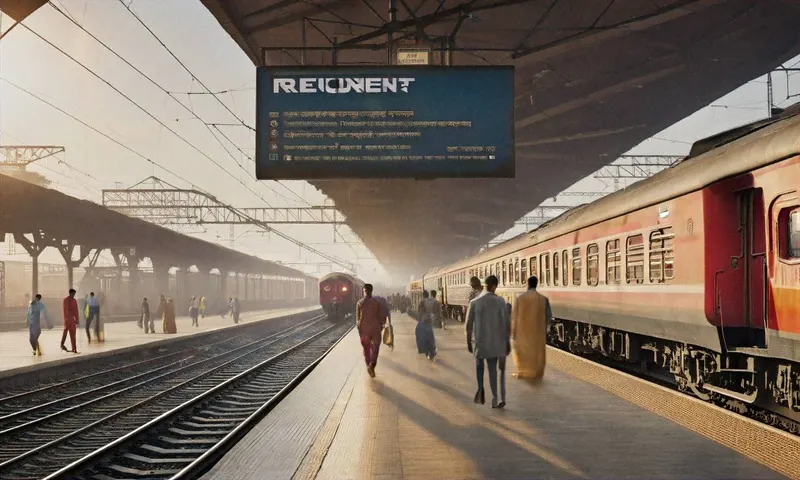
35,000 railway jobs. That's what's on the table right now. The Railway Recruitment Boards have released the Centralised Employment Notification (CEN) for NTPC 2026, and this is one of the biggest recruitment drives Indian Railways has announced in years. If you're eligible and interested, stop reading random WhatsApp forwards and read this instead. Everything you need is right here.
Quick Facts -- Read This First
- Total Vacancies: Approximately 35,000
- Recruiting Body: Railway Recruitment Boards (21 RRBs across India)
- Posts: Station Master, Goods Guard, Senior Commercial cum Ticket Clerk, Senior Clerk cum Typist, Junior Account Assistant cum Typist, Traffic Assistant, Commercial cum Ticket Clerk, Accounts Clerk cum Typist, Junior Clerk cum Typist, Trains Clerk
- Qualification: Graduation for higher-level posts, 12th pass for lower-level posts
- Age Limit: 18-33 years (graduate posts), 18-30 years (12th pass posts) as on 1 July 2026
- Application Fee: 500 rupees (General/OBC), 250 rupees (SC/ST/Female/others) -- refundable on appearing
- Apply at: rrbcdg.gov.in or your regional RRB website
- Last Date: Check the notification for the exact closing date. Apply early.
What Exactly Is RRB NTPC?
NTPC stands for Non-Technical Popular Categories. "Non-technical" means you do not need an engineering degree or ITI certificate. A regular graduation or 12th pass certificate is enough. "Popular" because these posts attract crores of applicants -- literally. The last NTPC cycle in 2019-21 received over 1.26 crore applications. That's not a typo. Over one crore twenty-six lakh people applied.
Indian Railways is the country's largest employer with over 12 lakh people on its payroll. The NTPC posts cover the non-engineering side of railway operations: managing stations, handling tickets, processing freight documents, keeping accounts, running clerical offices, and coordinating train traffic. These are permanent government posts with full benefits -- pension contributions, railway passes, medical facilities, housing, the works.
The Posts: What You'll Actually Be Doing
Let me break down each post so you know what you're signing up for. Too many candidates apply without knowing the actual job profile. Don't be that person.
Graduate-Level Posts (Need a Bachelor's Degree)
Station Master (Pay Level 6, Basic Pay: 35,400 rupees)
- Approximate vacancies: 5,500
- You run the station. Train arrivals, departures, signal coordination, safety protocols -- all on your shoulders.
- Shift work. Stations run 24/7, so expect night duties and rotating schedules.
- Posted at stations across the zone you apply to. Could be a major junction, could be a small-town halt.
- Requires passing a Computer Based Aptitude Test (CBAT) after the written exams.
- Vision standards are strict -- you need good eyesight for safety-related work.
- This is the highest-paying NTPC post. Gross salary with allowances: 52,000 to 65,000 per month.
Goods Guard (Pay Level 5, Basic Pay: 29,200 rupees)
- Approximate vacancies: 4,200
- You ride on goods (freight) trains. Your job is to ensure the train is safe to run -- checking brake power, monitoring load, maintaining the brake van journal.
- Involves travel. You'll be on the move, not sitting in an office.
- Also requires CBAT.
- Gross salary: 42,000 to 55,000 per month.
Senior Commercial cum Ticket Clerk (Pay Level 5, Basic Pay: 29,200 rupees)
- Approximate vacancies: 3,800
- Ticket counters, reservation windows, parcel booking, commercial revenue management.
- Desk-based work at stations. Customer-facing role.
- Typing speed required: 30 WPM English or 25 WPM Hindi.
Senior Clerk cum Typist (Pay Level 5, Basic Pay: 29,200 rupees)
- Approximate vacancies: 2,500
- Office work in divisional and zonal headquarters. File management, correspondence, typing.
- Typing speed: 30 WPM English or 25 WPM Hindi.
Junior Account Assistant cum Typist (Pay Level 5, Basic Pay: 29,200 rupees)
- Approximate vacancies: 1,800
- Accounting and financial record-keeping in railway accounts offices.
- Typing speed required.
Traffic Assistant (Pay Level 5, Basic Pay: 29,200 rupees)
- Approximate vacancies: 1,200
- Assists in train traffic management and operations planning.
12th Pass Level Posts (No Graduation Needed)
Commercial cum Ticket Clerk (Pay Level 3, Basic Pay: 21,700 rupees)
- Approximate vacancies: 5,000
- Similar to Senior Commercial Clerk but at a lower level. Ticket windows, basic commercial duties.
- Gross salary: 30,000 to 38,000 per month.
Accounts Clerk cum Typist (Pay Level 2, Basic Pay: 19,900 rupees)
- Approximate vacancies: 3,500
- Accounts work in railway offices. Data entry, ledger maintenance, financial records.
- Gross salary: 28,000 to 34,000 per month.
Junior Clerk cum Typist (Pay Level 2, Basic Pay: 19,900 rupees)
- Approximate vacancies: 4,000
- General clerical duties. Filing, typing, correspondence handling.
Trains Clerk (Pay Level 2, Basic Pay: 19,900 rupees)
- Approximate vacancies: 3,500
- Works in marshalling yards and goods sheds. Documentation of wagon movements, tracking freight.
Eligibility -- Do You Qualify?
Check these points carefully. If you don't meet even one criterion, your application will be rejected. No appeal, no second chance.
Education:
- Graduate-level posts: Bachelor's degree from a recognized university. Any stream. BA, B.Sc, B.Com, B.Tech -- all work. Distance education and open university degrees also accepted if UGC-recognized.
- 12th pass posts: Higher Secondary (10+2) certificate from a recognized board. CBSE, ICSE, state boards -- all accepted.
- For typist posts: Typing proficiency of 30 WPM in English or 25 WPM in Hindi on computer. You will be tested.
Age (as on 1 July 2026):
- Graduate posts: 18 to 33 years
- 12th pass posts: 18 to 30 years
- SC/ST: +5 years relaxation
- OBC (Non-Creamy Layer): +3 years
- PwBD: +10 years
- Ex-servicemen: as per railway rules
Medical fitness: This is non-negotiable in Railways. Station Master and Goods Guard posts have especially strict vision standards because these are safety-category jobs. If you wear thick glasses or have color blindness, check the medical standards document in the notification before applying. Don't waste your fee on a post you'll be medically disqualified from.
Nationality: Indian citizens. Certain categories of Nepalese and Bhutanese nationals also eligible under specific conditions.
The Exam: Four Stages, Here's What to Expect
Stage 1: CBT-1 (Screening Test)
This is the first filter. It does NOT count towards your final merit. Its only purpose is to reduce the candidate pool from lakhs to a manageable number for CBT-2.
- 100 questions, 100 marks, 90 minutes
- Mathematics: 30 questions
- General Intelligence and Reasoning: 30 questions
- General Awareness: 40 questions
- Negative marking: one-third of allotted marks per wrong answer
- Conducted online at exam centers across your RRB zone
- Difficulty: moderate. If you can score 65-70+ out of 100, you're likely safe for most zones.
Maths covers arithmetic basics: number system, fractions, decimals, LCM/HCF, percentages, ratio-proportion, time-work, time-speed-distance, profit-loss, SI/CI, basic algebra, geometry, trigonometry, mensuration, and elementary statistics. Nothing too advanced -- think SSC level, maybe slightly easier.
Reasoning covers analogies, series, coding-decoding, mathematical operations, Venn diagrams, syllogisms, data interpretation, jumbling, relationships, and decision making. Standard fare for government exams.
General Awareness is the biggest section at 40 questions. Current affairs from the last 6-8 months, Indian history, geography, polity, Constitution basics, economics, general science, sports, awards, and important national/international events. Read a newspaper daily. Follow a monthly current affairs PDF. This alone can carry your CBT-1 score.
Stage 2: CBT-2 (Main Exam -- THIS DECIDES YOUR RANK)
This is the exam that matters. Your CBT-2 score determines your position on the merit list.
- 120 questions, 120 marks, 90 minutes
- Mathematics: 35 questions
- General Intelligence and Reasoning: 35 questions
- General Awareness: 50 questions
- Negative marking: one-third per wrong answer
- Higher difficulty than CBT-1
- Normalization applied across shifts
Same subjects, harder questions. The maths problems will have more steps. The reasoning puzzles will be trickier. The GK questions may go slightly deeper into topics. Prepare accordingly. If you treated CBT-1 as the real exam and CBT-2 as "just harder CBT-1," you'll be unprepared for the difficulty jump.
Stage 3: Skill Tests
Depending on the post, you'll face one of these:
- Typing Skill Test: For posts requiring typing -- 30 WPM in English or 25 WPM in Hindi on computer. Qualifying only. If you can type at the required speed, you pass. If you can't, you're out. Practice on a computer, not a phone.
- Computer Based Aptitude Test (CBAT): For Station Master and Goods Guard. Tests your aptitude for safe working on railways. Multiple modules testing things like memory, following instructions, concentration, and perceptual speed. Qualifying in nature, but minimum qualifying marks apply. This test catches people off guard because it's not knowledge-based -- it tests cognitive abilities. Practice CBAT mock tests online.
Stage 4: Document Verification and Medical
You've passed the written tests and skill tests. Now you show up with your original documents. Everything you claimed in your application gets verified in person.
- 10th certificate (for date of birth proof)
- 12th certificate / graduation degree
- Caste certificate (if applicable)
- PwBD certificate (if applicable)
- NOC from employer (if already working in government)
- Passport-size photographs
- Aadhaar card
After DV, you undergo a medical examination at a railway hospital. For safety-category posts (Station Master, Goods Guard), the medical is more detailed, especially eye tests. If you fail the medical, you can request a re-examination, but don't count on a different result unless the first exam was clearly flawed.
Zone-Wise Vacancy Breakdown
The 35,000 vacancies are spread across all 21 RRBs. Where you apply determines where you'll be posted if selected. Choose your RRB carefully -- don't just pick based on vacancy numbers. Think about where you want to live and work for the next 30 years.
- RRB Kolkata (Eastern and South Eastern Railway): ~3,500 vacancies
- RRB Mumbai (Central and Western Railway): ~3,200 vacancies
- RRB Allahabad/Prayagraj (North Central Railway): ~2,800 vacancies
- RRB Secunderabad (South Central Railway): ~2,600 vacancies
- RRB Chennai (Southern Railway): ~2,400 vacancies
- RRB Patna (East Central Railway): ~2,200 vacancies
- RRB Bhopal (West Central Railway): ~1,800 vacancies
- Remaining 14 RRBs (Guwahati, Jammu, Chandigarh, Gorakhpur, Ranchi, Bilaspur, Ajmer, Ahmedabad, Bengaluru, Bhubaneswar, Thiruvananthapuram, Siliguri, Malda, Muzaffarpur): ~16,500 vacancies combined
Northern and Eastern zones tend to have more vacancies because the rail network is denser there. Southern and Western zones have fewer seats but also slightly less competition from some categories. Research your zone before applying.
Application Fee and How to Apply
Fee:
- General and OBC candidates: 500 rupees. 400 rupees is refunded to your bank account after you appear for CBT-1. So effectively you're paying 100 rupees if you show up for the exam.
- SC, ST, Female, Transgender, Minorities, Economically Backward Classes, Ex-servicemen: 250 rupees. Full 250 rupees refunded on appearing.
- Payment: online (net banking, UPI, debit/credit card) or offline (SBI challan, post office challan).
Application process:
- Go to rrbcdg.gov.in. This is the central portal with links to all regional RRB websites.
- Click the CEN for NTPC 2026.
- Register with your mobile number and email. You'll get an OTP.
- Fill in personal details: name (exactly as on your 10th certificate), father's name, date of birth, category, educational qualifications.
- Select your RRB zone. This cannot be changed after submission. Choose wisely.
- Select post preferences. Rank the posts you want in order of priority.
- Upload photo (recent, colour, 20-50 KB, JPG) and signature (10-20 KB, JPG).
- Pay the fee.
- Submit. Print the confirmation page. Save the PDF. You'll need it later.
Do not wait until the last day. RRB servers crash under load. Apply in the first two weeks of the window to avoid technical issues.
Salary and Benefits -- The Full Picture
Railway jobs come with a package that goes beyond just the monthly salary. Here's what you actually get:
Station Master (Pay Level 6): Basic 35,400 + DA (~50% currently) + HRA (8-24% depending on city) + Transport Allowance + other bits. In a major city, gross monthly salary hits 60,000-65,000. In a smaller town, around 52,000-56,000. Take-home after deductions: roughly 42,000-52,000.
Goods Guard, Senior Clerk, Traffic Assistant (Pay Level 5): Basic 29,200. Gross: 42,000-55,000. Take-home: 35,000-44,000.
Commercial Ticket Clerk (Pay Level 3): Basic 21,700. Gross: 30,000-38,000. Take-home: 25,000-32,000.
Junior Clerk, Trains Clerk, Accounts Clerk (Pay Level 2): Basic 19,900. Gross: 28,000-34,000. Take-home: 23,000-28,000.
Benefits beyond salary:
- Free railway passes: You and your family can travel across India on trains for free. This alone saves lakhs over a career.
- Medical facilities: Free treatment at railway hospitals for you and your dependents.
- Subsidized housing: Railway colonies offer quarters at nominal rent. In cities where rent is 15,000-20,000 per month, this is a massive saving.
- Children's education allowance.
- Dearness Allowance: revised twice a year, keeps pace with inflation.
- Pension under NPS: Government contributes 14% of your basic+DA to your NPS account.
- Leave: earned leave, casual leave, medical leave, maternity/paternity leave.
- Job security: permanent post. Can only be terminated for misconduct, not for "performance" or "restructuring" like private sector.
Preparation Tips -- What Actually Works for NTPC
Stop buying ten different books. Here's what you need:
- For Maths: R.S. Aggarwal's Quantitative Aptitude or Rakesh Yadav's Class Notes. Solve previous year RRB papers. The difficulty is moderate -- not SSC CGL level, not bank exam level. Somewhere in between. Focus on: percentages, profit-loss, time-work, time-speed-distance, ratios, averages, SI/CI. These topics together account for 60-70% of maths questions.
- For Reasoning: Any standard reasoning book. Practice is king here. Do 20-30 questions daily. Focus on: series, coding-decoding, analogies, Venn diagrams, syllogisms, puzzles. Non-verbal reasoning appears occasionally -- don't ignore it entirely.
- For General Awareness: This is where NTPC exams are won. 40 questions in CBT-1 and 50 in CBT-2 are GK. That's the single biggest section. Read a newspaper every day -- Dainik Jagran, Amar Ujala, or The Hindu depending on your language preference. Download monthly current affairs PDFs. For static GK: Lucent's General Knowledge is the standard. Cover Indian history, geography, polity, economics, and science at the 10th-12th class level.
- Mock tests: Take at least 30-40 full-length mock tests before CBT-1. Analyze every single one. Track your scores. See the trend. If your score isn't improving, change something in your approach.
FAQ -- Real Questions, Straight Answers
Q: Can I apply for both graduate-level and 12th-pass-level posts?
A: Yes, if you have a graduation degree. You can apply for both levels in the same application. Your CBT-1 and CBT-2 scores will be used for allocation to both levels based on your rank.
Q: I'm in the final year of graduation. Can I apply for graduate-level posts?
A: Check the notification very carefully. In past NTPC cycles, final-year students were NOT eligible. You needed the degree in hand at the time of application. This may or may not have changed for 2026. Read the eligibility section of the CEN before filling the form.
Q: Can I choose which station or city I get posted to?
A: No. You can choose your RRB zone when applying, and your posting will be within that zone. But the specific station or city is decided by the railway administration based on vacancies and operational needs. You might get a metro city, you might get a remote junction. There's no guarantee.
Q: How many times can I attempt NTPC?
A: No limit on attempts as long as you meet the age criteria. If you're within the age bracket, you can apply every cycle.
Q: Is the typing test very strict?
A: 30 WPM in English or 25 WPM in Hindi is not unreasonable. If you can type at conversational speed without looking at the keyboard, you'll clear it. If you're a hunt-and-peck typist, practice for at least a month using online typing tools. There are free websites that track your speed and accuracy. Use them.
Q: What's the difference between Station Master and Goods Guard in terms of career growth?
A: Station Master starts at Pay Level 6 (higher) and has a defined promotion path within the Operating/Traffic department. Goods Guard starts at Pay Level 5 but can get promoted to Station Master and then upwards. Long-term career ceiling is similar, but Station Master gets there faster because of the higher starting level.
Q: Will there be normalization in CBT-2?
A: Yes. CBT-2 is conducted in multiple shifts across multiple days. Normalization formulas adjust for difficulty differences between shifts. Your raw score gets converted to a normalized score. This means getting an "easy" shift doesn't help you and getting a "hard" shift doesn't hurt you. The math evens it out.
Q: I have a government job already. Can I still apply?
A: Yes, but you need a No Objection Certificate from your current employer at the time of document verification. Start that process early -- NOCs from government departments can take weeks.
Q: What happens if I clear the exam but fail the medical?
A: For safety-category posts, you can request a medical appeal. The appeal is examined by a higher medical authority. If you still fail, you may be offered a non-safety-category post if one is available. But this is not guaranteed. If you have known medical conditions that might disqualify you (especially vision issues), research the standards before applying for Station Master or Goods Guard.
Q: How long does the entire process take from application to joining?
A: Based on past cycles: 18 to 24 months from notification to joining. Sometimes longer if there are legal challenges or administrative delays. The NTPC 2019-21 cycle took much longer due to COVID and protests. Hopefully this cycle will be smoother, but don't expect to be joining your post within 6 months of applying. Plan your life accordingly.
Common Mistakes to Avoid
- Applying to the wrong RRB zone. Once submitted, you cannot change it. Choose carefully based on where you want to work.
- Uploading a blurry photo or wrong-size signature. Your application gets rejected at the first screening if documents don't meet specs.
- Not practicing for the CBAT. Station Master and Goods Guard aspirants often ace CBT-1 and CBT-2 but fail the aptitude test because they never practiced for it. CBAT is unusual -- it tests cognitive speed and accuracy, not knowledge. Practice online mock CBATs.
- Ignoring General Awareness. It's 40% of CBT-1 and over 40% of CBT-2. Candidates who treat it as a "read the night before" subject consistently underperform.
- Panicking about the competition. Yes, crores apply. But a large chunk don't prepare seriously. Of those who do prepare, many make avoidable mistakes on exam day. Your real competition is the top 2-3 lakh candidates, not the full 1 crore.
Bottom Line
35,000 vacancies in Indian Railways. Permanent government jobs with free travel passes, medical benefits, housing, and a salary that grows every year. The exam is tough but the syllabus is defined and the pattern is predictable. If you put in 4-6 months of disciplined preparation, you have a genuine shot.
Apply now. Start studying today. Don't wait for the "perfect time" -- it doesn't exist. Open rrbcdg.gov.in, fill the form, pay the fee, and get to work.
Source: This article is based on the official Centralised Employment Notification published by the Railway Recruitment Boards at rrbcdg.gov.in. Always refer to the official notification for final details on vacancies, eligibility, exam dates, and medical standards.
Comments 0
Leave a Comment