Rajasthan Chiranjeevi Swasthya Bima Yojana 2026: Free Health Insurance, Registration, and Hospital List
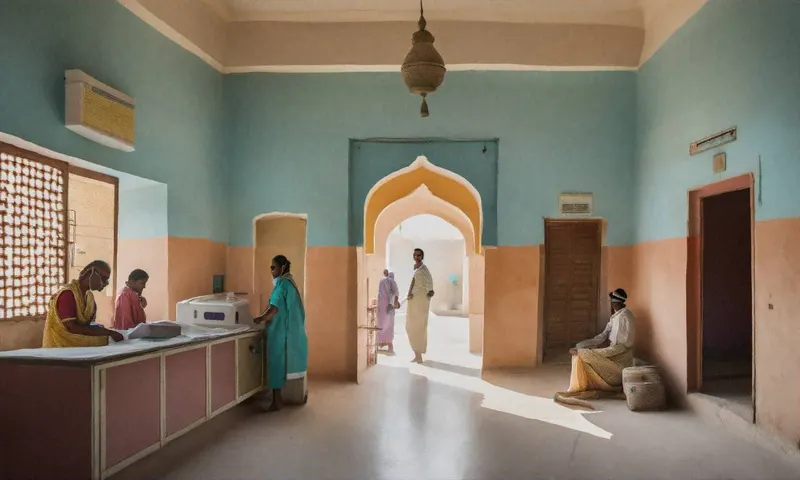
Ramesh Meena, a 47-year-old farmer from a village about 40 kilometres outside Jodhpur, found out he needed heart bypass surgery in October last year. His family's annual income is roughly Rs 80,000. The surgery was estimated at Rs 3.5 lakh at a private hospital in Jaipur. Without the Chiranjeevi Yojana, Ramesh's family would have had two choices: sell their land or let him die. That sounds dramatic, but I have reported on enough medical bankruptcy cases across Rajasthan to know this is the reality for lakhs of families.
Ramesh got his surgery done at Eternal Heart Care Centre in Jaipur. He did not pay a single rupee. The hospital billed the State Health Assurance Agency, and the entire cost was covered under his Chiranjeevi card. When I visited his home in December, he was recovering well, sitting in the courtyard, drinking chai. His wife Kamla told me, "Humne socha tha ki ab bas Bhagwan bharosa hai. Phir kisine bola ki Chiranjeevi card banwa lo. Wahi bach gaye."
This is the scheme I am going to explain to you in detail today. Not just the official bullet points you can find on the government website, but the real, practical, on-the-ground information that matters when you or your family member is lying in a hospital bed.
What Exactly is Chiranjeevi and Why Does It Matter?
Chiranjeevi Swasthya Bima Yojana is Rajasthan's state health insurance scheme. It started on 1 May 2021, and the idea was straightforward -- give every family in Rajasthan health coverage so that nobody goes bankrupt because of a medical emergency. The scheme sits on top of the Ayushman Bharat PM-JAY framework at the central level, but Rajasthan extended it much further. While Ayushman Bharat covers only BPL families and gives Rs 5 lakh coverage, Chiranjeevi is open to every family in the state and gives up to Rs 25 lakh coverage per family per year.
Read that number again. Twenty-five lakh rupees. Per family. Per year. That covers almost everything -- heart surgeries, cancer treatment, kidney transplants, brain surgeries, joint replacements, normal deliveries, C-sections, dialysis, ICU charges, medicine costs during hospitalization, and even follow-up visits after discharge. Pre-existing diseases are covered from day one. No waiting period. No exclusions for age-related conditions.
The scheme is run by the State Health Assurance Agency, which works under the Department of Medical, Health and Family Welfare. The money comes from the state budget. For free-category families, the government pays the entire premium. For others, families pay Rs 850 per year and get the same Rs 25 lakh coverage. Think about that for a second. Rs 850 a year. That is less than what most people spend on mobile recharges in a month.
Case Study: Sunita's Delivery in Udaipur
Before I get into the registration process and technical details, let me share one more story because I think stories explain things better than government circulars.
Sunita Kumari, 28, lives in a small town near Udaipur. She was pregnant with her second child and was told she would need a C-section because of complications. She went to a private hospital -- Geetanjali Medical College -- with her Jan Aadhaar card. The hospital has a Chiranjeevi desk right at the entrance. They verified her identity, checked her registration status on the system, and admitted her. The C-section happened the next morning. She stayed in the hospital for three days. Total bill: Rs 38,000. Amount paid by Sunita: zero.
"Pehle bachche ke time humne Rs 25,000 apni jeb se diye the," Sunita told me. "Tab Chiranjeevi ke baare mein pata nahi tha. Is baar ek paisa nahi laga." Her husband Dinesh, who drives an auto-rickshaw, added, "Paanch saal pehle delivery ka kharcha uthane ke liye sethji se byaaj pe paisa liya tha. Ek saal laga chukane mein."
These are the kind of differences this scheme makes. It is not an abstract policy discussion. It is the difference between a family having savings and a family drowning in debt.
Who Gets Free Coverage and Who Pays Rs 850?
The Chiranjeevi Yojana divides families into two categories. Understanding which category you fall into is the first step.
Free Category -- No Payment Needed: If your family falls into any of these groups, you are automatically eligible for free coverage. You do not need to pay any premium at all.
Families holding ration cards under the National Food Security Act (NFSA). This is a huge chunk of Rajasthan's population. If you have an NFSA ration card -- the one that gives you subsidized wheat, rice, and other grains -- you are covered.
Families listed in the Socio-Economic Caste Census (SECC) 2011 database. Even if you do not have an NFSA ration card, if your name was in the 2011 SECC list, you qualify.
Small and marginal farmers registered with the state agriculture department. This covers farmers with less than 2 hectares of land.
Beneficiaries of existing government schemes like Ayushman Bharat PM-JAY. If you already have a golden card from Ayushman Bharat, you are automatically covered under Chiranjeevi too, with the higher Rs 25 lakh limit.
COVID-19 orphans and families of frontline workers who passed away during the pandemic.
Families where at least one member is a state government contractual employee, as long as they have a Jan Aadhaar card.
Paid Category -- Rs 850 Per Year: Everyone else. If you do not fall into any of the above groups but you live in Rajasthan, you can still register by paying Rs 850 per family per year. Same coverage -- Rs 25 lakh. Same hospitals. Same benefits. No difference at all in the treatment you receive. The Rs 850 is paid once a year during registration or renewal.
Step-by-Step: How to Register
Okay, this is the part where I am going to be very specific because registration confusion is the number one reason people miss out on this scheme. I have seen it happen dozens of times -- a family shows up at the hospital, needs treatment, but their card is not active because they never completed registration properly. So read this carefully.
Step 1 -- Get a Jan Aadhaar Card. This is the foundation. Jan Aadhaar is Rajasthan's family identity card. Every family in the state needs one. If you do not have it, go to any e-Mitra centre and get it made. You need the Aadhaar cards of all family members. The Jan Aadhaar is free to make. It takes about 15-20 minutes at the e-Mitra centre.
Step 2 -- Go to the SSO Portal. Open sso.rajasthan.gov.in in your browser. If you already have an SSO (Single Sign-On) ID, log in. If not, create one using your Jan Aadhaar number or Aadhaar number. The SSO portal is the gateway to almost all Rajasthan government services, so it is worth having an account anyway.
Step 3 -- Find the Chiranjeevi Application. Once logged in, look for the Chiranjeevi Yojana option on your dashboard. It might be under Health Services. Click on it.
Step 4 -- Enter Your Jan Aadhaar Family ID. The system will pull up all the family members linked to your Jan Aadhaar. Check that the names, ages, and Aadhaar numbers are correct. If something is wrong, you need to fix it on the Jan Aadhaar portal first before proceeding.
Step 5 -- Category Check. The system will automatically check whether you fall in the free category by matching your Jan Aadhaar against the NFSA, SECC, and other databases. If you qualify for free coverage, great -- your registration gets confirmed right there. If not, you will be asked to pay Rs 850.
Step 6 -- Payment (If Applicable). For paid category, you can pay through debit card, credit card, net banking, or UPI right there on the portal. Payment confirmation is instant.
Step 7 -- Download Your E-Card. After registration, you can download your Chiranjeevi e-card. It has your policy number and the details of all covered family members. Save it on your phone. Take a screenshot. Print a copy and keep it in your wallet. You will need this when you go to a hospital.
Cannot Do It Online? No problem. Walk into any e-Mitra centre in Rajasthan. There are thousands of them -- every town, most large villages have one. The operator will do the entire registration for you. They charge Rs 20 as a service fee. Bring your Jan Aadhaar card and Aadhaar cards of family members. That is all you need.
Finding Empanelled Hospitals -- This is Where People Get Confused
Not every hospital accepts Chiranjeevi. You have to go to an empanelled hospital. As of February 2026, there are over 3,200 empanelled hospitals across Rajasthan. That is a big number, but let me break it down so you know exactly where to go.
All government hospitals are covered. Every district hospital, sub-district hospital, community health centre, and primary health centre that has indoor (admission) facilities is part of the Chiranjeevi network. You do not need to check anything -- just walk in with your Jan Aadhaar.
Government medical college hospitals are covered. SMS Hospital in Jaipur, JLN Hospital in Ajmer, SN Medical College in Jodhpur, RNT Medical College in Udaipur, SP Medical College in Bikaner, and all other government medical colleges in the state.
Over 1,800 private hospitals are empanelled. This includes big names like Eternal Hospital, Fortis, Narayana Health, Manipal Hospital, and many local hospitals in every district. The list keeps growing as more hospitals sign up.
Some hospitals outside Rajasthan are also covered. For specialized treatments that are not available within the state, select super-specialty hospitals in Delhi-NCR and other cities are empanelled. This is particularly important for rare surgeries and organ transplants.
To check if a specific hospital is empanelled, go to chiranjeevi.rajasthan.gov.in. There is a hospital search option. Select your district, select the type of treatment you need, and the portal will show you all available empanelled hospitals. I check this portal regularly, and I can tell you the data is updated frequently.
One practical tip from my experience: if you are planning a non-emergency surgery, call the hospital first and specifically ask their Chiranjeevi desk about the procedure you need. Some hospitals are empanelled for general treatments but not for super-specialty procedures. Better to confirm before admission than to face a surprise bill later.
What Happens When You Walk Into a Hospital
Let me walk you through what actually happens, step by step, when you need treatment.
You arrive at the empanelled hospital. Go to the Chiranjeevi help desk. Almost all empanelled hospitals have a dedicated counter or desk for scheme beneficiaries. Show them your Jan Aadhaar card or your Chiranjeevi e-card.
The hospital staff will verify your identity. This is done through biometric authentication -- you place your finger on a small device connected to the Aadhaar system. If fingerprint does not work (which happens sometimes, especially with manual labourers whose fingerprints are worn), they can do iris (eye) scan or OTP-based verification.
Once verified, the hospital admits you and starts treatment. For planned surgeries, the hospital raises a pre-authorization request through the Transaction Management System (TMS). This is basically the hospital telling the government, "We are doing X procedure for this patient, it will cost Y amount, please approve." Approval usually comes within 24 hours.
For emergencies -- and this is very important -- the hospital starts treatment immediately. They do not wait for pre-authorization. Treatment first, paperwork later. The post-authorization has to be submitted within 72 hours. I have personally verified this at multiple hospitals. In genuine emergencies, no empanelled hospital will refuse treatment or ask for advance payment from a Chiranjeevi beneficiary.
When you are discharged, you just sign the discharge summary. That is it. The hospital settles the bill with the State Health Assurance Agency directly. You walk out without paying anything.
Real Numbers: What the Scheme Has Done So Far
I believe in looking at actual data rather than just government claims. Here are some numbers I have gathered from the State Health Assurance Agency and independent sources.
Total registered families as of February 2026: approximately 1.4 crore families. That covers roughly 4.5 crore individuals, which is about 55 percent of Rajasthan's population. The government's goal is to reach 80 percent coverage by the end of 2026.
Total hospitalizations under the scheme from May 2021 to January 2026: over 45 lakh. That is 45 lakh people who received hospital treatment without paying out of pocket.
Total amount disbursed to hospitals by the government: approximately Rs 8,700 crore over the life of the scheme. The average claim size is about Rs 19,000 per hospitalization.
The most common treatments claimed under the scheme are general surgeries (hernias, appendix, gallbladder), maternity and delivery, orthopaedic procedures (knee and hip replacements, fracture surgeries), cardiac procedures, dialysis, and cancer treatment. Cardiac procedures alone account for about Rs 1,400 crore of the total claims.
These numbers tell a story. Without this scheme, Rs 8,700 crore would have come out of people's pockets, or more likely, people would simply not have gotten treated. A significant portion of that amount -- maybe 30-40 percent in my estimate -- would have pushed families below the poverty line.
Common Problems and How to Solve Them
I would not be doing my job properly if I did not tell you about the problems. No scheme this large runs without hiccups.
Problem: Hospital says "Chiranjeevi limit khatam ho gayi." Some hospitals, especially smaller private ones, have an annual limit on how many Chiranjeevi patients they will take because the government's reimbursement rates are lower than their regular rates. If this happens, go to a different empanelled hospital. Government hospitals do not have this issue -- they always accept Chiranjeevi patients.
Problem: Biometric verification failing. This is common with elderly patients and people who do manual labour. Ask the hospital to try iris scan instead of fingerprint. If that also fails, OTP-based verification using the Aadhaar-linked mobile number is the backup option. If none of these work, contact the Chiranjeevi helpline at 14555 immediately.
Problem: Hospital asking for advance payment or extra charges. This is not supposed to happen. If an empanelled hospital asks for any payment from a Chiranjeevi beneficiary for a covered procedure, file a complaint at the Chiranjeevi helpline 14555 or through the Rajasthan Sampark portal at sampark.rajasthan.gov.in. The government takes these complaints seriously, and hospitals can be de-empanelled for overcharging.
Problem: Registration showing as "inactive" or "expired." For paid-category families, the registration needs to be renewed every year by paying Rs 850 again. If you forget to renew, your coverage lapses. Set a reminder on your phone. For free-category families, the coverage is continuous as long as they remain in the eligible database.
Problem: Needed treatment not covered. While 1,950+ packages are covered, some extremely rare or experimental treatments might not be in the list. In such cases, the hospital can request a special approval from the State Health Assurance Agency. I have seen cases where even unlisted procedures were approved on a case-by-case basis, especially when no alternative treatment was available.
District-by-District Coverage: Who is Using the Scheme Most?
Interestingly, the utilization of Chiranjeevi varies a lot across districts. Jaipur district has the highest number of claims, which makes sense because the city has the most empanelled hospitals. But in terms of registration rate as a percentage of population, districts like Barmer, Jaisalmer, and Dungarpur have some of the highest rates -- above 70 percent. People in remote areas who previously had almost no access to decent healthcare are now traveling to district hospitals and getting treated for free.
Some specific numbers that stood out to me: Jodhpur district saw 3.2 lakh hospitalizations under the scheme in 2025. Udaipur: 2.8 lakh. Ajmer: 2.1 lakh. Bikaner: 1.9 lakh. Kota: 1.7 lakh. Even smaller districts like Banswara and Pratapgarh, which are predominantly tribal, recorded over 60,000 hospitalizations each.
The tribal districts are worth highlighting. Healthcare access in southern Rajasthan has always been poor. Hospitals are far away, roads are bad, and families could never afford private care. Chiranjeevi has genuinely changed the equation there. A doctor at the Banswara district hospital told me, "Pehle tribal families apne bachche ko laate hi nahi the hospital. Ab hamare beds full rehte hain. Log aa rahe hain." That is the kind of change that does not show up in policy papers but changes lives on the ground.
What to Carry to the Hospital: A Quick Checklist
I am putting this as a simple list because this is the kind of thing you want to save on your phone for when you actually need it.
- Jan Aadhaar card (physical card or screenshot of e-card on phone)
- Aadhaar card of the patient
- Chiranjeevi e-card if downloaded (not mandatory if you have Jan Aadhaar, but helpful)
- Any previous medical reports related to the condition
- A referral letter from a government doctor if you are going to a private hospital for a planned surgery (some hospitals ask for this, others don't -- better to have it)
That is basically it. You do not need ration cards, income certificates, or caste certificates at the hospital. All verification happens digitally through the Jan Aadhaar system.
Helplines and Contact Information -- Save These Numbers
When you are dealing with a medical emergency, you do not want to be hunting for phone numbers. Here they are.
Chiranjeevi Yojana Helpline: 14555. This is toll-free, runs 24 hours a day, seven days a week. Call this number for anything related to the scheme -- registration issues, hospital complaints, coverage questions, anything.
Rajasthan Sampark Helpline: 181. This is the general state government helpline. You can register complaints about any government service, including Chiranjeevi.
State Health Assurance Agency Office (Jaipur): 0141-2609233. This is the head office number. Useful if you have a complicated case that the helpline could not resolve.
For online grievances, go to sampark.rajasthan.gov.in or the Jan Sunwai portal of the Chief Minister's Office.
Comparison with Health Schemes in Other States
I get asked this a lot -- how does Chiranjeevi compare with health insurance schemes in other states? Here is a quick comparison based on my research.
Ayushman Bharat PM-JAY (Central): Rs 5 lakh coverage, only for BPL families. Chiranjeevi covers 5 times more amount and is open to everyone.
Andhra Pradesh Aarogyasri: Rs 5 lakh coverage, similar to PM-JAY. Good scheme but lower coverage amount.
Kerala KASP: Rs 5 lakh coverage, integrated with PM-JAY. Kerala's healthcare infrastructure is better, but the coverage amount is the same as PM-JAY.
Tamil Nadu CMCHIS: Rs 5 lakh coverage, good hospital network. Again, lower coverage than Chiranjeevi.
Rajasthan's Rs 25 lakh coverage is the highest among all state and central health insurance schemes in India. And the Rs 850 annual premium for non-free-category families is among the lowest. On paper and in practice, this is one of the best state health insurance schemes running anywhere in the country.
The one area where Rajasthan lags behind some southern states is hospital infrastructure. Kerala and Tamil Nadu have more hospitals per capita, better primary healthcare systems, and higher doctor-to-patient ratios. Rajasthan is catching up -- the number of empanelled hospitals has gone from 1,500 in 2021 to 3,200 in 2026 -- but there is still ground to cover, especially in western Rajasthan where villages are far apart and healthcare facilities are sparse.
A Final Word from the Ground
I have been a health reporter in Rajasthan for over a decade. I have seen families sell their ancestral homes for medical treatment. I have seen farmers take loans at 36 percent annual interest from local moneylenders because their child needed surgery. I have covered deaths that happened simply because a family could not afford a Rs 50,000 procedure.
Chiranjeevi has not fixed everything. Healthcare in Rajasthan still has massive problems -- shortage of doctors in rural areas, overcrowded government hospitals, inconsistent quality at some empanelled private hospitals. But the financial barrier? For 1.4 crore families, that barrier is gone. You can walk into a hospital, get treatment worth lakhs of rupees, and walk out without paying. Five years ago, that was unthinkable for most Rajasthani families.
If you live in Rajasthan and have not registered for Chiranjeevi yet, please do it today. It takes 15 minutes online or a single trip to an e-Mitra centre. You may never need it. But if you do -- and medical emergencies do not send advance notice -- you will thank yourself.
And if you know someone in your village or neighbourhood who does not know about this scheme, tell them. That is the least we can do.
Source: This article is based on ground reporting across Jaipur, Jodhpur, Udaipur, and Banswara districts, combined with official data from chiranjeevi.rajasthan.gov.in, the Rajasthan SSO portal (sso.rajasthan.gov.in), the State Health Assurance Agency, and the Department of Medical, Health and Family Welfare, Government of Rajasthan. Patient names used with verbal consent.
Comments 0
Leave a Comment