One Nation One Ration Card 2026: How to Apply, Link Aadhaar, and Access Benefits Anywhere in India
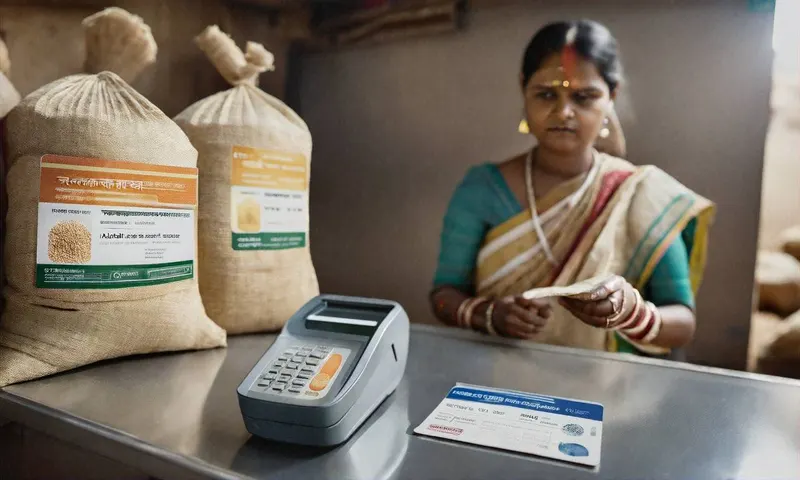
If you move to another state for work, you can still get your ration. Yes, this is really possible now. And if nobody told you about it, or if you tried once and it did not work, this guide is for you. We are going to explain everything in simple language -- how the scheme works, how to link your Aadhaar, where to go for ration, and what to do if something goes wrong.
This is not a government notice full of difficult words. This is a plain, simple explanation for every worker, every family, every person who depends on the ration system for their dal, chawal, and atta.
What is One Nation One Ration Card? Seedhi Baat
Pehle kya hota tha? You had a ration card in your village or town. That card was linked to one specific ration shop -- your nearest Fair Price Shop. If you moved to Mumbai for construction work, or to Delhi as a domestic helper, or to Gujarat for factory work, your ration card was useless. You could not use it in the new city. Your family back home could still use it, but you? Bhookhe raho ya full price pe kharido. That was the reality for crores of people.
Ab kya badla hai? Under One Nation One Ration Card -- called ONORC for short -- your ration card works anywhere in India. Any state. Any district. You go to any Fair Price Shop that has the electronic machine (called ePoS machine), put your finger on the scanner, and you get your ration. Simple as that.
The system uses your Aadhaar number to identify you. When you scan your fingerprint at a ration shop in, say, Surat, the machine checks a central computer system called IM-PDS (Integrated Management of Public Distribution System). This system knows how much ration you are allowed every month and how much you have already taken. It deducts the amount you collect from your total monthly quota. So if your family gets 25 kg per month and you take 5 kg in Surat, your family can still take 20 kg back home in Bihar.
All 28 states and 8 union territories are now part of this system. Over 5.4 lakh Fair Price Shops across the country have the ePoS machines. So whether you are in Kerala or Kashmir, the system works.
Who Can Use This Scheme?
Anyone who has a ration card under the National Food Security Act (NFSA) can use ONORC. This includes:
- Priority Household (PHH) cardholders: Each person in the family gets 5 kg of food grains every month.
- Antyodaya Anna Yojana (AAY) cardholders: The poorest families get 35 kg per family per month, no matter how many people are in the family.
There is one condition -- your Aadhaar must be linked to your ration card. Without this, the ePoS machine cannot identify you. If your Aadhaar is not linked, don't worry. We will explain exactly how to do it below.
How Much Ration Do You Get and at What Price?
Let us make this very clear because there is a lot of confusion about this.
PHH Card Holders: Each family member gets 5 kg food grains per month. The official prices are: rice at 3 rupees per kg, wheat at 2 rupees per kg, and coarse grains (bajra, jowar, ragi) at 1 rupee per kg.
AAY Card Holders: Each family (not each person, the whole family together) gets 35 kg of food grains per month. Same prices as above.
But here is the good news: Under the Pradhan Mantri Garib Kalyan Anna Yojana (PMGKAY), which the government has extended through March 2026, all this ration is completely FREE. You don't pay 3 rupees or 2 rupees. You pay zero. Bilkul muft. This has been going on since 2020, and the extension means free grains continue at least until end of March 2026.
Now you might ask -- what is the difference between PHH and AAY cards? AAY cards are for the most vulnerable families. Widows living alone, families with a disabled member, very elderly people without income, landless labourers, tribal families in remote areas. The state government decides who gets AAY and who gets PHH based on economic criteria. If you think you should have an AAY card but have a PHH card, you can apply at your district food office for a category upgrade.
Step by Step: How to Link Your Aadhaar to Your Ration Card
This is the most important thing you need to do. Without Aadhaar linking, you cannot use ONORC. There are five ways to do it. Pick whichever is easiest for you.
Method 1: At Your Ration Shop (Easiest for Most People)
Go to your regular Fair Price Shop -- the one where you normally get ration. Carry your ration card and your Aadhaar card. Tell the shop dealer you want to link Aadhaar. He will enter your ration card number and Aadhaar number into the ePoS machine. Then he will take your fingerprint. That's it. The linking happens right there. Do this for every family member whose name is on the ration card. Go together if possible, or go on different days.
Method 2: Online Through the State PDS Portal
Each state has its own PDS website. For example, UP has fcs.up.gov.in, Bihar has epds.bihar.gov.in, Maharashtra has mahafood.gov.in. The central portal is epds.nic.in. Go to your state's website, look for "Aadhaar Seeding" or "Aadhaar Linking" option, enter your ration card number and the Aadhaar numbers of all family members, and submit. The department will verify and complete the linking in a few days. You will get a confirmation SMS.
Method 3: At the District Food Office
Visit the office of the District Supply Officer or the Food Inspector in your area. Carry your ration card, Aadhaar card, and one photocopy of each (self-attested -- meaning sign on the photocopy yourself). Write a simple application saying "I want to link my Aadhaar with my ration card" and submit it. They will process it in 7 to 15 working days. This method is useful if you face problems with the online or shop-based methods.
Method 4: At a Common Service Centre (Jan Seva Kendra)
There is a Jan Seva Kendra in almost every area now. The person running it can do the Aadhaar linking for you. They may charge a small fee -- usually 20-50 rupees. This is the best option if you are not comfortable with online work and your ration shop dealer is not helpful.
Method 5: Through the Mera Ration App
Download the "Mera Ration" app from the Google Play Store or Apple App Store. Register with your ration card number. The app will guide you through the Aadhaar linking process. It is available in 13 languages including Hindi, Tamil, Telugu, Bengali, Marathi, Gujarati, Kannada, Malayalam, Odia, Punjabi, Assamese, Urdu, and English.
One important thing: The name on your Aadhaar card and the name on your ration card should match. If your name is spelled differently on the two cards -- for example, "Ramesh Kumar" on Aadhaar and "Ramesh Kr." on ration card -- the linking might fail. In that case, first get the name corrected on one of the documents. Aadhaar correction can be done at any Aadhaar centre. Ration card correction requires an application at the food office.
How to Get Your Ration in Another State: Step by Step
Okay, so your Aadhaar is linked. You have moved to another state for work. Now what?
Step 1: Find a Fair Price Shop near your new location that has an ePoS machine. How to find one? Open the Mera Ration app and use the "Nearest Fair Price Shop" option -- it uses your phone's GPS to show nearby shops. Or go to impds.nic.in and use the shop locator. Or simply ask around in your neighbourhood -- most people know where the ration shop is.
Step 2: Go to that shop during ration distribution time. Carry your ration card (the physical card or the digital copy on the Mera Ration app) and your Aadhaar card.
Step 3: Tell the shop dealer that you want to collect ration under ONORC. He will enter your ration card number or Aadhaar number into the ePoS machine.
Step 4: Place your finger on the biometric scanner. The machine will verify your identity and show your monthly entitlement and how much you have already collected this month.
Step 5: The dealer gives you the ration. You get a printed receipt showing the date, quantity, and shop details. Keep this receipt.
That is the entire process. Five steps. Should take 10-15 minutes if there is no queue.
Common Problems and How to Fix Them
Let us be honest -- the system does not work perfectly every time. Here are the most common problems people face and what you can do about them.
Problem: Fingerprint not matching
This happens a lot, especially with people who do manual labour. Construction workers, farm labourers, brick kiln workers -- their fingerprints get worn out from hard work. The machine cannot read them properly.
Solution: Ask the dealer to try iris scan instead of fingerprint. Most new ePoS machines have iris scanning option. If that also fails, ask for OTP-based verification -- the system can send an OTP to your Aadhaar-linked mobile number. Put in the OTP, and you get your ration. If the dealer says "OTP option nahi hai," call the helpline number and complain, because the government has specifically allowed OTP verification for cases where biometrics fail.
Problem: Dealer refuses to give ration to "outsiders"
Some dealers in certain states still resist giving ration to people from other states. They might say "yahan ka ration card lao" or "yeh yahan nahi chalega." This is WRONG. The government has made it very clear that any NFSA beneficiary can collect ration from any ePoS-enabled shop in India.
Solution: Show the dealer the ONORC government notification on your phone (available on the Mera Ration app under "Notifications"). If he still refuses, note down the shop number and dealer name, and file a complaint on the Mera Ration app or call the state helpline. Do not accept no for an answer -- this is your right under the law.
Problem: "Server down" or "Internet not working"
The ePoS machine needs internet to connect to the central system. In many rural areas and some urban locations, internet connectivity is poor. If the internet is down, the machine cannot verify your identity.
Solution: Unfortunately, there is no immediate fix for this. You have to come back when the internet is working. But report the issue on the Mera Ration app so that the government knows which areas have connectivity problems. In some states, the government is installing dedicated SIM-based internet connections at ration shops to reduce this problem.
Problem: Your name or details show differently in the system
Sometimes the system shows wrong information -- wrong name spelling, wrong family member count, wrong entitlement. This happens when data entry was done incorrectly at the time of digitization.
Solution: Visit your home state's food department office or the district food office. Carry your physical ration card and Aadhaar card. File a correction request. You can also do this through the state PDS portal online. Correction usually takes 15-30 days.
Problem: Ration shop is far from your location
In some areas, especially in new industrial zones or construction sites, the nearest ration shop might be several kilometers away.
Solution: Check the Mera Ration app for all nearby shops, not just the nearest one. Sometimes a shop that is slightly farther but on a bus route is more convenient. Also, in areas with many migrant workers, some NGOs and labor organizations run awareness camps about nearby ration shop locations. Ask at your workplace or with local community groups.
The Mera Ration App: Your Best Tool
If you have a smartphone, download the Mera Ration app. It is free. It takes very little space. And it can do a lot of useful things:
- Check how much ration you can get this month and how much is left
- See the full history of every time you collected ration -- date, place, amount
- Find the nearest ration shop on a map
- Check if your Aadhaar is linked properly
- File a complaint if something goes wrong
- See a digital copy of your ration card on your phone
The app works in 13 languages. You can change the language in the settings. It works on basic smartphones too -- you do not need an expensive phone.
State Helpline Numbers for Ration Problems
If you face any problem with ration -- whether it is Aadhaar linking, dealer issues, wrong entitlement, or anything else -- call your state's food department helpline. Here are the numbers for major states where migrant workers commonly go:
- National Helpline (All India): 14445
- Maharashtra: 1800-22-4950 (toll free)
- Delhi: 1800-11-0841 (toll free)
- Gujarat: 1800-233-5500 (toll free)
- Karnataka: 1967
- Tamil Nadu: 1800-425-5901 (toll free)
- Uttar Pradesh: 1800-180-0150 (toll free)
- Bihar: 1800-3456-194 (toll free)
- Rajasthan: 1800-180-6030 (toll free)
- West Bengal: 1800-345-5505 (toll free)
- Punjab: 1800-3006-1313 (toll free)
- Madhya Pradesh: 181 or 1800-233-4375
- Jharkhand: 1800-345-6598 (toll free)
- Odisha: 1800-345-6724 (toll free)
- Haryana: 1800-180-2087 (toll free)
All these are toll-free numbers. You will not be charged for calling. Call during working hours (9 AM to 6 PM on weekdays) for the fastest response.
How ONORC Has Helped Migrant Workers: Real Stories
India has about 14 crore people who move from one state to another for work. Construction workers from Bihar going to Mumbai. Farm labourers from UP going to Punjab during harvest season. Domestic helpers from Jharkhand going to Delhi. Factory workers from Odisha going to Gujarat. Before ONORC, all these people lost their food security when they moved.
Kamla Devi, a domestic worker from Darbhanga, Bihar, works in a house in Noida. "Pehle jab main yahan aayi thi, ration nahi milta tha. Full rate pe bazaar se lena padta tha. Ab mujhe Noida mein hi 5 kg chawal mil jaata hai muft mein, aur mere bachche Bihar mein apna hissa le lete hain." Before, she had to buy everything at market price. Now she gets her share in Noida, and her children collect the rest in Bihar.
Raju, a construction worker from Kalahandi, Odisha, moves between Gujarat and Maharashtra depending on where construction projects are happening. "Har teen-chaar mahine sheher badalta hoon. Pehle ration card ka koi fayda nahi tha mere liye. Ab jahan jaata hoon, ration mil jaata hai. Sirf ungli lagao aur chawal lo." He just puts his finger on the scanner and gets rice. Wherever he goes.
Since the system became fully operational across all states, more than 95 crore portability transactions have been recorded. That means 95 crore times, someone collected ration from a shop that was not their "home" shop. Maharashtra, Delhi, Gujarat, Karnataka, and Tamil Nadu see the most incoming migrant ration collections. Bihar, UP, Jharkhand, Odisha, and MP are where the families back home collect their share.
Important Things to Remember
Before we finish, here are some things you should keep in mind:
Your ration quota is monthly. If you don't collect your ration in a particular month, it does not carry over to the next month. Use it or lose it. So make sure you go to the ration shop every month.
Keep your mobile number updated in Aadhaar. OTP verification uses your Aadhaar-linked mobile number. If you changed your phone number, update it in Aadhaar first. You can do this at any Aadhaar centre.
You can split your quota. This is a feature many people don't know about. If a family of 5 has a 25 kg quota, the husband in Gujarat can take 10 kg, and the wife in Bihar can take 15 kg. The system tracks everything automatically.
Free ration continues through March 2026. After that, the government will decide whether to extend it again or go back to the Rs 2-3 per kg price. Keep an eye on the news.
If you don't have a ration card yet, you can apply at your district food office or through your state's PDS portal. You will need Aadhaar card, income proof, and residence proof. The process takes 30-60 days in most states.
If you face problems, don't stay quiet. Call 14445 (national helpline), file a complaint on the Mera Ration app, or go to the District Grievance Redressal Officer. Under the National Food Security Act, you have the legal right to get your ration. Nobody can deny it to you.
Yeh aapka haq hai. This is your right. Don't let anyone tell you otherwise.
Source: This article is based on official information from the Department of Food and Public Distribution, the National Food Security Act portal (nfsa.gov.in), the IM-PDS portal (impds.nic.in), and the Press Information Bureau releases dated February 2026.
Comments 0
Leave a Comment