National Health Mission 2026: Strengthening Primary Healthcare in Rural India Through Health and Wellness Centres
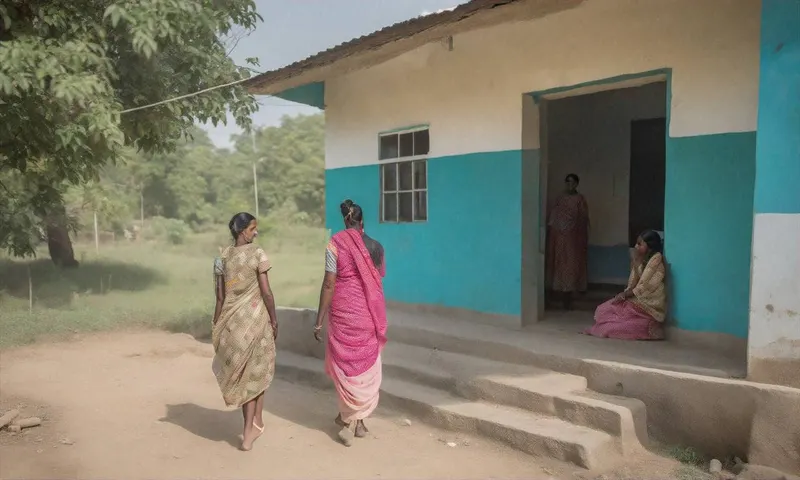
I arrived at the Health and Wellness Centre in a small town near Chitrakoot, Bundelkhand, around nine in the morning last Tuesday. The building was freshly painted -- white walls, a blue strip along the bottom, and the Ayushman Arogya Mandir signboard nailed above the entrance. Inside, about thirty people were already sitting on plastic chairs lined up against the wall. A pregnant woman held her MCP card. Two old men waited for their blood pressure reading. A child coughed in his mother's lap. And there was one doctor. One single Community Health Officer for a centre that serves roughly fifteen surrounding villages.
This is what the National Health Mission looks like on the ground in 2026. Not on paper, not in budget documents, not in press releases from the Health Ministry -- but right there, on a dusty road in one of India's most backward regions.
I have been covering rural health for close to eight years now. I have visited PHCs in Jharkhand where the roof leaked during monsoon and the medicine cabinet was locked because the pharmacist hadn't shown up in three weeks. I have sat with ASHA workers in Rajasthan who walked six kilometres in the summer heat to track a pregnant woman who had missed her antenatal check-up. And I have also seen shining new Health and Wellness Centres in Kerala and Tamil Nadu where tele-consultation with a specialist actually works, where a patient with diabetes can get a free glucometer check and walk out with a month's supply of metformin. The gap between the best and the worst is enormous. That gap is, in many ways, the story of NHM itself.
What Is the National Health Mission, Really?
Let me break this down without the government jargon. NHM is the central government's biggest health programme. It has been running since 2005 -- first as the National Rural Health Mission, and then from 2013 onwards as the National Health Mission, which clubbed together the rural and urban sub-missions. The basic idea? Build health infrastructure from the bottom up. Train community health workers. Supply free medicines. Run immunisation drives. Make sure a woman in a remote village does not die during childbirth simply because the nearest hospital is sixty kilometres away.
The programme works through State Health Societies. Delhi sends the money and the guidelines, but each state writes its own Programme Implementation Plan -- a PIP, in the usual acronym soup that the Health Ministry loves. Bihar's PIP looks different from Himachal's because the problems are different. Bihar struggles with institutional delivery rates and a shortage of trained ANMs. Himachal has better infrastructure but faces the challenge of serving scattered mountain populations where a single PHC may cover an area that takes four hours to cross on foot.
For the financial year 2025-26, the central government allocated approximately Rs 36,000 crore to NHM. Sounds like a lot, right? Divide that by India's 1.4 billion population. That is roughly Rs 257 per person per year from the centre. States add their own share, but the combined per capita spending on primary health through NHM still does not cross Rs 500 in most states. Compare that with what a single visit to a private clinic costs in a tier-two city, and you begin to understand the scale of the challenge.
Ayushman Arogya Mandir: The Old Sub Health Centre Gets a New Life
The biggest push under NHM in the last five years has been the conversion of old Sub Health Centres and Primary Health Centres into Ayushman Arogya Mandirs -- what were earlier called Health and Wellness Centres. The government crossed the 1,65,000 mark in early 2026. They had originally targeted 1,50,000, so on paper, the target is exceeded.
But here is where things get complicated. I have visited maybe forty or fifty of these centres across six states in the last two years. Some of them are genuinely well-run. The one I saw in Ernakulam district had a Community Health Officer who was a trained nurse practitioner, a functioning eSanjeevani tele-consultation setup with a tablet and a decent internet connection, and a medicine stock that actually matched the essential drug list. Patients came, got screened for blood pressure and sugar, received their medications, and went home. Proper healthcare delivery at the doorstep, just like the programme promises.
Then there are the others. In Banda district of Uttar Pradesh, I walked into a "converted" Health and Wellness Centre that was essentially the same crumbling Sub Health Centre it had been for twenty years -- except now it had a new signboard. The Community Health Officer position was vacant. The ANM was running the show alone, doing what she could with the supplies she had. The eSanjeevani tablet was there, but the internet connectivity was so bad that tele-consultations dropped mid-session. Medicine stock? About forty percent of the listed drugs were out of stock. The NCD screening register showed entries for maybe three hundred people out of a target population of over eight thousand above the age of thirty.
The truth about the HWC programme is somewhere between the government's success stories and the critics' dismissal. A lot has changed. Genuinely. The fact that you can walk into a government facility in a small town in Madhya Pradesh and get your blood sugar tested for free was not possible ten years ago. But the quality is really uneven, and the staffing crisis is real.
The ASHA Worker: India's Unsung Health Warrior
If you want to understand NHM's impact on the ground, talk to an ASHA worker. I have spoken to hundreds of them over the years. Their stories are simultaneously inspiring and maddening.
There are about 10.5 lakh ASHA workers across the country right now. Each one is responsible for roughly 1,000 people in her village or hamlet. She is the one who goes door to door identifying pregnant women, making sure they go for antenatal visits, tracking immunisation schedules, distributing ORS packets and iron tablets, and -- since the NCD screening push began -- checking blood pressure and blood sugar levels with a digital BP monitor and a simple glucometer.
I remember meeting Sunita Devi in a village about twenty kilometres from Gaya, Bihar, sometime in late 2025. She had been an ASHA worker for eleven years. She pulled out a thick register from a steel trunk in her house and showed me her records -- every pregnant woman in the village for the past decade, every child's immunisation status, every referral she had made to the PHC. She knew every family in her catchment area by name. When I asked her about her biggest challenge, she did not say money first. She said, "Doctor nahin milta." You can't find a doctor. When she refers someone to the PHC, the doctor is often not there. Or the PHC does not have the medicine that the patient needs, so the patient ends up going to a private practitioner anyway.
Now, about the money. ASHA workers are technically "volunteers" -- that is how the government classifies them. They receive activity-based incentives, not a fixed salary. Administer a dose of ORS? You get Rs 50. Ensure a full immunisation schedule for a child? There is an incentive for that. Help a woman deliver at a government hospital under JSY? Another incentive. The total monthly income for a typical ASHA worker ranges from Rs 3,000 to Rs 8,000 depending on how many tasks she completes and how promptly the incentive payments come through. In many states, the payments are delayed by months. Several states have started paying a fixed monthly honorarium on top of the activity incentives -- Rs 3,000 to Rs 5,000 per month -- but even then, the total compensation is below minimum wage for the amount of work these women do.
The irony is hard to miss. The ASHA worker programme is arguably the most successful component of NHM. Multiple international health organisations have praised it. The WHO gave India's ASHA workers a Global Health Leaders Award in 2022. They are the reason India's immunisation rates have gone up, maternal mortality has come down, and community-level health awareness has improved in places where the nearest doctor is an hour away. And yet, the system does not pay them a proper wage.
The ANM at the Sub-Centre: Stretched Thin
One step above the ASHA worker in the primary health structure is the Auxiliary Nurse Midwife -- the ANM. She is posted at the Sub Health Centre and handles antenatal care, immunisation sessions, assisted deliveries at the PHC level, and postnatal follow-up. With the HWC conversion, ANMs now work alongside the Community Health Officer where one is posted, but in many centres where the CHO position is vacant, the ANM is essentially running the entire facility on her own.
I met an ANM named Kamla in Sheopur district, Madhya Pradesh, last year. She had been in service for seventeen years. Her sub-centre covered three villages with a combined population of around five thousand. She conducted immunisation sessions twice a month, tracked about forty pregnant women at any given time, maintained multiple registers -- the RCH register, the immunisation register, the NCD screening register, the HMIS data entry -- and dealt with whatever walk-in patients showed up at the centre. "Ek haath mein teen kaam," she told me. Three jobs in one hand. She was not complaining, exactly. She was just stating a fact. There are not enough people to do this work properly.
The government recognises this staffing problem, at least in its official documents. The Indian Public Health Standards lay out exactly how many doctors, nurses, and paramedical staff each level of health facility should have. A PHC should have at least one MBBS doctor, a CHC should have four specialists. In practice, the specialist positions at CHCs are vacant at staggering rates -- over 75 percent of surgeon posts, 70 percent of obstetrician-gynaecologist posts, and similar numbers for physicians and paediatricians are unfilled in many states. Doctors simply do not want to work in rural areas, and the government has not found a way to change that.
Maternal Health: Where NHM Has Made Real Progress
There is one area where even the harshest critics of NHM have to admit that things have improved: maternal health. India's maternal mortality ratio has fallen from 167 per lakh live births in 2011-13 to about 97 per lakh in the most recent Sample Registration System bulletin. That is still far from the Sustainable Development Goal target of 70 per lakh by 2030, but the direction of movement is clear.
A lot of this progress comes down to two specific NHM schemes: the Janani Suraksha Yojana and the Janani Shishu Suraksha Karyakram. JSY is simple -- give a cash incentive to women who deliver at a government health facility. In rural areas of low-performing states, the incentive is Rs 1,400. It is not a huge amount, but it changed behaviour. Institutional delivery rates jumped from around 40 percent to over 85 percent nationally in the space of about fifteen years. Women who used to deliver at home with a dai now go to the PHC, where there is at least a trained health worker present.
JSSK goes further. Under this scheme, a woman delivering at a government hospital gets everything free. Absolutely everything -- the delivery itself, C-section if needed, medicines, diagnostics, blood if required, food during the stay, and transport to and from the hospital. No out-of-pocket expense at all. I have seen this work in practice. At a district hospital in Raebareli, I watched a woman being wheeled in for an emergency caesarean. She was from a BPL family. Her husband was a daily wage labourer. Under JSSK, the entire procedure was free. Ten years ago, that same family would have had to borrow money at predatory interest rates from a local moneylender to pay for the surgery at a private nursing home, or worse, the woman would not have reached a hospital at all.
That said, the quality of care at delivery points remains a genuine concern. A 2024 study by a team from AIIMS Delhi found that while the number of institutional deliveries had increased dramatically, the quality of obstetric care at many PHCs and CHCs was not up to standard. Many facilities conducting deliveries did not have functional operation theatres, blood storage, or round-the-clock doctor availability. So women were delivering in institutions, which is good, but the institutions were not always equipped to handle complications, which is a problem.
Immunisation: Crossing the 90 Percent Mark
The Universal Immunisation Programme under NHM covers twelve vaccine-preventable diseases now -- TB, diphtheria, pertussis, tetanus, polio, measles, rubella, hepatitis B, Haemophilus influenzae type B, Japanese encephalitis in endemic areas, rotavirus, and pneumococcal disease. Full immunisation coverage has crossed 90 percent nationally as of the latest NFHS-6 data. A decade ago, it was around 62 percent. That is a massive jump.
The Mission Indradhanush and Intensified Mission Indradhanush campaigns deserve a lot of credit here. These targeted drives go after children who were missed in routine immunisation rounds -- kids in urban slums, migrant families, tribal areas, and what the government calls "left-out, dropped-out, and resistant" populations. I covered an IMI drive in a brick kiln settlement near Lucknow once. The ASHA worker had identified six children under the age of two who had not received any vaccinations. The mobile team came in, set up under a tree, and vaccinated all six within an hour. That is the kind of last-mile delivery that makes a real difference.
But here is something people do not talk about enough. While the national average has crossed 90 percent, district-level variation is still huge. There are districts in Nagaland, Meghalaya, and parts of western Rajasthan where full immunisation coverage is still below 60 percent. The national average hides these pockets. And these are exactly the places where vaccine-preventable diseases still kill children.
Tele-Consultation Through eSanjeevani: A Mixed Bag
The eSanjeevani platform is the government's answer to the specialist shortage at rural health facilities. The idea is straightforward: connect the patient at the HWC with a specialist doctor at the district hospital or medical college through a video call. The Community Health Officer at the HWC presents the case, the specialist examines the patient remotely, and a prescription is generated electronically. The government says over 15 crore tele-consultations have been completed since the platform launched during COVID.
I have seen eSanjeevani work well in places with reliable internet. At a Health and Wellness Centre in Dharwad district, Karnataka, I watched a CHO connect a diabetic patient with a physician at the district hospital. The physician reviewed the patient's blood sugar records, adjusted the medication dose, and the new prescription was printed right there. The patient, a sixty-year-old farmer, did not have to spend Rs 500 on a bus to the district hospital, did not have to wait four hours in the OPD queue, and did not have to lose a day's wage. He got his consultation in fifteen minutes. That is the promise of eSanjeevani when it works.
When it doesn't work, though, it is frustrating for everyone involved. In rural Bundelkhand, where I started this piece, the internet drops constantly. The CHO told me she tries to schedule tele-consultations in the morning when the network is slightly better, but even then, calls get disconnected. She showed me her log -- out of twelve attempted tele-consultations in the previous week, only seven were completed. The other five either could not connect or dropped mid-conversation. "Patient frustrate ho jaata hai," she said. The patient gets frustrated. And then next time, they just go to the private clinic instead.
The infrastructure gap is the bottleneck here, not the technology. The eSanjeevani platform itself is fairly well-designed. It works fine in areas with 4G coverage. The problem is that many rural Health and Wellness Centres are located in areas where mobile network coverage is patchy at best, and there is no dedicated broadband line to the facility. Until that changes, tele-consultation will remain a hit-or-miss affair in the most backward areas -- exactly the places that need it the most.
Free Medicines and Diagnostics: The Good News That Nobody Talks About
Here is one thing that NHM has done quietly but effectively: made a huge number of medicines and basic tests available for free at public health facilities. The Free Drug Service at HWCs covers over 105 essential medicines -- everything from paracetamol to anti-hypertensives to anti-diabetic drugs. The National Free Diagnostics Initiative provides basic lab tests at the HWC level and more advanced diagnostics at district hospitals.
I genuinely think this is one of the most underappreciated aspects of NHM. Medicines account for nearly 63 percent of out-of-pocket health spending in India, according to the National Health Accounts data. When a patient with hypertension can walk into the Health and Wellness Centre and get a month's supply of amlodipine for free -- medicine that would cost them Rs 80 to Rs 150 at a private chemist -- that is money saved. Multiply that by twelve months, and you are talking about Rs 1,000 to Rs 1,800 per year for a single drug. A patient on multiple medications could be saving Rs 5,000 or more annually. For a family earning Rs 8,000 a month, that is not a trivial amount.
The problem, again, is supply chain reliability. Stock-outs happen. Drug procurement is handled at the state level through State Medical Services Corporations in most states, and the efficiency varies wildly. Tamil Nadu's TNMSC is widely regarded as one of the best drug procurement agencies in the country -- their supply chain is tight, stock-outs are rare, and the quality control is solid. Now compare that with UP or Bihar, where stock-outs of basic medicines at PHCs are routine. An ASHA worker in Deoria district told me that the PHC had run out of iron-folic acid tablets for pregnant women for nearly two months. Two months! For a supplement that costs a few paise per tablet to procure.
Ambulance Services: The 108 and 102 Lifeline
The emergency ambulance service under NHM has quietly become one of the most effective emergency response systems in India. The 108 number is for general medical emergencies. The 102 number is specifically for pregnant women and sick newborns. Together, these services operate a fleet of over 30,000 ambulances across the country.
I have ridden in a 108 ambulance in Rajasthan. The Emergency Medical Technician on board was trained, professional, and quick. We picked up a snake-bite patient from a village about forty kilometres from the district hospital. The EMT administered the initial first aid protocol, kept the patient stable, and we reached the hospital in under an hour. The patient survived. Without that ambulance, the family would have had to arrange a private vehicle -- assuming they could find one at ten o'clock at night in a village with no auto-rickshaws -- and the delay could have been fatal.
Average response time in many states has been brought down to under twenty minutes. That is a huge achievement for a country where ten years ago, calling for an ambulance in a rural area was basically pointless because none existed. But -- and there is always a but -- the service is still not uniformly available. There are regions in the Northeast and some hill districts where ambulance coverage is thin. And the condition of rural roads means that even when the ambulance arrives quickly, the ride to the hospital can take an hour on potholed, unlit roads.
The TB Fight: Progress and Honest Shortfalls
India missed its target of eliminating TB by 2025. Let me just say that plainly. The revised target is now 2030, and even that looks ambitious. TB is deeply intertwined with poverty, malnutrition, and overcrowded living conditions, and you cannot eliminate a disease without addressing the social conditions that breed it.
That said, NHM's TB programme has made real progress. Under the Nikshay Poshan Yojana, diagnosed TB patients receive Rs 500 per month as a direct benefit transfer for nutritional support during treatment. The treatment success rate has crossed 85 percent. The National TB Elimination Programme has rolled out molecular diagnostic tools like the CB-NAAT and TrueNat machines at district and sub-district levels, making diagnosis faster and more accurate than the old sputum microscopy method.
I spoke to a DOTS provider in Varanasi who had supervised TB treatment for over two hundred patients in three years. He told me the nutritional support payment had made a real difference. "Pehle patient dawaai chhod deta tha kyunki khaana nahin milta tha," he said. Earlier, patients would drop out of treatment because they could not afford to eat properly. The Rs 500 monthly DBT does not solve malnutrition, but it is something. It keeps patients on treatment, and that is what matters for TB control.
Malaria, Dengue, and Vector-Borne Disease Control
On malaria, the news is genuinely positive. Cases have dropped by over 80 percent compared to 2015 levels. India is on track for malaria elimination in many states. The combination of long-lasting insecticidal nets, indoor residual spraying, rapid diagnostic testing, and artemisinin-based combination therapy has worked. Districts in Odisha that were once among the worst malaria hotspots in the country now report a fraction of the cases they used to.
Dengue is a different beast. It is an urban and peri-urban disease, driven by the Aedes mosquito, and it is tied to factors like water storage practices, construction activity, and waste management. NHM's dengue control programme focuses on surveillance, early detection, and case management. Every district now has sentinel surveillance hospitals. During the monsoon months, intensive fogging and larvicidal drives are conducted. The case fatality rate has come down, which means that even though outbreaks still happen, fewer people die because hospitals are better prepared to manage dengue shock syndrome and severe dengue.
But ask any public health expert honestly, and they will tell you that vector-borne disease control in India remains reactive rather than preventive. We respond to outbreaks. We do not invest enough in the boring, everyday work of keeping drains clean, reducing mosquito breeding sites, and changing community behavior around water storage. That is not just an NHM problem -- it is a municipal governance problem, a sanitation problem, and an urban planning problem all rolled into one.
NCD Screening: A Good Start, But We Are Behind
Non-communicable diseases -- hypertension, diabetes, cancers -- now kill more Indians than infections do. NHM recognised this shift and rolled out a massive population-based NCD screening programme through the Health and Wellness Centres. The plan is to screen every person above 30 years of age for hypertension, diabetes, and three common cancers -- oral, breast, and cervical.
The numbers on paper look decent. Over 45 crore screenings have been conducted so far. But coverage remains patchy in many states. In the Chitrakoot HWC I visited, the ANM had screened about 300 people out of a target population of 8,000. That is under four percent. She told me she simply does not have enough time. Between immunisation sessions, antenatal care, and regular patient care, organising an NCD screening camp requires manpower she does not have.
The real bottleneck in NCD control is not screening, though. It is follow-up. You screen someone and find that their blood sugar is 250. You refer them to the PHC. What happens next? Do they go? Does the doctor at the PHC put them on medication? Do they come back for their monthly refill? Do they make dietary changes? The system is decent at the screening step but weak on the treatment-and-follow-up chain. Chronic disease management requires continuity of care. That is hard to deliver when the patient sees a different doctor every time they visit the PHC -- or does not see a doctor at all because the position is vacant.
Digital Health: The ABHA Card and What It Means for You
The Ayushman Bharat Digital Mission has been layered on top of NHM's physical infrastructure. Every citizen can now create an ABHA -- Ayushman Bharat Health Account -- which serves as a unique digital health ID. The idea is that your health records, prescriptions, lab reports, and immunisation history will all be linked to this single ID, creating a portable electronic health record that follows you wherever you go.
Over 60 crore ABHA IDs have been generated as of early 2026. At the HWC level, Community Health Officers are supposed to create ABHA IDs for patients and link their consultations and prescriptions to the digital system. In practice, this works in some centres and is barely functional in others. The CHO in Dharwad I mentioned earlier was diligently entering data. The centre in Bundelkhand was doing it on paper because the tablet's data connection was unreliable.
Still, the direction of travel is right. A farmer in Rajasthan who gets his blood pressure checked at the village HWC, gets referred to the district hospital, and then sees a cardiologist at the medical college should ideally have his entire medical history available digitally at each step. We are not there yet. But the infrastructure is being built, and five years from now, this could genuinely change how healthcare works in India.
What Needs to Change: An Honest Assessment
I have covered NHM long enough to recognise both its achievements and its blind spots. Here is what I think needs to change for the programme to deliver on its promise:
Fix the staffing crisis. Nothing else matters if there are not enough doctors and nurses at health facilities. The government needs to take hard decisions on rural posting requirements for medical graduates, improve working conditions at PHCs and CHCs, and offer financial incentives that actually make rural service attractive. Right now, a fresh MBBS graduate can earn Rs 60,000 to Rs 80,000 per month in a private hospital in a city. The government posting in a rural PHC offers Rs 56,000 to Rs 70,000 with none of the comforts of urban life. The math does not add up for most young doctors.
Pay ASHA workers a proper salary. Stop calling them volunteers. They are frontline health workers. They deserve a fixed monthly salary that reflects the work they do, not an incentive-based system where payments arrive late and the total amount barely covers their transportation costs.
Fix the drug supply chain. Stock-outs of essential medicines at public health facilities push patients to private pharmacies where they pay full price. This defeats the purpose of the free drug programme. States like Tamil Nadu and Rajasthan have shown that efficient centralised procurement works. Other states need to follow.
Invest in connectivity. Tele-consultation cannot work without internet. Digital health records cannot work without internet. Half of NHM's new-age programmes depend on internet connectivity that simply does not exist in many rural areas. BharatNet was supposed to connect every gram panchayat with fibre optic broadband. It is years behind schedule. Until rural health facilities get reliable broadband, the digital health agenda will remain aspirational in the areas that need it most.
Move from counting activities to measuring outcomes. NHM loves to report numbers. Number of HWCs opened, number of tele-consultations done, number of screenings conducted. But what about outcomes? Has the average blood sugar of diagnosed diabetics in a given district actually come down? Has the hypertension control rate improved? Are fewer women dying during childbirth in the districts with the worst maternal mortality? Inputs are easy to count. Outcomes are what matter.
The Bottom Line
The National Health Mission is not perfect. Bahut door hai perfect se, if I am being honest. There are days when I visit a Health and Wellness Centre and come back feeling hopeful -- the CHO is motivated, the systems work, patients are getting free medicines and decent care. And there are days when I come back angry, having seen a facility that exists only in name while the people it is meant to serve continue to spend money they do not have at private clinics that charge them for everything.
But here is the thing. For all its flaws, NHM is the only large-scale public health programme India has that reaches the last village. There is no alternative infrastructure. If NHM did not exist, those 10.5 lakh ASHA workers would not exist. Those 1.65 lakh Health and Wellness Centres would not exist. The free medicines, the ambulance service, the immunisation drives, the tele-consultations -- none of it would exist.
The question is not whether NHM should continue. The question is whether we are willing to spend enough and manage it well enough to make it work the way it should. India spends about 2.1 percent of GDP on health. Most health experts say we need at least 3 to 3.5 percent to meet basic healthcare needs for a population our size. That gap -- between what we spend and what we need to spend -- is the gap between the shining HWC in Kerala and the crumbling sub-centre in Bundelkhand.
Until we close that gap, NHM will remain a story of partial progress. Impressive from a distance. Inadequate up close.
Source: This article is based on information from the official National Health Mission portal (nhm.gov.in), Ministry of Health and Family Welfare annual reports, Press Information Bureau releases, and the author's field visits to Health and Wellness Centres across Uttar Pradesh, Madhya Pradesh, Bihar, Karnataka, Rajasthan, and Kerala.
Comments 0
Leave a Comment