Maharashtra Ladki Bahin Yojana 2026: Monthly Financial Assistance for Women, Eligibility and Application Process
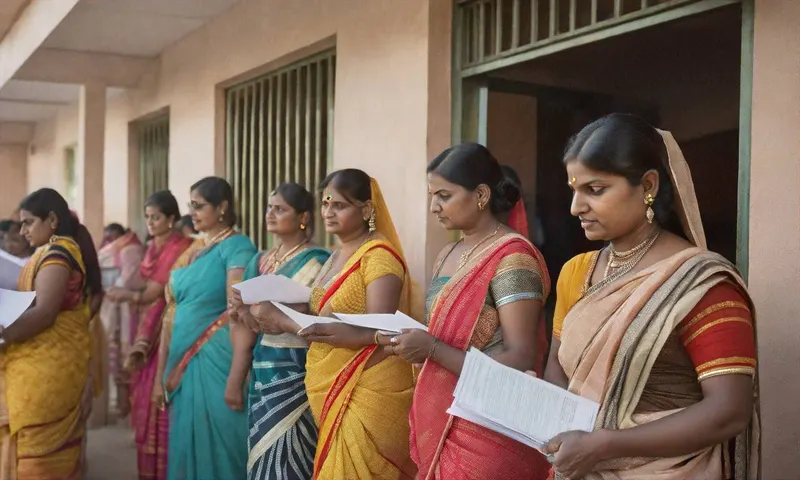
From what the data shows, let me start with a question. What does Rs 1,500 mean to you? Maybe a nice dinner out. Maybe half a tank of petrol. Maybe nothing at all -- just loose change you would not think twice about. But for Meena Jadhav, who rolls bidis in a one-room house in Beed district, Rs 1,500 per month is the first money she has ever had that was entirely hers. Not her husband's earnings that she had to ask permission to use. Not a loan from a neighbour. Her money. In her bank account. With her name on it.
"Zindagi mein pehli baar bank mein mera khata khula," she told me when I visited Beed last month. She is 38 years old. Thirty-eight. And she opened her first personal bank account because the Ladki Bahin Yojana required one.
Based on the figures available, this is not just a financial assistance scheme. I want to be very clear about that from the beginning. This is, at its root, about something much bigger -- the idea that women deserve to have money that belongs to them, that they control, and that nobody can take away. Whether you think Rs 1,500 is enough or too little is a separate debate, and we will get to that. But the principle behind the scheme deserves attention, and I am going to give it the space it deserves in this article.
The Origin Story: Why Maharashtra Did This
The Mukhyamantri Majhi Ladki Bahin Yojana was announced in the Maharashtra state budget for 2024-25. It did not come out of nowhere. There had been growing pressure on state governments across India -- driven partly by election politics, partly by genuine advocacy -- to put cash directly in the hands of women. Madhya Pradesh did it first with Ladli Behna Yojana in 2023. The political impact was immediate. Women voters responded. Other states took notice.
As things stand right now, but let me argue something that I feel strongly about: whether the motivation was electoral or social does not change the outcome. If a woman in Latur who never had a bank account now gets Rs 1,500 every month because a politician wanted her vote, the money is still real. The impact is still real. Her ability to buy medicines for her child without begging her husband or her in-laws for money is still real. So yes, let the critics debate the politics. I am more interested in what the scheme does on the ground.
The scheme is run by the Women and Child Development Department of the Maharashtra government. Money goes straight from the government treasury to the woman's bank account through the Direct Benefit Transfer (DBT) system, linked to Aadhaar. There is no middleman. No local neta distributes the money. No panchayat sarpanch has a say in who gets it. It is a direct, digital, and (for the most part) corruption-free transfer.
Rs 1,500 Per Month: The Numbers Behind the Scheme
If the current trend holds, each eligible woman gets Rs 1,500 per month. That adds up to Rs 18,000 per year. The payment lands in the account usually between the 1st and 10th of every month, credited through the Public Financial Management System (PFMS).
Now let me put this in context with some numbers that matter.
As of February 2026, approximately 2.4 crore women are enrolled as beneficiaries. That is 2.4 crore individual women receiving monthly payments. The annual cost to the state exchequer is roughly Rs 46,000 crore. To understand the scale of that, the total Maharashtra state budget for 2025-26 was about Rs 6.5 lakh crore. So Ladki Bahin takes up about 7 percent of the entire state budget. That is a massive commitment of public funds, and it tells you how seriously the government has backed this scheme.
For comparison: Maharashtra spends about Rs 35,000 crore on education, Rs 15,000 crore on healthcare, and Rs 12,000 crore on rural development annually. The Ladki Bahin Yojana is now the single largest welfare expenditure in the state budget. Let that sink in.
Who Qualifies -- And Who Doesn't
Here are the eligibility rules, and I am going to explain each one because some of them cause confusion.
Age: 21 to 65 years. You have to be at least 21 and not more than 65 on the date you apply. The lower limit makes sense -- it aligns with the legal age of marriage and adulthood. The upper limit of 65 is meant to exclude those who should be covered under senior citizen pension schemes instead. One criticism I have heard: what about women between 18 and 21 who are already married, already mothers, already financially struggling? They are left out. The government has not addressed this gap.
Residency: 15 years in Maharashtra. You need to prove you have been living in Maharashtra for at least 15 years. A domicile certificate works. So does a voter ID, ration card, or Aadhaar card showing a Maharashtra address. This rule is designed to prevent cross-state migration for scheme benefits, which is fair enough. But 15 years is a long time. Women who married into Maharashtra families 10 years ago and have been living here since are technically excluded. I think the residency requirement could be relaxed to 10 years.
Family income: Below Rs 2.5 lakh per year. This includes income from all sources -- salary, agriculture, business, rent -- for the entire family. "Family" means the applicant, her spouse, and dependent children. This threshold eliminates middle-class and above families. But here is the thing -- in urban Maharashtra, even daily wage workers in Mumbai can earn more than Rs 2.5 lakh if you count the household income of two working adults. So some genuinely poor urban families get excluded while relatively better-off rural families where declared income is lower get included. The income measurement system is imperfect, and everyone knows it.
Not a government employee. Neither the applicant nor any family member should be a current government employee. Retired employees drawing a pension above Rs 1,500 per month are also excluded. This makes sense. Government employees already have salary, pension, medical insurance, and other benefits.
Not an income tax payer. No family member should have filed income tax returns in the previous three years. This is the strictest filter. If your husband works in a private company and his employer deducts TDS and files returns for him, even if his actual income is low, you get disqualified. Several women I spoke to in Pune were frustrated by this rule. Their husbands earn Rs 20,000 a month but have TDS deducted, and that automatically makes the family "income tax payers" on paper.
Marital status: Almost all women are eligible. Married, widowed, divorced, separated, and unmarried women above 21 are all eligible. This is good. Many schemes in India exclude unmarried women, which makes no sense because an unmarried 25-year-old woman supporting herself on a low income needs financial help just as much as a married one.
How to Apply -- The Real Process, Not the Brochure Version
The official process looks simple on paper. In reality, I have heard enough stories to know that for many women, especially in rural areas, it is anything but simple. Let me walk you through both the ideal process and the real-world complications.
The Ideal Process:
Go to ladkibahin.maharashtra.gov.in. Click "New Registration." Enter your Aadhaar number. Get an OTP on your Aadhaar-linked mobile. Fill in personal details -- name, date of birth, marital status, address, district, taluka. Enter family income details. Upload documents: income certificate, age proof, address proof. Enter bank account details (must be in your name, must be linked to Aadhaar). Upload scanned documents (JPEG or PDF, under 200 KB each). Submit. Done. You get a reference number.
Sounds straightforward, right? Here is what actually happens for a large percentage of applicants.
The Reality:
Meena from Beed, whom I mentioned at the start? She does not own a smartphone. She has never used a computer. Her Aadhaar is linked to her husband's old phone number, which was switched off two years ago. She did not have an income certificate because getting one means going to the tehsildar's office, which is 18 kilometres from her village, and the last time she went there for a different certificate, she had to make three trips because the clerk kept sending her back for missing documents.
This is where the offline option really matters. The government has set up application assistance at Common Service Centres (CSCs), Setu Suvidha Kendras, and Gram Panchayat offices. A designated operator fills in the form for the woman, uploads documents, and submits the application. No charge for this service. But in practice, many women do not know these centres exist, or the centres are overwhelmed with applicants, or the operator is unavailable, or the internet connection at the centre is down.
My advice for women reading this or for anyone helping a woman relative apply: go to the Setu Suvidha Kendra or Gram Panchayat office with ALL your documents ready. Do not go unprepared. Carry Aadhaar, domicile proof, income certificate, bank passbook, and a passport photo. If your Aadhaar mobile number is not working, update it at the nearest Aadhaar centre first. The entire application can be done in 20 minutes if your paperwork is in order.
Documents You Need -- Keep These Ready
I am listing these with specific practical notes because the official list alone is not always enough.
Aadhaar Card: Mandatory. Must have correct name and date of birth. If there is a spelling error or wrong birth year, get it corrected at the Aadhaar centre first. Do not try to apply with incorrect Aadhaar details because the system will reject it later during verification.
Domicile Proof: A domicile certificate from the tehsildar is the cleanest option. But voter ID, ration card, or electricity bill showing Maharashtra address for 15+ years also works. If you have a Maharashtra voter ID from 2010, that proves 15+ years of residency right there.
Income Certificate: Issued by the Tehsildar. Must show family annual income below Rs 2.5 lakh. Getting this certificate can take anywhere from one day to one month depending on your district. Some districts have made it available online through Aaple Sarkar portal (aaplesarkar.mahaonline.gov.in). Use the online route if available -- it is faster.
Bank Passbook or Cancelled Cheque: The account must be in the applicant's name only. Joint accounts are accepted only if the applicant is the primary holder. The account must be linked to her Aadhaar. Post office savings accounts are also accepted.
Passport Photo: One recent photograph. Some application centres take the photo digitally, so not always needed, but carry one just in case.
Self-Declaration Form: Available on the portal. It states that your family income is below the threshold, no family member pays income tax, and nobody in the family is a government employee. You sign it. It is a legal declaration, so be truthful.
When Does the Money Come? Payment Schedules and Tracking
After your application is approved -- which takes 30 to 45 days for the first payment -- the money arrives monthly. Usually between the 1st and 10th. The government publishes the quarterly payment schedule on the official portal.
To check your payment status, there are three ways. First, go to the Ladki Bahin portal and enter your application reference number or Aadhaar number under "Payment Status." Second, check your bank passbook -- the transaction will show a DBT credit with the scheme name. Third, call the helpline at 1800-120-8040 (toll-free). I have tested the helpline several times. Wait times vary from 2 minutes to 15 minutes, but they are generally helpful once you get through.
A common problem: the first payment gets delayed. This is usually because of an Aadhaar-bank linking issue. The system tries to send money, but if the Aadhaar-bank connection is not verified, the payment bounces back. If your first payment is late by more than 45 days, go to your bank and confirm that your Aadhaar seeding is active. Then call the helpline and give them your application number. They can check if the payment was attempted and returned.
What Are Women Actually Doing with the Money?
This is the section that I think matters most, because it answers the question that critics always ask: "Are they just spending it on frivolous things?"
No. Based on my reporting across five districts -- Mumbai suburban, Pune, Nashik, Beed, and Kolhapur -- here is what women are spending the money on.
Healthcare leads the list. I was surprised by this, but I should not have been. In family budgets where money is tight, women's health always comes last. They ignore their own health problems because every rupee is needed for children's school fees or household groceries. Now that they have their own Rs 1,500, many women are going to doctors for the first time in years. A gynaecologist in Nashik district told me that her clinic has seen a 30 percent increase in women patients from low-income families since the scheme started. "They come and say, Ladki Bahin ke paise se aayi hoon," she said.
Children's education expenses come second. School uniforms, books, tuition fees for coaching classes. A woman in Kolhapur told me she uses the money specifically for her daughter's private tuition in mathematics. "Meri beti mujhse zyada padhi likhi hogi," she said. That sentence stays with you.
Household groceries. In months when the family's income falls short -- maybe the husband did not get work for a week, maybe the crop yield was low -- the Rs 1,500 becomes the buffer. It keeps the family fed.
Savings. Some women are saving. They are putting Rs 500 or Rs 1,000 per month into recurring deposits or self-help group funds. This is significant because these are women who never had the ability to save before. Any money in the household went to immediate expenses. Now they have a small stream that they can partly save.
Small business investments. Women who are part of self-help groups are pooling their Ladki Bahin money and investing in group enterprises -- purchasing sewing machines, setting up small shops, buying raw materials for pickle-making or papad-making businesses.
I did not find a single woman who said she was wasting the money. Not one. The "frivolous spending" argument is a myth that is usually pushed by people who have never had to budget on Rs 1,500 a month.
The Bigger Picture: Financial Inclusion of Women
Here is a statistic that shook me. Before the Ladki Bahin Yojana launched, an estimated 35 to 40 percent of women in rural Maharashtra did not have a bank account in their own name. They had accounts jointly with their husband, or they had accounts that existed on paper but were never used, or they simply had no account at all.
Because the Ladki Bahin Yojana requires a personal bank account linked to the applicant's Aadhaar, millions of women opened their first bank account specifically for this scheme. The Women and Child Development Department estimates that approximately 85 lakh new women's bank accounts were opened since the scheme was announced. Eighty-five lakh. That is not just a number. That is 85 lakh women who now exist in the formal financial system. They have a bank account, a passbook, and a relationship with a bank branch. That foundation can lead to savings accounts, fixed deposits, micro-loans, insurance products, and a dozen other financial tools that were previously out of reach.
My argument is this: even if you think Rs 1,500 per month is too little to make a real difference in living standards, the act of bringing 85 lakh women into the banking system is a permanent structural change. The money amount can be increased in future budgets. But the financial inclusion that has already happened cannot be undone.
How Maharashtra Compares with Other States
I want to do this comparison honestly, without state-pride bias.
Madhya Pradesh's Ladli Behna Yojana gives Rs 1,250 per month. Maharashtra's Ladki Bahin gives Rs 1,500. On the amount, Maharashtra wins. But MP started earlier (March 2023 vs Maharashtra's 2024 launch) and has a higher percentage of eligible women already enrolled.
Tamil Nadu's Kalaignar Magalir Urimai Thogai gives Rs 1,000 per month. Lower amount, but Tamil Nadu has much stronger existing welfare infrastructure -- subsidized rice, free bus travel for women, free healthcare through CMCHIS. So the Rs 1,000 sits on top of a much larger support base.
Jharkhand's Mukhyamantri Maiyan Samman Yojana also gives Rs 1,000 per month. Smaller state, smaller budget, but the per-capita impact is comparable.
What makes Maharashtra's scheme stand out is the sheer scale. 2.4 crore beneficiaries. Rs 46,000 crore annual budget. No other state comes close in absolute numbers. And given that Maharashtra is India's second-most populous state and its economic engine, what happens here sets the tone for national policy debates.
There is a growing conversation in policy circles about whether the central government should introduce a national version of this kind of scheme. If that happens, Maharashtra's data and experience will probably be the primary reference point.
Critics and My Response
No honest article about this scheme would be complete without addressing the criticism. Let me lay out the main arguments against the scheme and give you my take on each.
"Rs 1,500 is too little to make any difference." For middle-class observers, yes, Rs 1,500 seems trivial. For a woman earning zero, it is infinite. It is the difference between having money and not having money. Studies across the world on unconditional cash transfers show that even small amounts create measurable improvements in health, education, and household well-being when they go to women. The amount is a starting point, not the end point.
"The state cannot afford Rs 46,000 crore per year." This is a legitimate fiscal concern. Maharashtra has a debt of about Rs 7 lakh crore. Can it afford to add Rs 46,000 crore in annual welfare spending? The answer depends on economic growth and tax collections. If Maharashtra's GDP keeps growing at 8-9 percent annually and GST collections keep rising, the scheme is sustainable. If there is an economic slowdown, the government will face difficult choices. But that is true of any large government programme -- education, healthcare, defence. Nobody questions whether we can "afford" roads.
"This is just vote-buying." Maybe. But show me a democracy where politicians do things without thinking about voters. If providing direct financial support to 2.4 crore women is vote-buying, then every school, hospital, and highway ever built by a politician was also vote-buying. The question should not be "Is this political?" because everything in governance is political. The question should be "Does it work?" And on that metric, the evidence so far says yes.
"Women should earn, not get handouts." This one genuinely angers me. The women receiving this money are already working. They are rolling bidis, harvesting cotton, washing dishes, raising children, cooking three meals a day, walking kilometres to fetch water in some areas. They are working harder than most office-going men. The fact that their work is unpaid or underpaid is the problem. Calling Rs 1,500 a "handout" to someone who works 14 hours a day is not just incorrect -- it is disrespectful.
Grievance Redressal -- What to Do if Something Goes Wrong
Applications get stuck. Payments fail. The system glitches. It happens. Here is what to do.
Call 1800-120-8040. Toll-free. Available Monday to Saturday, 9 AM to 6 PM. Keep your application reference number ready. The helpline can tell you the exact status of your application and payment, and can escalate issues to the district office if needed.
Visit the District Women and Child Development Office. Every district has one. If the helpline cannot solve your problem, go in person with your documents. Ask for the District Programme Officer and explain your case.
Go to your Gram Panchayat or Municipal Ward Office. They have lists of all applicants and can help with follow-ups.
Use the online grievance portal on ladkibahin.maharashtra.gov.in under the "Grievance" section. You can track your complaint status online.
One practical tip: if your payment fails because of an Aadhaar-bank mismatch, the fastest fix is to go to your bank branch with your Aadhaar and ask them to confirm Aadhaar seeding. Then call the helpline and inform them. The next payment cycle should work.
What I Would Like to See Changed
I am going to end with my personal wish list. This is opinion, not fact. Take it or leave it.
First, increase the amount. Rs 1,500 was a good starting point, but inflation erodes its value every year. The government should commit to annual increments tied to inflation -- even Rs 100 or Rs 200 per year would show intent.
Second, lower the residency requirement from 15 years to 10 years. Fifteen years is too long and excludes women who have been living in Maharashtra for a decade or more.
Third, fix the income tax filter. Many low-income families are flagged as "income tax payers" simply because TDS was deducted on a monthly salary of Rs 15,000 to Rs 20,000. The system should look at actual tax liability, not just TDS deduction.
Fourth, speed up the income certificate process. This is the biggest bottleneck for applications. Some districts take months. The government should allow self-declaration for the first year, followed by random verification.
Fifth, create awareness. Millions of eligible women still do not know the scheme exists. Gram panchayats should do door-to-door drives. Health workers (ASHAs and ANMs) who visit homes regularly should carry application forms and information.
The Ladki Bahin Yojana is not a perfect scheme. No government programme is. But it is doing something that no amount of speeches about women's rights ever achieved -- it is putting real money into the real bank accounts of real women. And for 2.4 crore women across Maharashtra, that is what dignity looks like.
Source: This article is based on field reporting across Beed, Nashik, Kolhapur, Pune, and Mumbai suburban districts, combined with official data from the Maharashtra Ladki Bahin Yojana portal (ladkibahin.maharashtra.gov.in), the Women and Child Development Department, Government of Maharashtra, budget documents, and official government resolutions from the Maharashtra Government Gazette. Beneficiary names used with their verbal consent.
Comments 0
Leave a Comment