Madhya Pradesh Ladli Behna Yojana 2026: Monthly Rs 1,250 for Women, Updated Eligibility and Application Guide
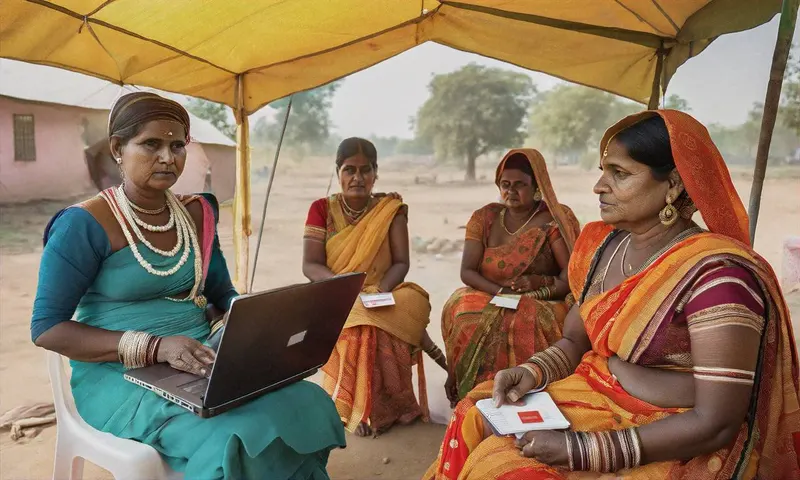
The morning I arrived at Tikamgarh's gram panchayat office for the Ladli Behna enrollment camp, there were already forty-odd women sitting on plastic chairs under a shamiana. It was barely 8 AM. The camp was supposed to start at 10. Sunita Lodhi, a 34-year-old farmworker whose husband drives an auto in the town, had taken a shared tempo from her village Bamhori at 6:30 in the morning. "Pehle aana padta hai, nahi toh line bahut lambi ho jaati hai," she told me, adjusting her dupatta. She had her Aadhaar card, her Samagra ID printout, her bank passbook, and a photocopy of everything -- just in case. Her neighbour Meena had been rejected last time because her bank account wasn't linked to Aadhaar. Sunita wasn't taking chances.
I've been reporting from MP's districts for the better part of eight years now, covering everything from farm distress in Bundelkhand to smart city contracts in Bhopal. But I have never seen a government scheme generate this kind of ground-level energy. Women who would never step inside a sarkari office for anything are showing up at these camps with their documents in order, asking specific questions about payment dates and eKYC, and following up when money doesn't arrive on time. Something has shifted.
Let me tell you what I found over three weeks of travelling through Tikamgarh, Chhindwara, Jhabua, and Sagar -- four very different districts that together paint a picture of how the Ladli Behna Yojana is actually working on the ground.
1.31 Crore Women -- That Number Deserves a Pause
The government says 1.31 crore women are now enrolled. I'll be honest, I was sceptical about that number when I started reporting this piece. Government statistics in India are... well, you know how it is. But the Samagra portal data checks out reasonably well against the district-level figures I collected. In Tikamgarh alone, enrollment is at 93 percent of estimated eligible women. Sheopur: 94 percent. These are among MP's poorest districts, and that's precisely the point -- the women who need Rs 1,250 the most are actually getting it.
The breakdown is telling. About 78 percent of beneficiaries -- roughly 1.02 crore -- are from rural areas. OBC women make up 45 percent (59 lakh), ST women 21 percent (28 lakh), SC women 18 percent (24 lakh), and General category 16 percent (20 lakh). SC and ST women together are 39 percent of beneficiaries against 36 percent of the state population. The scheme is tilting slightly towards the most marginalized. That's not by design, exactly -- it's just that more SC/ST families fall below the Rs 2.5 lakh income threshold.
Where the numbers drop is in the cities. Indore's enrollment rate is just 62 percent. Bhopal: 65 percent. That's not a failure of outreach. Indore is a relatively wealthy city -- fewer women qualify.
Sunita's Rs 1,250: Where Does It Actually Go?
Back in Tikamgarh, I sat with Sunita and four other women under a neem tree after their enrollment was processed, and I asked them the question every economist wants answered: what do you spend the money on?
Sunita laughed. "Arey didi, Rs 1,250 mein kya kya karein? Sabse pehle ration. Phir bachche ki copy-kitab. Agar kuch bach gaya toh dawai." Grocery first, then children's school supplies, then medicine if anything is left. Her friend Kamla, who is 52 and a widow, put it more bluntly: "Pehle ghar mein sirf aadmi ka paisa hota tha. Ab apna bhi hai. Chhota hai, lekin apna hai." Before, the household ran on the man's earnings alone. Now she has her own. Small, but her own.
The MP Institute of Social Science Research ran a proper survey of 5,000 households across 15 districts in late 2025, and the numbers largely match what I heard anecdotally. Women are spending about 42 percent (Rs 525) on food and groceries, 18 percent (Rs 225) on healthcare -- this one matters a lot because women in low-income families routinely skip their own medical needs -- 15 percent on children's education, and here's the one that surprised everyone: 12 percent goes into savings. Self-help groups, post office deposits, bank accounts. Across 1.31 crore women, that 12 percent adds up to approximately Rs 2,340 crore per year flowing into the formal savings system. Economists will tell you that's a big deal for a state where female financial inclusion has always lagged.
The remaining goes to clothing (8 percent) and transportation (5 percent).
An NIPFP study estimated the multiplier effect of cash transfers to low-income women at 1.7 -- meaning every rupee transferred generates Rs 1.70 in local economic activity. Apply that to Rs 19,500 crore per year (1.31 crore women times Rs 1,250 times 12 months), and the total economic stimulus is somewhere around Rs 33,000 crore. That's money circulating through kirana stores, vegetable mandis, local chemist shops, and school supply hawkers. Village economies are feeling it.
The Camp in Jhabua: Where the System Struggles
If Tikamgarh showed me the scheme working well, Jhabua showed me where it breaks down.
Jhabua is predominantly Bhil tribal. The enrollment rate is a respectable 88 percent, but here's the catch -- eKYC completion is only 71 percent. The lowest in the entire state. And without eKYC, your payments get suspended.
I met Kamla Bai Damor, a 41-year-old Bhil woman, at the panchayat office in Ranapur block. She had been enrolled for over a year but hadn't received money for the last three months. "Ungali nahi chal rahi," she said, showing me her calloused, cracked hands. The biometric fingerprint reader couldn't read her prints. Years of crushing stone at a local quarry and grinding maize on a stone chakki had worn her fingerprints nearly flat. The officials tried three times with the reader. Failed each time.
This is not a rare problem. In tribal districts where women do heavy manual labour -- stone quarrying, farm work, construction -- the fingerprint failure rate is significantly higher. The state's overall eKYC completion is 86 percent, which sounds fine as a headline number. But drill into the district data and the picture is ugly in specific pockets. Jhabua: 71 percent. Barwani: 73 percent. Alirajpur: 74 percent. Dindori: 75 percent. All tribal. All with the same pattern -- women enrolled but can't verify because their fingers won't scan.
Compare that to Bhopal at 97 percent eKYC or Indore at 96 percent. The digital infrastructure gap between urban and tribal MP is enormous, and schemes like Ladli Behna expose it ruthlessly.
The government has deployed mobile eKYC teams with better biometric devices (iris scanners alongside fingerprint readers) in low-performing districts. The target is 95 percent eKYC by June 2026. I think they'll realistically hit 90-92 percent, which still leaves 8-10 lakh women unverified. Kamla Bai might be one of them.
Payment Day in Sagar: The 10th of Every Month
Every scheme has a rhythm, and for Ladli Behna, it's the 10th. Payments are processed through the DBT pipeline -- State Treasury to PFMS to NPCI to banks. On a typical payment day, the system pushes 1.31 crore transactions worth Rs 1,625 crore through the banking system in about 6-8 hours. First-attempt success rate: 91 percent. The remaining 9 percent fail and get retried.
I was in Sagar on February 10th. Walked into the State Bank branch near Cantt Road around 11 AM. There was a queue of about fifteen women checking their account balance at the single ATM outside. Pushpa Sahu, 38, had just checked. "Aa gaya, 1,250," she said, showing me the mini-statement slip. She gets the money on the 10th like clockwork now. "Pehle do-teen baar late aaya tha. Ab time pe aata hai."
The punctuality has improved significantly since the early months. Nationalized banks credit within about 2.4 hours of the payment order. Cooperative and rural banks take closer to 3.8 hours. Women in very remote areas who rely on bank mitras (banking correspondents) sometimes wait an extra day or two because the mitra visits their hamlet only on specific days of the week.
In Sagar district, there are 1,107 gram panchayats, with average enrollment of 412 women per panchayat. The highest enrollment panchayat is Chandanpur with 782 women. The lowest is Rehli Town at 89, reflecting higher incomes in the semi-urban pocket. These kinds of variations are normal -- the data doesn't show any panchayat where enrollment has completely failed.
Who Qualifies, Who Doesn't -- And the Rules That Annoy People
The eligibility criteria are straightforward on paper. In practice, they create some frustrating edge cases.
Age: 21 to 60 years. The upper bound links to senior citizen pension eligibility. But here's the gap nobody talks about -- a woman turning 60 moves from Ladli Behna (Rs 1,250/month) to the old-age social security pension (Rs 600-1,000/month). That's a pay cut for being old. Doesn't make sense, but that's how it works.
Marital status: Married, widowed, divorced, or deserted. Unmarried women are excluded. The government's logic is that unmarried women are supported by their parents. Try explaining that to a 35-year-old unmarried woman working as a domestic helper in Bhopal. About 3.2 percent of women aged 21-60 in MP are unmarried -- roughly 4 lakh women shut out by this one rule.
Family income: Below Rs 2.5 lakh per year. "Family" means the woman, her spouse, and dependent children. Verification happens through the Samagra database, which cross-checks income tax records and land revenue records automatically. The backend integration is actually impressive -- I'll give the MP government credit for the Samagra architecture. Each family gets a 9-digit family ID and each person gets an 8-digit member ID. It's linked to Aadhaar, bank accounts, ration cards. Other states trying similar schemes should study this system.
Land holding: Maximum 5 acres. Own more, and you're out regardless of income. This is a wealth proxy that's imperfect but workable. In MP, 5 acres qualifies as a substantial smallholding. Land records are verified through the Bhu-Abhilekh database tied to Samagra.
Not a government employee or income tax payer. Standard exclusion, nothing unusual.
How the Application Works -- Offline by Design
Maharashtra's Ladki Bahin Yojana uses online applications. Tamil Nadu's Kalaignar scheme works through ration shops. MP went with offline camps at gram panchayat and ward offices. The reason is simple: MP's female digital literacy rate is about 38 percent. An online-only scheme would lock out the majority of target beneficiaries.
The camp I attended in Tikamgarh ran like this. Two officials sat behind a table with a laptop and biometric device. Women came in one by one with their documents -- Samagra ID, Aadhaar card, bank passbook, Aadhaar-linked phone. The official photographed them, scanned their fingerprint for Aadhaar verification, typed in the details, and submitted. Ten to fifteen minutes per person when everything was in order. Twenty-five minutes when something wasn't -- wrong bank account details, Aadhaar name mismatch, Samagra ID not updated after marriage.
Verification takes 15-30 days after submission. The applicant gets an SMS when approved. First payment hits on the next 10th-of-the-month cycle. New enrollment windows open periodically -- dates are posted on cmladlibahna.mp.gov.in.
Documents you need: Samagra ID card (family and individual both), Aadhaar card, bank passbook (must be an individual account in your name, linked to Aadhaar), and an Aadhaar-linked mobile number. Income and land records get verified in the backend -- you generally don't need separate certificates for those.
The Rs 3,000 Promise -- Maamu, Kab Badhega?
This was the question I heard most. The scheme started at Rs 1,000 in March 2023, went up to Rs 1,250 in September 2023, and the government has talked about eventually reaching Rs 3,000. But no timeline has been set.
Let me do the math on Rs 3,000. At 1.31 crore beneficiaries, that's Rs 3,930 crore per month. Rs 47,160 crore per year. MP's total state budget for 2025-26 is about Rs 3.65 lakh crore. At Rs 3,000, the scheme alone would eat 12.9 percent of the total budget and 42.9 percent of the state's own tax revenue. I don't see how that's sustainable without either massive revenue growth or cutting other spending.
The current Rs 19,500 crore (at Rs 1,250) already represents 5.3 percent of the budget and 17.7 percent of own revenue. MP's debt-to-GSDP ratio is about 28 percent, already above the FRBM target of 25 percent. Part of the Ladli Behna spending has been financed through additional borrowing.
But -- and this is where it gets interesting -- the money isn't disappearing. That Rs 33,000 crore multiplier effect I mentioned generates additional GST collections, estimated at Rs 1,800-2,200 crore per year. Local businesses see higher sales, pay more tax. Household poverty rates decline, reducing pressure on other safety nets. The net fiscal cost is lower than the gross number.
My realistic guess: incremental increases. Rs 1,500 next budget, then Rs 1,750, reaching maybe Rs 2,000-2,500 over three to five years. Going straight to Rs 3,000 from 1,250 would require the budget to grow 30 percent, which takes about four years at current rates. The women I met aren't holding their breath. "Jitna mil raha hai utna bhi bahut hai, didi," Pushpa told me in Sagar. Whatever we're getting is already a lot.
Chhindwara: The Tribal District That's Getting It Right (Mostly)
I spent two days in Chhindwara because the enrollment numbers were interesting -- high enrollment, but a split story between tribal and non-tribal panchayats.
The district has 876 gram panchayats. Average enrollment: 487 women per panchayat. Tribal panchayats average 523 (higher, because more families are below the income threshold). Non-tribal panchayats average 391. But when you look at eKYC, the pattern reverses: tribal panchayats at 76 percent versus non-tribal at 89 percent. That 13-point gap translates to real money -- women with incomplete eKYC don't get paid on time.
In a tribal hamlet about 40 km from Chhindwara town, I met Phoolmati, a Gond woman who runs a small sabzi stall from her courtyard. She's been enrolled since the beginning but had her payment stopped twice over eKYC issues. Both times she had to travel to the block office -- Rs 80 each way in a shared auto, plus half a day of lost earnings from the stall. "Do baar gayi, do baar wahi ungali ki samasya." Went twice, same fingerprint problem both times. It was resolved on her third visit when they used an iris scanner instead.
The government has started deploying iris scanners alongside fingerprint readers in tribal districts. It should have been done from day one. Better late than never, I suppose, but women like Phoolmati have already lost months of payments in the meantime.
How to Check Your Status -- The Practical Stuff
Three ways to track your application and payment.
The portal at cmladlibahna.mp.gov.in is the best option if you have internet access. Enter your Samagra ID or application number. You get the full history -- application date, verification status, every payment date and amount, and the reason if any payment failed. It's genuinely well-built for a government website.
The Ladli Behna app on Google Play Store does the same thing on your phone, with push notifications when money arrives. Hindi interface, works on basic Android phones, about 15 MB download.
Helpline: 0755-2700800 (working days, 9 AM to 6 PM). CM Helpline: 181 (toll-free, 24x7, but slower because it handles all government schemes). The 0755 number resolves queries in about 4 minutes on average. 181 takes 8-12 minutes.
How MP Compares to Other States
Every state seems to be launching its own version now. Here's how they stack up against each other.
Maharashtra's Ladki Bahin Yojana pays Rs 1,500 per month to 2.4 crore women, costing Rs 46,000 crore per year -- 7 percent of their budget. They use online applications, which works better in Maharashtra where digital literacy is higher. Tamil Nadu's Kalaignar Magalir Urimai Thogai scheme pays Rs 1,000 to 1.06 crore women at Rs 12,720 crore per year, using the ration shop network for enrollment. Jharkhand's Maiyan Samman Yojana pays Rs 1,000 to about 50 lakh women.
MP's advantage? The Samagra ID system, which no other state has replicated. It's the tightest backend verification system in the country for a welfare scheme. The offline-camp model also works better for rural outreach than online applications. Where MP falls behind: the amount (Maharashtra pays more) and overall welfare infrastructure (Tamil Nadu's social safety net is decades ahead of everyone).
Common Questions People Actually Ask
My neighbour says unmarried women can now apply. True? No. Only married, widowed, divorced, or deserted women. About 4 lakh unmarried women in the 21-60 age group are excluded. The rule hasn't changed.
Someone at the camp asked me for money. Is that normal? Absolutely not. The application is free. Zero cost. The government has filed 840 FIRs against people who charged women for Ladli Behna applications. If anyone asks for payment, report them immediately to 181 or the district collector's office.
Aadhaar isn't linked to my bank account. What happens? Your payment will fail. About 7.8 lakh women have had at least one payment failure because of this. Go to your bank with your Aadhaar card and get the linking done. Takes 3-7 working days.
I'm from Bihar but married into an MP family. Can I apply? Yes. You need an MP Samagra ID, which requires MP residence, not MP birth. About 10.5 lakh current beneficiaries (8 percent) were born outside MP.
The amount was supposed to become Rs 3,000. When? The government has said it will happen but hasn't said when. Given the fiscal math I explained above, don't expect a jump to 3,000 anytime soon. Incremental increases of Rs 250-500 per budget cycle are more realistic.
I'm turning 60 next year. Will my payments stop? Yes, you'll transition to the social security pension, which pays Rs 600-1,000 per month. Lower than Ladli Behna. It's a known policy gap that nobody in the government seems eager to fix.
What I Came Away Thinking
Three weeks, four districts, probably a hundred conversations with women, block officials, bank managers, and SHG workers. Here's where I've landed.
The reach is real. 1.31 crore women against an estimated eligible 1.5 crore -- that's 87 percent coverage in under three years. Most government schemes in India take a decade to hit those numbers. Give credit where it's due.
The money is being spent wisely. Women aren't frittering it away -- 42 percent on food, 18 percent on health, 15 percent on children's education, 12 percent saved. When women control money, the spending pattern is different from when men do. Every development economist knows this, and Ladli Behna is proving it at scale.
The eKYC mess in tribal areas is the scheme's ugliest scar. 18 lakh women with incomplete verification, concentrated in the poorest districts, facing payment delays because the biometric system wasn't designed for hands that do hard physical labour. The iris scanner deployment should fix much of this, but those months of lost payments won't come back.
Can MP afford this long-term? At Rs 1,250, yes -- tight, but manageable if the economy keeps growing. At Rs 3,000, almost certainly not without something else giving way. The political pressure to increase the amount will only grow, especially with Maharashtra paying Rs 1,500. The government is in a bind of its own making: the scheme's popularity is both its greatest strength and its greatest fiscal risk.
But here's what stays with me most. Kamla from Tikamgarh saying "chhota hai, lekin apna hai" -- it's small, but it's mine. For 1.31 crore women in MP, many of whom have never had a bank account in their own name, never had money that wasn't handed to them by a husband or father, Rs 1,250 is not just Rs 1,250. It's proof that the government knows they exist. Aur woh feeling, bhai -- that feeling of mattering -- you can't put a number on that.
Source: Reporting based on field visits to Tikamgarh, Sagar, Chhindwara, and Jhabua districts (January-February 2026), official data from the Mukhyamantri Ladli Behna Yojana portal (cmladlibahna.mp.gov.in), the Samagra Social Security Mission portal (samagra.gov.in), MP State Budget documents 2025-26, and the MP Institute of Social Science Research household survey (2025).
Comments 0
Leave a Comment