JEE Main 2026 Notification: Sessions, Pattern Changes, Syllabus, Cut-offs, and JoSAA Counselling
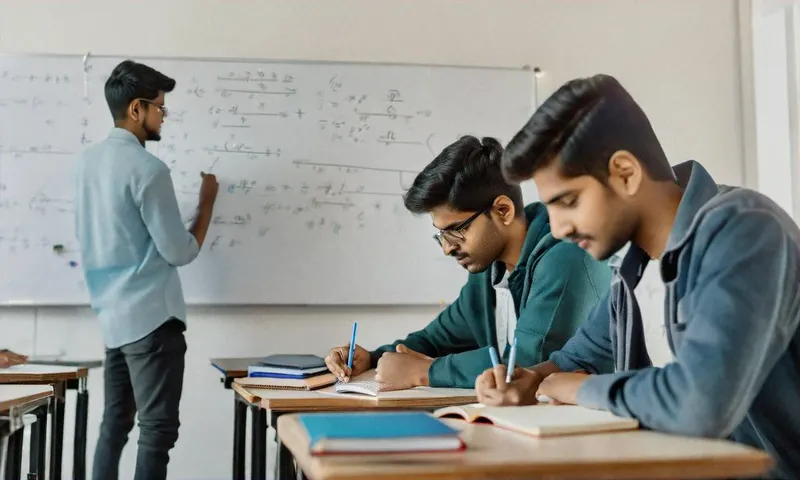
NEW DELHI, 28 Feb: NTA has released the JEE Main 2026 Session 1 notification. Registration window is open. Here is the complete breakdown - dates, fees, pattern, syllabus, eligibility rules, cut-off history, and the JoSAA counselling process. Everything a candidate or parent needs, in one place, with no padding.
At a Glance: JEE Main 2026 Fact Sheet
Exam name: Joint Entrance Examination Main (JEE Main)
Conducting body: National Testing Agency (NTA)
Mode: Computer Based Test (online) for Paper 1 and Paper 2B; Paper 2A Drawing section is pen-and-paper
Sessions: Two per year (Session 1 in April, Session 2 in June)
Scoring: Better of two session scores counts for merit list
Papers: Paper 1 (B.E./B.Tech), Paper 2A (B.Arch), Paper 2B (B.Plan)
Total registrations (2025): 13.2 lakh
JEE Advanced eligibility: Top 2,50,000 across all categories
Institutions covered: 23 IITs (through Advanced), 31 NITs, 26 IIITs, 33 GFTIs
Website: jeemain.nta.nic.in
Complete Schedule - Session 1 and Session 2
| Event | Session 1 | Session 2 |
|---|---|---|
| Registration opens | 15 Feb 2026 | Expected May 2026 |
| Registration closes | 15 Mar 2026 | TBA |
| Correction window | 16-20 Mar 2026 | TBA |
| Admit card release | ~5 Apr 2026 | TBA |
| Exam dates (Paper 1) | 15-21 Apr 2026 | Expected June 2026 |
| Exam date (Paper 2) | 22 Apr 2026 | TBA |
| Answer key | Last week Apr 2026 | TBA |
| Result | ~10 May 2026 | TBA |
Post-result timeline: JEE Advanced expected July 2026. JoSAA counselling expected July-August 2026.
Session 1 is spread across seven exam days this time. Last cycle it was five. NTA has not given an official explanation, but it is likely due to increased registrations - more candidates need more shifts, more shifts need more days. Two shifts per day: morning (9 AM - 12 PM) and afternoon (3 PM - 6 PM).
Application Fee Structure
| Category | Paper 1 Only | Paper 1 + Paper 2 (Both) |
|---|---|---|
| General/OBC Male | Rs 1,000 | Rs 1,800 |
| General/OBC Female | Rs 500 | Rs 900 |
| SC/ST/PwD (Male or Female) | Rs 500 | Rs 900 |
| Transgender | Rs 500 | Rs 900 |
Fees increased slightly from 2025. Payment via UPI, debit card, credit card, or net banking. Each session requires separate payment.
What Changed in 2026
Honestly? Not a lot for Paper 1, which is what 95% of JEE Main candidates sit for. Same structure. Same marking scheme. Same syllabus. NTA has kept the format stable after several years of adjustments. This is good news for anyone using last year's preparation materials.
The change worth noting is in Paper 2A (B.Arch). The mathematics section now has 25 compulsory MCQs instead of the earlier 20+5 structure. The aptitude section has been trimmed from 50 to 45 questions. Drawing section stays the same - two questions, pen-and-paper mode, 100 marks. This shifts the balance for B.Arch candidates. More weight on maths, less on aptitude. If you are a B.Arch aspirant, recalculate your time strategy. Five extra maths questions in the same 3-hour window is a real change.
Paper 2B (B.Plan) is untouched. Same as last year in every way.
Paper 1 Pattern: B.E./B.Tech
| Subject | Section A (MCQ) | Section B (Numerical) | Total Qs | Attempt | Max Marks |
|---|---|---|---|---|---|
| Physics | 20 (all compulsory) | 10 (attempt 5) | 30 | 25 | 100 |
| Chemistry | 20 (all compulsory) | 10 (attempt 5) | 30 | 25 | 100 |
| Mathematics | 20 (all compulsory) | 10 (attempt 5) | 30 | 25 | 100 |
| Total | 60 | 30 (attempt 15) | 90 | 75 | 300 |
MCQ marking: +4 correct, -1 wrong, 0 unanswered.
Numerical marking: +4 correct, 0 wrong, 0 unanswered. No negative marking on numerical questions.
Duration: 3 hours. PwD candidates: 4 hours.
Language: English, Hindi, and 11 other regional languages (Assamese, Bengali, Gujarati, Kannada, Malayalam, Marathi, Odia, Punjabi, Tamil, Telugu, Urdu).
The zero negative marking on numerical questions is the single most underused advantage in JEE Main. A guess costs nothing. A correct guess gives 4 marks. Leaving them blank is throwing away potential free points. Attempt all five numerical questions per subject, even if you are not 100% sure.
Eligibility Criteria
Age: No limit from NTA. But IITs require candidates born on or after 1 October 2001 (General) for 2026 admission through JEE Advanced.
Qualification: Class 12 passed or appearing in 2026, with Physics and Mathematics compulsory, plus one of Chemistry/Biotechnology/Biology/Technical Vocational subject.
Year of passing: 2024, 2025, or 2026. Students who passed before 2024 are not eligible.
Attempts: Three consecutive years from year of Class 12 passing.
Board marks for admission (not for JEE Main eligibility, but for NIT/IIT admission): 75% aggregate in Class 12 OR top 20 percentile in your board. SC/ST: 65%. This is checked during counselling, not during JEE Main registration. A common confusion point. You can sit for JEE Main with any marks. But if your board marks are below the threshold, you will not be eligible for seat allotment through JoSAA even if your JEE rank is excellent. Board exams matter. Do not ignore them.
Registration: How to Apply
Website: jeemain.nta.nic.in. The process is online only.
Step 1 - Create account. Enter name (as on Class 10 marksheet), date of birth, email, mobile number. An application number is generated. This number is your identity for the entire JEE Main process. Safeguard it.
Step 2 - Fill form. Personal details, parents' details, educational details, category, PwD status. Select paper(s) - Paper 1 only, Paper 2A only, Paper 2B only, or combinations. Select exam city preferences (up to 4 cities). Choose medium of question paper.
Step 3 - Upload documents. Photograph: JPG, 10-200 KB, white background, taken after January 2026. Signature: JPG, 4-30 KB, black ink on white paper. Class 10 certificate: JPG/PDF, 50-300 KB. Category certificate if applicable.
Step 4 - Pay fee and submit. Use UPI for the fastest, most reliable transaction. Screenshot the payment confirmation. Download and print the completed application form. Email yourself a copy.
Correction window opens approximately 3-5 days after registration closes. You can fix your name, date of birth, father's name, and photograph during this window. You cannot change category, gender, or paper choice. The correction window is not always smooth, technically speaking. Servers slow down, some fields may not save properly. Do not depend on it. Fill correctly the first time.
Syllabus Overview with Weightage Analysis
Based on the NTA-published syllabus for 2026 (no changes from 2025) and analysis of the last five years of JEE Main papers, here is where the marks actually come from.
PHYSICS
High-weight topics (5+ questions per paper historically): Mechanics - especially Newton's Laws, Work-Energy-Power, and Rotational Motion. Electrostatics and Current Electricity. Optics (both ray and wave). Modern Physics - photoelectric effect, Bohr model, radioactivity.
Medium-weight: Thermodynamics, Magnetism, EM Induction, Waves and Oscillations.
Low-weight: Units and Measurements, Communication Systems, Electronic Devices.
Tactical note: Rotational Motion is the single highest-weightage topic in JEE Main Physics over the last five years. If your rotation is weak, fix it first.
CHEMISTRY
Physical Chemistry (high-weight): Mole Concept, Chemical Bonding, Thermodynamics, Equilibrium, Electrochemistry, Chemical Kinetics.
Organic Chemistry (high-weight): GOC (General Organic Chemistry), Carbonyl Compounds (Aldehydes, Ketones, Carboxylic Acids), Named Reactions, Hydrocarbons.
Inorganic Chemistry (high-weight): p-Block Elements, Coordination Chemistry, Periodic Properties.
Tactical note: Inorganic Chemistry gives the fastest return on study time. It is almost entirely memory-based. An evening of focused revision on p-block reactions and coordination compounds can be worth 12-16 marks in the exam. Chemistry is where last-minute work pays off the most.
MATHEMATICS
High-weight: Calculus (Limits, Continuity, Differentiability, Integrals, Differential Equations) - typically 8-10 questions. Coordinate Geometry (Straight Lines, Circles, Conics) - 5-7 questions. Matrices and Determinants. Probability.
Medium-weight: Sequences and Series, Complex Numbers, Vectors, 3D Geometry, Trigonometry, PnC and Binomial Theorem.
Low-weight: Sets and Relations, Mathematical Reasoning, Statistics.
Tactical note: Calculus and Coordinate Geometry together account for 40-45% of the maths paper. If you master only these two areas, you have a strong base score in maths before touching any other topic.
Cut-Off History and What It Tells You
| Category | 2023 (Percentile) | 2024 (Percentile) | 2025 (Percentile) |
|---|---|---|---|
| General | 90.8 | 93.2 | 93.2 |
| OBC-NCL | 72.8 | 78.1 | 78.5 |
| SC | 50.2 | 54.0 | 60.1 |
| ST | 38.8 | 44.3 | 48.7 |
| EWS | 68.2 | 73.1 | 74.0 |
These are JEE Advanced eligibility cut-offs (top 2,50,000). The general trend: cut-offs have been rising. More candidates competing for the same 2,50,000 slots pushes the percentile threshold upward.
In raw marks, the 2025 General cut-off of 93.2 percentile translated to roughly 115 out of 300. That is 29 correct answers out of 75 attempted - assuming no negatives. Sounds achievable? It is. But the difference between qualifying for JEE Advanced and getting an actual IIT seat is enormous. Qualifying requires ~93 percentile. Getting CSE at IIT Bombay requires 99.95+ percentile. That gap represents a completely different level of preparation.
Understanding percentile: 99 percentile does not mean 99% marks. It means better than 99% of all test-takers. With 13 lakh candidates, 99 percentile = rank ~13,000. 99.5 = rank ~6,500. 99.9 = rank ~1,300. 99.99 = rank ~130. The competition at the top is extraordinarily tight.
NIT/IIIT Closing Ranks: 2025 JoSAA Data
| Institute | Branch | Closing Rank (General) |
|---|---|---|
| NIT Trichy | CSE | ~3,500 |
| NIT Warangal | CSE | ~4,200 |
| NIT Surathkal | CSE | ~4,000 |
| MNNIT Allahabad | CSE | ~7,500 |
| NIT Rourkela | CSE | ~8,000 |
| IIIT Hyderabad | CSE (4-year) | ~2,500 |
| NIT Calicut | ECE | ~14,000 |
| NIT Durgapur | Mechanical | ~32,000 |
For newer NITs and less popular branches, closing ranks go up to 50,000-60,000 for General category. This means even candidates in the 96-97 percentile range can land a government-funded engineering seat if they are flexible on location and branch.
The Two-Session Advantage: Strategy
NTA takes the better of your two session percentile scores. This is a big deal.
Data from 2025: among candidates who appeared in both sessions, 72% scored better in Session 2 than Session 1. The average improvement was 12-18 percentile points. Reason? Session 1 gives you real-exam experience - the interface, the pressure, the time management. That experience directly improves Session 2 performance.
The smart move is to appear in both sessions. There is zero downside. Your Session 1 score is never lost, even if Session 2 goes badly. Only the higher score counts.
Between sessions, get your NTA response sheet (released with the answer key). Map every wrong answer to the chapter and concept it came from. This gives you a precise list of weak points to attack before Session 2. Targeted revision of weak chapters between sessions is the highest-ROI study strategy available.
JEE Advanced: The IIT Gateway
Top 2,50,000 JEE Main scorers (across all categories) qualify for JEE Advanced. JEE Advanced 2026 will be conducted by IIT Madras, expected in July 2026.
JEE Advanced is a different exam. Two papers. 3 hours each. Same day, with a break. Question types include single-correct MCQs, multi-correct MCQs (partial marking available), numerical answer type, and matching/paragraph-based questions. Difficulty is a visible step up from JEE Main.
Attempts: Maximum 2, in consecutive years. Unlike JEE Main's three-year window, you get only two cracks at Advanced.
Fee: Rs 2,800 (General), Rs 1,400 (SC/ST/PwD/Female). Registration opens immediately after JEE Main final results.
Roughly 2,50,000 qualify. About 1,80,000 actually appear. About 40,000 clear it. About 17,000 get IIT seats. The funnel narrows sharply. Qualifying for JEE Advanced and performing well in it are separate battles requiring different preparation strategies.
JoSAA Counselling: How Seats Are Allotted
Joint Seat Allocation Authority (JoSAA) runs centralised counselling for IITs (using Advanced rank), NITs, IIITs, and GFTIs (using JEE Main rank). Over 110 institutions, one counselling process.
Timeline: Opens late June or early July. Runs for 5-6 rounds plus a special round. Full process takes about 6 weeks.
Process:
1. Register at josaa.nic.in with your JEE Main/Advanced roll number.
2. Fill preference list: rank your desired institution + branch combinations. List as many as you want. There is no penalty for a long list, and longer lists improve your chances.
3. Seat allotment happens through an algorithm based on your rank, your preferences, available seats, and reservation rules.
4. If allotted a seat, your options: Freeze (accept and exit process), Float (accept but stay in for possible upgrade), or Slide (accept but stay in for a better branch at the same institution).
5. In early rounds, "Float" is almost always the right choice unless you received your top preference. It costs nothing and keeps upgrade options open.
Counselling fee: Rs 45,000 (General/OBC), Rs 20,000 (SC/ST/PwD). Payable upon accepting a seat. Adjustable against first-year tuition.
Documents needed at reporting: Class 10 certificate, Class 12 marksheet (with 75% or top 20 percentile), JEE scorecard, category certificate, passport photos, medical fitness certificate. Missing even one document can delay or cancel admission. Organise everything in advance.
Common JoSAA mistakes: (1) Forgetting to update choice list before a round's deadline - your old list carries forward, which may result in an unwanted allotment. (2) Freezing too early out of anxiety, when floating would have gotten you a better option in the next round. (3) Not understanding the difference between Float and Slide. Float upgrades you to any better choice on your list across all institutions. Slide upgrades you only within the same institution to a better branch.
Preparation Advice: 45 Days to Session 1
You have approximately 45 days until Session 1. Here is what to do and what not to do.
Do not start new topics. If you have not touched a chapter by now, it is too late to learn it from scratch. Exception: Inorganic Chemistry, which is memory-based and can be picked up quickly.
Do solve NTA papers from 2020 onwards. The question style, difficulty distribution, and option crafting have a specific flavour. Coaching mock tests do not always replicate it. Real NTA papers are the best practice material available.
Do take one full mock test every 3-4 days. Use the NTA mock test on their website - the interface is identical to the real exam. After each test, spend 60-90 minutes analysing: classify every wrong answer as either a concept gap, a silly error, or a time crunch problem. Each category needs a different fix.
Do not change answers without a strong reason. Data from NTA response sheet analysis shows first-instinct answers are correct more often than changed answers. Change only when you spot a clear calculation error.
Do attempt all Section B numerical questions. Zero negative marking. A guess costs nothing. Four potential marks per question.
Exam Day: What to Carry, What to Expect
Admit card (printed). Original photo ID (same one mentioned during registration). One passport-size photo. Transparent water bottle. That is it. No phones, no watches (even analog), no calculators, no wallets at most centres.
Arrive 60 minutes before your shift. Identity check, sometimes biometric scan, sometimes frisking. You will be seated 15-20 minutes before the exam starts. The computer screen will show a tutorial before the timer begins.
The CBT interface: questions displayed one at a time, navigation panel on the right showing all question numbers colour-coded (green = answered, red = unanswered, purple = marked for review). You can jump to any question at any time. Use the first 5 minutes to quickly scan all 75 questions. Identify the easy ones. Hit those first. Build confidence and marks before tackling harder problems.
Time per question: 180 minutes / 75 questions = 2.4 minutes average. If a question takes more than 3 minutes, mark it for review and move on. Coming back with fresh eyes later often helps.
Contact and Resources
NTA Helpline: 011-40759000, 011-69227700
Email: jeemain@nta.ac.in
JEE Main portal: jeemain.nta.nic.in
JoSAA portal: josaa.nic.in
JEE Advanced portal: jeeadv.ac.in
NTA Mock Test: nta.ac.in (under "Test Practice Centre")
Registration deadline: 15 March 2026. Do not wait until the last day. Server loads spike on final dates and payment failures are common. Register this week. Then forget the form and focus on preparation.
Source: This article is based on official NTA notifications at jeemain.nta.nic.in, JoSAA seat allotment records at josaa.nic.in, and JEE Advanced information at jeeadv.ac.in.
Comments 0
Leave a Comment