EPF 2026: Employee Provident Fund Interest Rate, Withdrawal Rules, and Online Claim Process
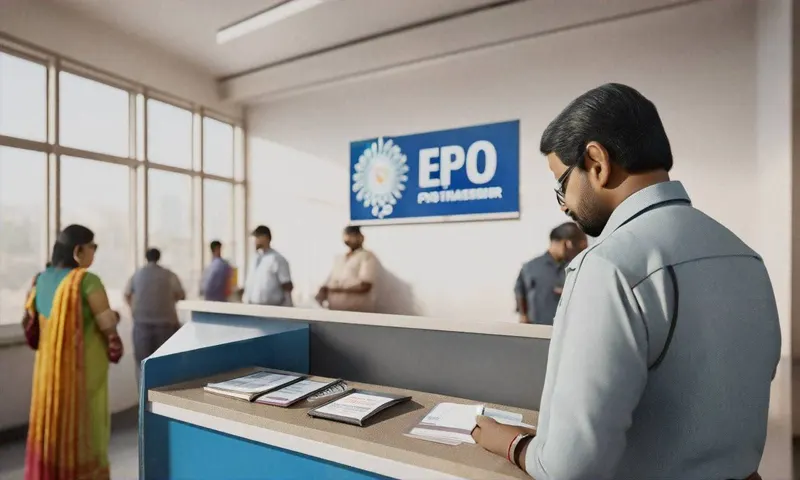
Welcome aboard! If you've just joined your first job -- congratulations, by the way -- you're probably looking at your salary slip and wondering what this "PF deduction" is that's eating into your take-home pay. I get it. When I first started in HR fifteen years ago, even I found the whole EPF system confusing. But trust me, once you understand how it works, you'll realise this is probably the best forced savings scheme you'll ever be part of.
I'm going to walk you through everything about your Employee Provident Fund the same way I explain it to new joiners during induction. Grab a chai and let's get started.
So What Exactly Is EPF? Let's Start From Zero
Think of EPF as a piggy bank that both you and your company put money into every single month. You can't easily take money out of it (there are rules, which I'll cover), and it keeps earning interest year after year. By the time you retire, or even by the time you've worked for 15-20 years, this piggy bank has grown into a surprisingly large amount.
The scheme is run by the Employees' Provident Fund Organisation -- EPFO for short -- which works under the Ministry of Labour and Employment. Any company with 20 or more employees HAS to register with EPFO. It's not optional for the employer. And if your basic salary is up to 15,000 rupees per month, you're automatically enrolled. Even if your basic is higher than 15,000, most companies still enrol you in EPF, just on the higher amount.
The day you join, HR (that's people like me) assigns you a Universal Account Number -- UAN. This is your EPF identity for life. You keep this UAN forever, even when you switch companies. Write it down somewhere safe. Better yet, memorise it.
How Much Money Goes Into Your PF Every Month?
This is the part that usually makes new joiners wince, so let me be upfront about the maths.
Every month, 12% of your basic salary plus dearness allowance (DA) gets deducted from your salary and goes into your PF account. Your employer also contributes 12%. But -- and this is where it gets slightly confusing -- your employer's 12% doesn't all go to the same place.
Here's the split. Your 12%: goes entirely into your EPF account. Your employer's 12%: 3.67% goes into your EPF account, and 8.33% goes into something called the Employee Pension Scheme (EPS). On top of this, your employer also pays some administrative charges and EDLI (insurance) contributions, but those come from the company's pocket, not yours.
Let me show you with a real example. Say your basic salary is 30,000 rupees per month.
Your contribution: 30,000 x 12% = 3,600 rupees per month. Employer's EPF contribution: 30,000 x 3.67% = 1,101 rupees. Employer's EPS contribution: 30,000 x 8.33% = 2,499 rupees. But wait -- EPS contribution is calculated on a maximum of 15,000 rupees, so it's actually 15,000 x 8.33% = 1,250 rupees. The balance (2,499 minus 1,250 = 1,249) goes to your EPF account instead.
So total going into your EPF account every month: 3,600 (yours) + 1,101 + 1,249 = 5,950 rupees. That's nearly 6,000 rupees a month, or about 71,400 rupees a year, just from one year's contributions. And this is before interest.
The Interest Rate -- 8.25% for 2025-26
Now here's where EPF gets really attractive. For the current financial year 2025-26, EPFO has declared an interest rate of 8.25% per annum. This is decided every year by the Central Board of Trustees -- basically a committee that includes government officials, employer representatives, and employee union members.
8.25% might not sound exciting compared to stock market returns, but remember two things. One, this is a guaranteed return backed by the Government of India. Your money is not going to disappear overnight because of some market crash. Two, the interest is compounded. It's calculated monthly (though credited at year-end), so your interest earns interest. Over 20-30 years, the compounding effect is massive.
Let me give you a concrete example. If your basic salary is 30,000 rupees and you get a 10% annual increment, and both you and your employer keep contributing 12%, here's roughly what your EPF balance would look like:
After 5 years: approximately 4.7 lakh rupees. After 10 years: approximately 12.8 lakh rupees. After 20 years: approximately 47 lakh rupees. After 30 years: approximately 1.3 crore rupees.
1.3 crore. From a 30,000 basic salary. That's the power of consistent savings and compound interest. This is why I always tell new joiners -- don't opt for a lower PF contribution just to increase your take-home pay. Your future self will thank you.
Three Accounts Under EPFO -- EPF, EPS, and EDLI
Let me quickly explain what each of these accounts does, because they serve very different purposes.
Your EPF Account -- this is your main retirement savings. Both your contribution and most of your employer's contribution sit here. It earns interest. You can withdraw from it under certain conditions (more on this below). When you retire or leave service permanently, you can take out the whole amount.
EPS (Employee Pension Scheme) -- this is your pension account. The employer's 8.33% contribution (on a max salary of 15,000) goes here. You can't withdraw this as a lump sum (except in very specific cases). Instead, after you've worked for at least 10 years and reached 58 years of age, you get a monthly pension for life. The pension amount depends on your average salary of the last 60 months and your years of service. Honestly, the pension amount isn't huge -- for most people it works out to 3,000-7,000 rupees per month -- but it's a guaranteed monthly income after retirement, which is nice.
EDLI (Employees' Deposit Linked Insurance Scheme) -- this is basically a free life insurance policy that comes with your EPF membership. If, God forbid, an employee dies while in service, the nominee gets a lump sum payment. The maximum insurance benefit is 7 lakh rupees. You don't pay anything for this -- the employer bears the cost. Make sure your nomination details are updated in your EPF account. I've seen cases where families didn't even know they were entitled to this money.
When Can You Withdraw From Your PF? -- Partial Withdrawal Rules
This is probably the most asked question I get from employees. "Sir, mujhe paise chahiye, PF se nikal sakte hain kya?" The answer is: yes, but with conditions. EPFO allows what they call "partial withdrawal" or "advance" for specific life events. Let me go through each one.
For Buying a House or Plot
You need to have completed 5 years of EPF membership. You can withdraw up to 90% of your total EPF balance. There's a condition though -- you shouldn't already own a house in your name or your spouse's name. I know, I know -- seems harsh. But that's the rule.
Real example: Meera has been working for 7 years. Her EPF balance is 8.5 lakh rupees. She can withdraw up to 7,65,000 rupees (90% of 8.5 lakh) for buying a flat. She applied online in January, got the money in her bank account in 18 days.
For Home Loan Repayment
Already have a home loan? You can use EPF to make a partial prepayment. But you need 10 years of EPF membership for this. You can withdraw up to 90% of the balance. Some people don't know this option exists -- they're struggling with EMIs while sitting on a big PF balance. Check if you qualify.
For Marriage
You can withdraw PF money for the marriage of yourself, your son, daughter, or brother/sister. Requirement: 7 years of EPF membership. Amount: up to 50% of the employee's share (not total balance, just your contribution portion). You can claim this three times in your lifetime -- once for each child's marriage or your own.
Example: Deepak has 10 years of service. Total EPF balance: 12 lakh, out of which approximately 6.5 lakh is his own contribution. He can withdraw up to 3,25,000 for his daughter's wedding.
For Children's Education
After 7 years of membership, you can withdraw up to 50% of your own contribution for your children's higher education (post class 10). This can be claimed up to three times. With education costs these days -- engineering college fees running 1-2 lakh per year, medical college even more -- this is a genuinely useful option.
For Medical Treatment
This is the most flexible category. There's NO minimum service requirement. If you, your spouse, your children, or your parents need medical treatment, you can withdraw up to 6 months' basic salary plus DA, or the employee's share in EPF, whichever is lower. You'll need medical certificates and hospital documents.
I remember a colleague whose father needed a heart surgery. He had been working for only 2 years. He was worried he couldn't touch his PF. But the medical withdrawal rule saved him -- he got about 1.8 lakh from his EPF within two weeks.
One Year Before Retirement
If you're 54 or older, you can withdraw up to 90% of your total EPF balance. This is basically the government saying, "You're about to retire, take most of it now if you need to." Many people use this to pay off remaining home loans or plan their post-retirement life.
How to Check Your EPF Balance -- Five Different Ways
Gone are the days when you had to visit the EPFO office and stand in line to know your balance. Now you have multiple options, and I'll give you all of them.
Method 1: UMANG App. Download the UMANG app (available on both Android and iOS). Go to EPFO section, tap on "View Passbook," log in with your UAN and get an OTP on your registered mobile number. You'll see your complete passbook -- every monthly contribution, interest credited, everything. This is what I recommend to everyone because the app interface is quite user-friendly.
Method 2: EPFO Member Portal. Go to member.epfindia.gov.in on your computer. Log in with your UAN and password. Click "View Passbook." You can download the full statement as a PDF. Great for keeping records.
Method 3: Missed Call. Give a missed call to 9966044425 from the mobile number registered with your UAN. Within a few minutes, you'll get an SMS with your PF balance. No internet needed. This is perfect for people who aren't very tech-savvy -- I always tell older employees about this one.
Method 4: SMS. Send a message "EPFOHO UAN" to 7738299899. You'll get a reply with your balance. Again, no internet required.
Method 5: WhatsApp. EPFO has a WhatsApp-based service now. Save the EPFO number and send "Hi" to start the process. You'll get your balance after verification. Honestly, this is the easiest for younger employees who live on WhatsApp anyway.
One tip: if none of these methods work, it's usually because your UAN isn't linked to your Aadhaar or your mobile number isn't updated. Visit the EPFO portal and check your KYC details. Get your Aadhaar seeded if it isn't already. This also speeds up any withdrawal claims you make later.
How to Withdraw Your PF Online -- Step by Step
Let me walk you through the exact process. I've helped hundreds of employees do this, so I know where people get stuck.
Step 1: Go to member.epfindia.gov.in and log in with your UAN and password. If you've never set a password, click "Activate UAN" first. You'll need your UAN, Aadhaar, name, date of birth, and registered mobile number.
Step 2: Click on "Online Services" in the top menu bar, then select "Claim (Form-31, 19, 10C & 10D)."
Step 3: The system will show your details -- name, date of birth, Aadhaar number, PAN, bank account. Verify everything is correct. Enter the last 4 digits of your linked bank account number as verification.
Step 4: Click "Proceed for Online Claim." Now you'll see options. For partial withdrawal while still employed, choose "PF Advance (Form 31)." For full withdrawal after leaving your job, choose "Full EPF Settlement (Form 19)." For pension withdrawal, choose "Pension Withdrawal (Form 10C)."
Step 5: If you chose Form 31 (partial withdrawal), select the purpose from the dropdown -- housing, medical, education, marriage, etc. Enter the amount you want to withdraw. Upload any supporting documents if required (like medical bills or property agreement).
Step 6: Submit the claim. You'll get an SMS confirmation.
Step 7: If your Aadhaar is linked and verified, the claim goes directly to EPFO for processing without needing your employer's approval. If Aadhaar isn't linked, the claim goes to your employer first for attestation, which adds a few days to the process.
Processing time: In my experience, if everything is in order and Aadhaar is linked, partial withdrawals get processed in 10-15 working days. Full settlements can take up to 20 working days. The money comes directly to your bank account linked to your UAN.
Transferring Your PF When You Change Jobs
This is where I've seen people make the biggest mistakes, so please pay attention. When you leave one company and join another, your old PF account and new PF account are separate. If you don't transfer, the old account just sits there -- and after a while, it stops earning interest and becomes "inoperative." That's money just wasting away.
Here's how to transfer online:
Log in to the EPFO member portal. Go to "Online Services" and click on "One Member - One EPF Account (Transfer Request)." Select whether you want to authorize the claim from your current employer or previous employer (I usually recommend current employer as they tend to respond faster). Fill in your previous employer's EPF establishment ID and your old member ID. Submit the request.
The transfer typically takes 15-20 working days. Once complete, your old balance gets merged into your new account, and your total service period is combined. This is important for the 5-year continuous service rule for tax-free withdrawal.
Common mistake alert: many people have multiple old PF accounts from various jobs and never bothered to consolidate them. I've seen employees discover they have 2-3 lakh sitting in old accounts they'd completely forgotten about. Check all your old UAN numbers and consolidate everything into one account.
Tax Rules on EPF -- The Good and the Not-So-Good
EPF has some of the best tax treatment of any savings instrument in India. It works on the EEE (Exempt-Exempt-Exempt) principle, but with some conditions. Let me break it down plainly.
While Contributing: Your contribution of up to 1.5 lakh per year gets you a tax deduction under Section 80C of the Income Tax Act. This means the money you put into PF reduces your taxable income. Nice. But from FY 2021-22 onwards, if your annual employee contribution exceeds 2.5 lakh rupees, the interest earned on the excess amount is taxable. This affects mainly people with very high basic salaries -- say above 2 lakh per month. For most people, this rule doesn't apply.
The Interest: Interest on your EPF balance is tax-free, as long as your annual contribution stays under 2.5 lakh rupees. At 8.25%, this is one of the best tax-free returns available anywhere.
At Withdrawal: Here's the important bit. If you withdraw your EPF after 5 years of continuous service (this is counted from your very first PF contribution, not just your current employer), the entire withdrawal is completely tax-free. All of it -- your contribution, employer's contribution, and interest. Zero tax.
But if you withdraw BEFORE completing 5 years? The entire amount becomes taxable. Your contribution goes to your income for that year, the employer's contribution is taxable, and the accumulated interest is also taxable. On top of that, EPFO deducts TDS at 10% on amounts above 50,000 rupees (or 20% if your PAN isn't linked to your UAN).
This is why I always, always tell people: if you can avoid withdrawing PF before 5 years, please do. Even if you switch jobs, just transfer the balance instead of withdrawing. Keep the 5-year clock running.
Common Mistakes New Employees Make With Their PF
After 15 years in HR, I've seen every possible mistake. Here are the ones that come up again and again:
Mistake 1: Not activating your UAN. Your company gives you a UAN on Day 1, but many people never bother to activate it on the EPFO portal. Do it immediately. Link your Aadhaar, PAN, and bank account. The sooner you do this, the easier everything becomes later.
Mistake 2: Not updating KYC when changing jobs. When you join a new company, make sure your new employer has the correct UAN and that your Aadhaar and bank details are current. I've seen cases where withdrawal claims get rejected because the name on Aadhaar doesn't match the name on PF records (spelling differences, middle name issues, etc.).
Mistake 3: Withdrawing PF every time you change jobs. I understand the temptation, especially when you're young and the amount seems small. But withdrawing before 5 years means you lose the tax benefit, and you're raiding your retirement savings. Let it grow. A 2 lakh balance withdrawn at 28 could have been 15 lakh by the time you're 55. Think about that.
Mistake 4: Not nominating anyone. Your EPF account needs a nominee -- the person who gets the money if something happens to you. By default, it might be listed as "no nominee," which creates a nightmare for your family to claim the money. Go to the EPFO portal, file an e-nomination, and list your family members. It takes 10 minutes.
Mistake 5: Ignoring the passbook. Check your EPF passbook at least once every few months. Make sure every month's contribution is being deposited by your employer. There have been cases -- I'm not trying to scare you, but it's happened -- where employers deducted PF from salaries but didn't deposit it with EPFO. The passbook is your proof.
Mistake 6: Having multiple UANs. If different employers assigned you different UANs (because of data mismatch or new registration), you need to get them merged. Having multiple UANs splits your balance and service years, which can affect your withdrawal eligibility and pension calculation. Contact your current employer's HR or visit the EPFO office to get this sorted.
Special Situations -- What Happens When...
What if you're unemployed for a long time? If your EPF account has no contributions for 36 consecutive months (3 years), it becomes "inoperative." Inoperative accounts still earn interest (this was changed a few years ago -- earlier they didn't), but you'll need to reactivate the account to make any claims. It's better to transfer or withdraw before this happens.
What if you go abroad for work? If you take up employment outside India, you can withdraw your entire EPF balance regardless of how many years of service you've completed. But be aware of the tax implications -- if it's before 5 years, TDS will be deducted.
What about contract employees or temporary workers? If you're employed through a contractor but the principal employer has 20+ employees, you're eligible for EPF coverage. Your contractor is supposed to enrol you. If they haven't, raise the issue.
Can women withdraw EPF for different reasons? Yes -- female members can withdraw up to 6 months' basic wages or their share of EPF contribution, whichever is lower, up to 3 months before marriage or up to 6 months before the expected delivery date. This is a specific provision many women employees don't know about.
New EPF Rules and Changes in 2026
A few updates that are relevant for this year. EPFO has been working on reducing claim settlement time. The target is now 3 days for auto-mode claims (where Aadhaar is verified and bank details are correct). In practice, it's still taking 10-15 days for most people, but it's definitely faster than it used to be.
The interest rate for 2025-26 has been declared at 8.25%, same as the previous year. There was speculation it might go up to 8.5%, but the trustees kept it steady. Still, 8.25% on a risk-free instrument is very good by any standard.
EPFO has also been pushing for voluntary registration by establishments with fewer than 20 employees. So if you work for a smaller company that doesn't have PF, ask your employer to voluntarily register. Many startups and small businesses don't know they can do this.
Another important change: EPFO has introduced a centralized IT system called EPFO 3.0, which aims to make all services fully digital. The new system is expected to reduce claim processing times further and make passbook updates near real-time. It's being rolled out in phases across different regions.
A Few Parting Words From Your Friendly HR Uncle
I know PF deductions feel annoying when you're young and your salary is just starting to grow. Every month you look at that salary slip and think, "Yaar, itna kaat rahe hain." But I've been on the other side too. I've seen employees retiring with 40-50 lakh in their PF accounts, money they accumulated without even trying. I've seen people use their PF to buy their first home, fund their daughter's engineering degree, handle a medical emergency.
Your EPF is not just a number on a payslip. It's a safety net. It's your future. It's possibly the most reliable financial asset you'll build over your career.
So here's what I'd say: activate your UAN today if you haven't already. Link your Aadhaar and PAN. Update your nomination. Check your passbook once a quarter. And most importantly, let the money grow. Don't withdraw unless you genuinely need to.
And if you have any questions -- well, that's what HR is for. Come find me near the water cooler, I'm usually there around 3 PM anyway.
Source: This article is based on information available on the official EPFO portal at epfindia.gov.in and the UMANG platform by the Government of India.
Comments 0
Leave a Comment