Digital India 2.0: Government Launches Unified Portal Integrating 1,200 Citizen Services Under One Platform
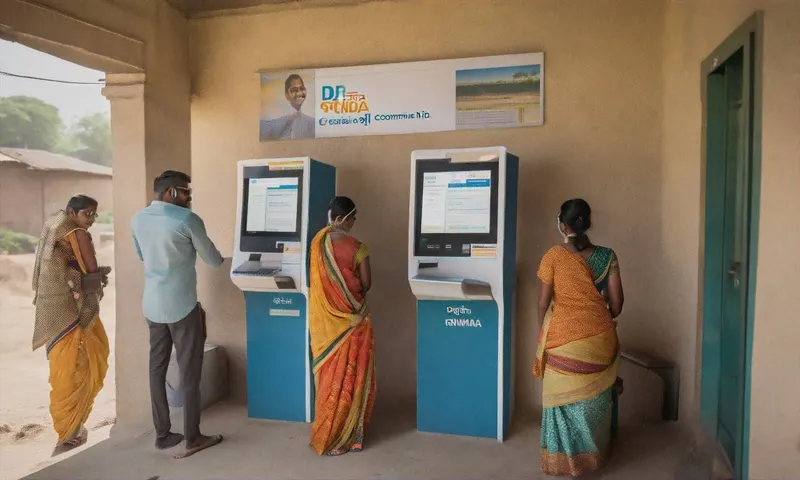
Okay, so the government just dropped Digital India 2.0. Another grand launch. Another mega promise. And honestly? My first reaction was -- here we go again. Because the government's track record with tech portals is... mixed, to put it politely. Remember the CoWIN crashes during peak vaccination days? Or the IRCTC website circa 2015, where getting a Tatkal ticket felt like winning the lottery? So yes, I walked into the launch event at Vigyan Bhawan on 28 February with my skepticism fully intact.
But I have to say -- and I don't say this lightly -- what I saw during the demo was actually impressive. Not perfect. Not without questions. But genuinely better than what I expected. Let me walk you through everything, the good bits, the concerning bits, and the stuff nobody is talking about.
The Big Idea Behind the Portal
So here is the basic pitch. Right now, if you want a birth certificate, you go to one website. Income certificate? Different site. Passport? passport.gov.in. Driving licence? Parivahan. PAN card? Another portal. Pension? Yet another one. You get the picture. There are literally hundreds of government portals, each with their own login, their own UI design (some looking like they were built in 2004, because they were), and their own way of doing things.
From what the data shows, digital India 2.0, accessible at digitalindia.gov.in, tries to fix this by pulling 1,200 services from 85 central ministries plus state government services from 28 states and 8 union territories into a single portal. One login. One dashboard. One place for everything. The MeitY folks have been working on this for about two years with NIC and some private tech partners, and the PM inaugurated it on the 28th.
Based on the figures available, on paper? Brilliant. The question is whether they can actually pull this off at India-scale. That means 140 crore people, wildly different internet speeds, and an absurd range of digital literacy levels. A retired colonel in Pune and a first-time smartphone user in Bastar need to be able to use the same portal. That's a tall order.
I Tested the Portal. Here is Exactly What Happened.
I created an account the morning after the launch. Registration was straightforward -- punch in your Aadhaar number, get an OTP on your linked mobile, and the system pulls your name, DOB, gender, and address automatically. Took about 90 seconds. Then you create a "Digital India ID" which becomes your master login for everything. I also linked my PAN and driving licence, which supposedly speeds up future applications.
The interface is clean. I'll give them that. It doesn't look like a government website, which is the highest compliment I can give a government website. The homepage has search prominently placed -- type "income certificate" and it pulls up the relevant service with step-by-step guidance. Services are categorized into buckets like Identity and Certificates, Education, Healthcare, Employment, Financial Services, Land and Property, Transport, and Legal.
I ran through a few things to test how they actually work:
Income Certificate Application (UP): Filled the form, uploaded documents, and it auto-populated my address from Aadhaar. The form was available in Hindi, which was nice. Submission took about 4 minutes. Status showed "Under Verification" within seconds. I got an SMS confirming receipt with a reference number. Okay, good start.
Driving Licence Renewal Check (Delhi): Searched for DL renewal, and it redirected me to the Parivahan integration. What stood out -- it didn't feel like I left the portal. The URL changed slightly but the design stayed consistent. I could see my DL details pulled from the linked documents. Slot booking for the test (if needed) was integrated right there.
Ayushman Bharat Registration: This one was smooth. If your Aadhaar is linked and you're eligible, the system auto-checks your eligibility based on SECC data and shows your entitlement. Health ID creation is baked in. I was impressed by this.
Land Records (Maharashtra): This is where things got shaky. Searched for my family's property in Nagpur. The portal showed a loading screen for about 45 seconds, then threw a "State server not responding" error. Tried three times. Same result. This is what worries me -- the portal is only as strong as the weakest state server it connects to.
The DigiLocker Integration is the Real Star
People are talking about the portal itself, but honestly, the DigiLocker integration might be the most useful part of this whole thing. When you register for Digital India 2.0, you automatically get a DigiLocker account linked to your ID. Every single certificate or document you get through the portal -- birth certificate, income certificate, whatever -- gets stored in DigiLocker in digitally signed format.
Why does this matter? Because these documents have legal validity under the IT Act, 2000. You don't need physical copies. You don't need attestation. Each document has a QR code that any government department or private institution can scan to verify authenticity. Imagine not having to carry a folder full of photocopies to a government office. That alone is worth the entire project, if it works consistently.
I downloaded my PAN card copy from DigiLocker through the portal. The QR code on it was scannable and showed my verified details. I also tried the "share document" feature where you can send a verified document link to someone via email or WhatsApp. It worked. The recipient could view the document and verify its authenticity without needing their own DigiLocker account. Accha feature hai, genuinely.
Authentication: Three Layers, But How Secure?
The portal uses three-tier authentication. For basic stuff like checking application status or downloading certificates, OTP verification is enough. For anything involving money -- pension claims, PF withdrawal, insurance enrollment -- you need biometric authentication through a fingerprint scanner. And they've added face recognition as a third option, mainly for elderly citizens or people whose fingerprints don't scan well (manual labourers, for instance, often have this issue).
Security-wise, the government claims end-to-end encryption and compliance with the Digital Personal Data Protection Act, 2023. There's also a consent-based data sharing mechanism -- when a department needs to access your data from another department, you get a notification and have to approve it. At least that's what the demo showed. Whether this consent mechanism holds up in practice when a babu at the tehsil level needs your information "urgently" is another question entirely.
My concern? This much centralized data is a honeypot for hackers. The 2023 AIIMS ransomware attack is still fresh in memory. One breach here could expose hundreds of millions of people's personal data, Aadhaar numbers, financial information, health records -- everything in one place. MeitY says they've implemented "multi-layered security architecture" but I'd love to see an independent security audit before we all breathe easy.
Pension Services Got a Serious Upgrade
One section that genuinely made me say "wah" was the pension services overhaul. If you're a retired government employee, you know the annual headache of submitting a life certificate. You had to physically go to a bank or government office, stand in line, and prove that yes, you are indeed still alive. For elderly people with mobility issues, this was borderline cruel.
Now? The Jeevan Pramaan integration lets pensioners submit their life certificate from home using face authentication on the portal or the mobile app. Open the app, look at the camera, done. Your pension slip, arrears calculation, disbursement tracking -- all of it is on the dashboard. My uncle in Lucknow, retired from the railways, tested this and called me excited. "Beta, pehli baar bank nahi jaana pada," he said. That's the kind of impact I want to see.
The pension section also handles family pension applications, commutation calculations, and pension transfer requests when you move cities. Everything that used to require multiple visits to the Accounts office and a stack of forms is now on one screen. If this works at scale without glitches, it will change the retirement experience for lakhs of people.
The Grievance System: Good in Theory
The portal integrates with CPGRAMS -- the central grievance system. You can lodge a complaint about any delayed or botched service, get a tracking number, and supposedly receive resolution within 30 days. Unresolved complaints auto-escalate to senior officials.
Now, anyone who has used CPGRAMS before knows the 30-day resolution thing is more of a suggestion than a rule. I've filed complaints there before that went into a black hole. But at least the tracking is better now -- the portal sends SMS and email updates at every stage. And the fact that complaints auto-escalate after the deadline might put some pressure on departments to actually respond. Maybe. We'll see.
The Mobile App: Surprisingly Decent
I downloaded the Android app on launch day. About 48 MB. Installed fine on my Pixel, and I also tried it on an older Redmi Note that a colleague had -- worked on both. The app mirrors the web portal's functionality, which is good. It supports 22 languages as per the Eighth Schedule, and there's a voice-guided interface for people who aren't comfortable reading text on screen.
The voice guidance is in Hindi and English right now, with more languages coming. I tested the Hindi voice interface -- it was a bit robotic but functional. You say "income certificate" and it takes you to the right section. Not as smooth as talking to Google Assistant, but for a government app? Surprisingly usable.
There is also an offline mode. You can download forms when you have connectivity, fill them out offline, and submit when you're back online. This is smart thinking for rural areas where data connectivity is patchy. The app saves your progress locally, so you don't lose anything if you close it midway. Someone on the design team clearly understood real-world usage patterns, which honestly surprised me.
State Rollout: Who's In, Who's Still Coming
Phase 1 -- what went live on February 28 -- covers all central government services plus 15 states: Maharashtra, Karnataka, Tamil Nadu, UP, Rajasthan, MP, Gujarat, Andhra Pradesh, Telangana, Kerala, West Bengal, Punjab, Haryana, Uttarakhand, and Himachal Pradesh. The remaining states and UTs join in Phase 2 by June 2026. And Phase 3, targeted for December 2026, will bring in municipal and panchayat-level services.
Phase 3 is the really ambitious bit. Getting Gram Panchayat-level services online means every small-town sarpanch office needs to be digitized. Given that many panchayat offices still run on paper registers and the computer sits in the corner gathering dust, this is going to be a massive challenge. But if they pull it off, the guy in Dharni taluka who currently has to travel 40 kilometers to the district office for a simple certificate could do it from his village CSC. That's the promise, anyway.
The Rural Challenge: Can Village India Actually Use This?
As things stand right now, the government is banking heavily on Common Service Centres -- those Jan Seva Kendras that exist in nearly every gram panchayat. There are over 5 lakh of them. The idea is that even if a farmer in Bundelkhand doesn't have a smartphone or knows how to use a web portal, he can walk to his nearest CSC and the Village Level Entrepreneur running it will help him access services.
I visited a CSC in Ghaziabad last week to see if the operators were trained. The VLE I spoke to had attended a two-day training session and could find his way around the portal okay, but struggled when I asked about some of the more specific services. Land records? Confident. Pension services? Needed to check the manual. Legal services? "Woh abhi nahi aata, madam." The training needs to be more thorough, and it needs to be ongoing -- not just a one-time event before launch.
If the current trend holds, agricultural services are prioritized for rural users: land records, MGNREGA job card status, PM Kisan registration and payment tracking, social security pensions. These are the services that matter most in gaon areas, and their placement front and center on the rural version of the dashboard shows some thought went into user segmentation. But the real test comes during peak usage -- like when PM Kisan installment dates are announced and 10 crore farmers try to check their status simultaneously.
What Could Go Wrong? Let Me Count the Ways
Look, I want this to work. India genuinely needs a unified government services platform. But here's what keeps me up at night:
Server capacity: India has 140 crore people. If even 5 percent try to use this portal on the same day -- that's 7 crore concurrent users. Can the infrastructure handle it? CoWIN crashed at much lower loads. The government says they've built on cloud infrastructure with auto-scaling. I hope they stress-tested it properly.
State server dependency: The portal is only a frontend. The actual service delivery -- issuing your certificate, updating your land record, processing your pension -- still happens on state government servers. If UP's server goes down, the portal can't magically fix that. It just shows you a nicer error message. This dependency on backend state infrastructure is the weakest link in the entire chain.
Digital divide: About 50 crore Indians don't have internet access. Another large chunk has internet but low digital literacy. The CSC model helps, but it also means these citizens are dependent on a middleman -- the VLE -- to access their own government services. And wherever there's a middleman in India, there's a chance of "service charges" being collected unofficially. Corruption ka chance toh rehta hi hai.
Aadhaar dependency: The portal leans heavily on Aadhaar. If you don't have Aadhaar, you can still register, but with "manual verification" that takes longer. There are still about 3-4 crore people without Aadhaar. Also, Aadhaar biometric failures are real -- ask any construction worker or agricultural labourer whose fingerprints are worn smooth. The face recognition option helps, but it needs a decent front camera and good lighting, which isn't always available.
Comparison With the Old System
Is this better than what existed before? Absolutely. Before Digital India 2.0, you had to remember dozens of URLs, create separate accounts on each portal, and each one had its own password policy (some wanted special characters, some didn't even allow them -- peak government logic). The interfaces ranged from decent to absolutely painful. Try using the EPFO portal on a mobile browser sometime -- I dare you.
The unified login alone saves a massive amount of frustration. The auto-population of data from Aadhaar means less form-filling and fewer errors. The DigiLocker integration means fewer physical documents needed. And the grievance tracking is a step up from the old system where your complaint would vanish into a bureaucratic void.
But "better than before" is a low bar. The real benchmark should be whether this portal can match the user experience of private sector apps that Indians use daily. If UPI apps can handle crores of transactions daily without major hiccups, why can't government portals? That's the standard citizens will judge this by, whether the government likes it or not.
The Verdict: Cautious Optimism
After spending four days testing Digital India 2.0, here's where I land. The concept is solid. The execution is above-average by government standards. The UI/UX team did good work. The DigiLocker and pension upgrades are genuinely useful. The 22-language support and voice interface show they thought about accessibility.
But the real test isn't the first week. The real test is month six, when the initial hype dies down, when server loads increase, when the state integration bugs surface, and when actual users in mofussil towns try to get their caste certificate at 2G speeds on a Rs 6,000 phone. That's when we'll know if Digital India 2.0 is actually a step forward or just another well-designed portal that works great in Delhi and falls apart everywhere else.
I'll be checking back in three months with a follow-up review. My DMs are open if you've tried the portal and have feedback -- good or bad. Because ultimately, this portal belongs to the people of this country, and their experience is the only review that really matters.
For now? Download the app, create your account, link your documents, and test it out yourself. And if the land records section gives you a "server not responding" error like it did for me -- well, at least you'll know you're not alone.
Source: This article is based on official information from the Ministry of Electronics and Information Technology, the Digital India portal (digitalindia.gov.in), the Press Information Bureau release dated 28 February 2026, and the author's personal testing of the platform.
Comments 0
Leave a Comment