Bharatmala Pariyojana Phase II: 25,000 KM Highway Development Update, Progress, and Impact on Connectivity
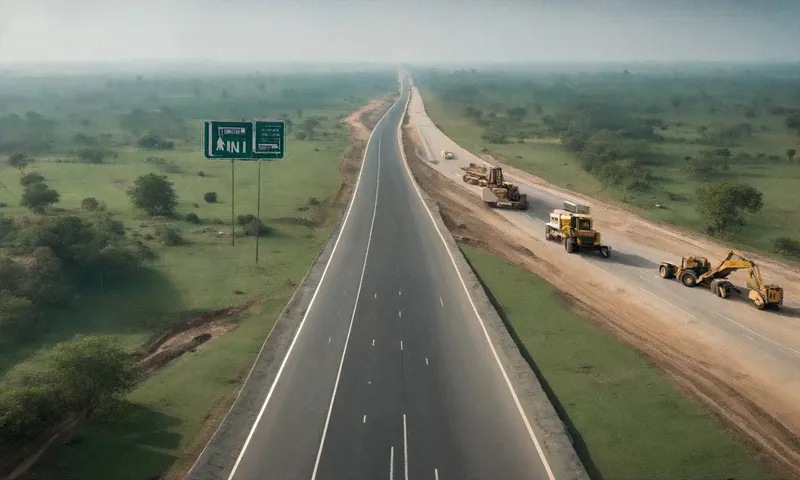
I drove the new stretch between Jaipur and Ajmer last month. Here's what I found.
The tarmac was butter-smooth. Six lanes. Proper signage -- in both Hindi and English, reflective enough to read at night. Service roads on both sides. And the speed? My Creta was comfortably doing 110 kmph without feeling like the car would rattle apart. Three years ago, this same stretch was a nightmare -- single lane in patches, trucks parked on the road, cattle crossings every few kilometers. The journey used to take three and a half hours if you were lucky. I did it in under two hours this time.
This is what Bharatmala Pariyojana looks like when it works. And with the Ministry of Road Transport and Highways releasing their latest Phase II progress report on 25 February 2026, it's time to look at where this massive project stands -- state by state, corridor by corridor, and wart by wart.
What Exactly is Bharatmala, and Why Should You Care?
Bharatmala -- literally "Garland of India" -- is the country's biggest highway building programme. Full stop. The Cabinet approved it in October 2017 to plug the gaps in India's road network. Not just building new roads, but connecting production centers to markets, factories to ports, border areas to the mainland. The total target: about 65,000 kilometers of national highways at a cost of roughly 10 lakh crore rupees. NHAI and NHIDCL are the implementing agencies, with the Road Transport Ministry overseeing everything.
Think of it as building the arteries of the Indian economy. Before Bharatmala, our highway network was like a body with clogged blood vessels -- stuff moved, but slowly, expensively, and with a lot of pain. The average truck speed on Indian highways was 30-40 kmph. Compare that with 60-80 kmph in China. That difference costs us lakhs of crores in wasted fuel, spoiled goods, and delivery delays every year.
Phase I: Where Things Stand
Phase I targeted 34,800 kilometers at about 5.35 lakh crore rupees. According to the ministry's latest numbers, roughly 28,500 kilometers are done. That is 82 percent. Not bad, considering the disruptions from COVID, land acquisition fights, and the usual contractor delays that plague every Indian infrastructure project.
The completed stretches have already changed the game on several routes. I have personally driven four Bharatmala corridors in the last year for reporting, and the before-and-after difference is stark. On the completed Delhi-Jaipur corridor, the average truck speed has gone from about 35 kmph to 75 kmph. A dal manufacturer in Indore told me his logistics costs dropped 18 percent after the Indore-Ahmedabad stretch was widened. An apple transporter from Shimla said he now gets his load to the Delhi mandi six hours faster than he used to, which means less spoilage and better prices.
The remaining 6,300 kilometers of Phase I are in advanced construction stages and should wrap up by end of 2026, according to the ministry. I'd add a six-month buffer to that estimate based on past track record, but the direction is right.
Phase II: 25,000 Kilometers and 4.8 Lakh Crore
Phase II was formally approved by the Cabinet in March 2025. It covers approximately 25,000 kilometers of new highways with a budget of 4.8 lakh crore rupees. The breakdown is as follows:
Economic Corridors -- 9,000 km: These are high-traffic routes connecting big economic centers, industrial zones, and ports. The goal is to make freight movement faster and cheaper on the routes that carry the most goods. Think of routes like the Nagpur-Mumbai corridor or the Vizag-Chennai stretch.
Inter-Corridors and Feeder Routes -- 7,500 km: These connect the main economic corridors to each other and link production areas to the main corridors. If the economic corridors are the highways, these are the ramps. Without them, goods still have to use crumbling state roads to reach the national highway, which defeats the purpose.
National Corridor Upgrades -- 4,000 km: Existing national highways being upgraded to expressway standard. Proper access control, service roads, amenities like rest areas and fuel stations at regular intervals. This is about taking roads that exist but are overloaded and bringing them up to modern standards.
Border and International Connectivity -- 2,500 km: Roads along India's international borders and connecting to neighbouring countries. A lot of this is in the Northeast, which has always been underserved in road connectivity. Strategic importance ke saath-saath, trade potential bhi hai -- better roads to Myanmar, Bangladesh, and Nepal borders mean better trade.
Coastal and Port Connectivity -- 2,000 km: Linking major and minor ports to the highway network and industrial hinterlands. India has 7,500 km of coastline but many ports still have poor last-mile road connectivity. This component fixes that.
The Expressway Projects: Where the Headlines Are
The Delhi-Mumbai Expressway is the showstopper. At 1,386 kilometers, it's one of the longest expressways on the planet. Eight lanes, expandable to twelve. The last few stretches in Rajasthan should open by mid-2026. When fully operational, it will cut Delhi-to-Mumbai driving time from 24 hours to roughly 12. That is not just convenient for road trippers -- it completely changes the economics of moving goods between India's political capital and its commercial capital.
I drove a 200-kilometer section of the Delhi-Mumbai Expressway near the Rajasthan-Haryana border in January. The road quality is genuinely world-class. Smooth asphalt, clearly marked lanes, emergency call boxes every couple of kilometers, rest areas with clean toilets and decent food options. My only complaint? Some stretches had construction debris piled along the median that hadn't been cleared. Minor issue, but it shows the finishing work isn't quite done.
Then there's the Amritsar-Jamnagar Economic Corridor -- 1,257 kilometers connecting Punjab's farmlands to Gujarat's industrial ports. About 60 percent complete as of now, with full completion expected by December 2027. This one doesn't get as many headlines but its economic impact could be massive. A farmer in Amritsar sending his wheat to Kandla port for export currently relies on a patchwork of state highways and single-lane national highways. This corridor will give him a direct, high-speed route.
The Bengaluru-Chennai Expressway is at 85 percent completion and should open fully in a few months. I spoke to a logistics company manager in Bengaluru who said he's already rerouting some of his Chennai-bound trucks to completed sections. "Fuel savings alone are 12-15 percent per trip," he told me over the phone. "And the time savings mean my drivers can do more round trips per month."
The Delhi-Amritsar-Katra Expressway stands at 70 percent. This one has a special significance -- it will give Vaishno Devi pilgrims a much faster route from Delhi. Right now that journey is a slog through congested NH44 and the winding Jammu-Katra road. The expressway will shave off hours.
State by State: Who's Leading, Who's Lagging
Not all states are progressing at the same pace under Phase II. Land acquisition is the biggest variable -- some states make it easy, others turn it into a years-long legal battle. Here's the ground reality:
Rajasthan (3,200 km under development): Leading the pack. Flat terrain, relatively cooperative state government on land acquisition, and a strong track record with NHAI contractors. The desert stretches are where construction moves fastest because there's less habitation to work around. I've driven through the Barmer and Jaisalmer sections -- work is moving at a good clip.
Maharashtra (2,800 km): Big numbers but also big complications. Connectivity to JNPT and the upcoming Navi Mumbai airport is a priority. But land acquisition in the Konkan belt is painfully slow due to hilly terrain and dense habitation. The Mumbai-Nagpur Samruddhi Mahamarg, while technically a state project, feeds into the Bharatmala network and has set a good precedent for execution speed.
Madhya Pradesh (2,400 km): Quietly making progress. The state sits right in the middle of India, so it's a natural hub for economic corridors running east-west and north-south. Bhopal-Indore, Indore-Ahmedabad, and the Jabalpur-Allahabad stretches are all under active work. I drove through the Bhopal bypass section recently -- four lanes, smooth, well-lit at night. Achha kaam ho raha hai.
Uttar Pradesh (2,100 km): Mixed bag. The Bundelkhand Expressway extensions and eastern UP connectivity are progressing, but UP's sheer size and population density mean land acquisition is a constant battle. Encroachments along proposed routes are a recurring headache for NHAI engineers.
Gujarat (1,900 km): Strong execution. The state has always been infrastructure-friendly, and the port connectivity focus aligns well with Gujarat's heavy industrial base. The DMIC integration work is particularly advanced here.
Karnataka (1,600 km): The Bengaluru peripheral ring road is the big-ticket item. Anyone who has driven through Bengaluru traffic knows why this matters. The ring road, when complete, will allow through-traffic to bypass the city entirely. But construction in the city's outskirts is painfully slow because of urbanization and land disputes.
Tamil Nadu (1,400 km): Good progress on the Chennai-Bengaluru corridor and eastern coastal connectivity. The state's industrial clusters in Sriperumbudur, Hosur, and Coimbatore will benefit significantly.
Northeast (2,100 km collectively): This is where the real challenge lies. Building roads through the hills of Manipur, Mizoram, and Arunachal Pradesh is engineering at its most difficult. Landslides during monsoon wipe out months of work. Insurgency concerns in some areas add security costs. But the strategic importance means the work continues. NHIDCL is the lead agency here, and they have been awarding contracts at a rapid pace.
The Money Question: How is All This Being Paid For?
10 lakh crore rupees doesn't grow on trees. So where's the money coming from?
The Central Road and Infrastructure Fund -- that cess you pay on every litre of petrol and diesel -- is the primary source. Current cess collections bring in about 1.4 lakh crore annually. Toll revenue from completed stretches is another source, and it's growing as more stretches become operational and traffic increases.
NHAI has also been raising money through bonds and the National Highways InvIT (Infrastructure Investment Trust). The InvIT model is actually clever -- NHAI bundles together completed, toll-generating highway stretches and sells units to investors. They've monetized over 2,400 kilometers this way, raising about 30,000 crore that goes straight back into new construction. Think of it as recycling old assets to fund new ones.
For Phase II specifically, a significant chunk is being built through the Hybrid Annuity Model. In this model, the government pays 40 percent of construction cost, the private developer puts in 60 percent, and the government repays the developer through annuity payments over 15 years. It's a risk-sharing arrangement -- the developer doesn't bear the full traffic risk, and the government doesn't need to put up all the capital upfront. Around 45 percent of Phase II projects are on this model.
How This Affects Real People: Stories from the Road
Numbers and percentages are one thing. But what does this actually mean for people on the ground?
I met Suresh Yadav, a truck driver from Nagaur, Rajasthan, at a dhaba near the Ajmer bypass. He's been driving trucks for 22 years. "Pehle Jodhpur se Ahmedabad jaane mein do din lagte the," he said. Two days. Now? "Ek din mein ho jaata hai. Aur diesel bhi kam lagta hai kyunki road pe rukna nahi padta." One day, and less diesel because you don't have to keep stopping and restarting in traffic jams.
I spoke to Meenakshi Devi, who runs a dairy in Alwar district. Her milk tankers used to take 5 hours to reach the Delhi processing plant via the old NH48. On the new expressway section, it's under 3 hours. "Milk spoilage kam ho gayi hai. Pehle garmi mein 8-10 percent kharab ho jaata tha, ab 2-3 percent." That 6-7 percent difference in spoilage translates to lakhs of rupees in saved revenue for her cooperative.
And then there's the employment angle. According to the ministry, Phase I and II combined are expected to generate about 14 crore man-days of construction employment. That's direct employment -- the labourers, machine operators, engineers, and supervisors building the roads. Then there's the massive indirect employment in cement, steel, bitumen, and equipment manufacturing. Every kilometer of highway takes about 500 tonnes of cement and 100 tonnes of steel, so the cement and steel industries are basically running on highway demand right now.
The Logistics Impact: Numbers Don't Lie
Here's a stat that should make every economics student sit up. India's logistics cost as a percentage of GDP was about 14 percent before Bharatmala started in earnest. The latest NCAER estimates put it at 11.5 percent. That 2.5 percentage point drop represents savings of several lakh crore rupees across the economy. And the target is to get it below 10 percent by 2028.
NCAER's research shows that every rupee invested in national highway development generates about 3.5 rupees in economic returns -- through reduced transport costs, increased trade volumes, better market access for farmers, and tourism growth. The completed corridors have already measurably boosted economic activity in the districts they pass through. Property values along new highway stretches have jumped 30-60 percent. New dhabas, fuel stations, hotels, and warehouses spring up within months of a road opening.
What's Not Working: The Honest Assessment
It's not all smooth roads and happy truckers. Some stretches have quality issues -- I've seen potholes develop on sections that are barely two years old near Kota. That suggests either substandard construction material or poor drainage design. NHAI has started imposing defect liability clauses on contractors, requiring them to maintain roads for 5 years after completion at their own cost. Good policy, but enforcement is the question.
Environmental clearances remain a bottleneck. Phase II projects are supposed to plant trees at a 1:3 ratio for any forest land diverted. The government also mandated solar-powered highway lighting, rainwater harvesting, and wildlife crossings in ecologically sensitive areas. These are good on paper, but implementation is spotty. I saw a "wildlife crossing" on the Ranthambore stretch that was basically a culvert too small for anything bigger than a nilgai calf. The forest department was not happy.
And then there's the toll issue. FASTag has made toll collection faster, but toll rates have been increasing steadily. Truck operators are grumbling that the higher tolls eat into their savings from faster travel. "Road toh acchi hai, par toll itna hai ki bachat kam ho jaati hai," was a common refrain at truckers' dhabas.
What's Coming Next
Remaining Phase I work should finish by December 2026. Phase II is a rolling implementation with a March 2030 target. The government wants to build 5,000 kilometers per year for the next five years -- that's about 14 kilometers every single day across all agencies. It's ambitious, but they've been hitting close to that number in recent years, so it's not fantasy.
The next few years will tell us whether Bharatmala genuinely transforms India's road infrastructure or whether it remains a half-finished promise like so many government projects before it. Based on what I've seen on the ground -- the actual roads, the actual trucks moving faster, the actual dhabas coming up -- I'm leaning towards optimism. Guarded optimism, the kind you develop after covering Indian infrastructure for 15 years. But optimism nonetheless.
I'll keep driving these highways and reporting what I find. Because the best way to review a road is to drive on it. And right now, the driving is getting better.
Source: This article is based on official information from the Ministry of Road Transport and Highways, the Bharatmala Pariyojana portal (bharatmala.gov.in), NHAI progress reports released in February 2026, and the author's field reporting across multiple Bharatmala corridors.
Comments 0
Leave a Comment