Union Budget 2026-27: Key Highlights and Impact on Common Citizens of India
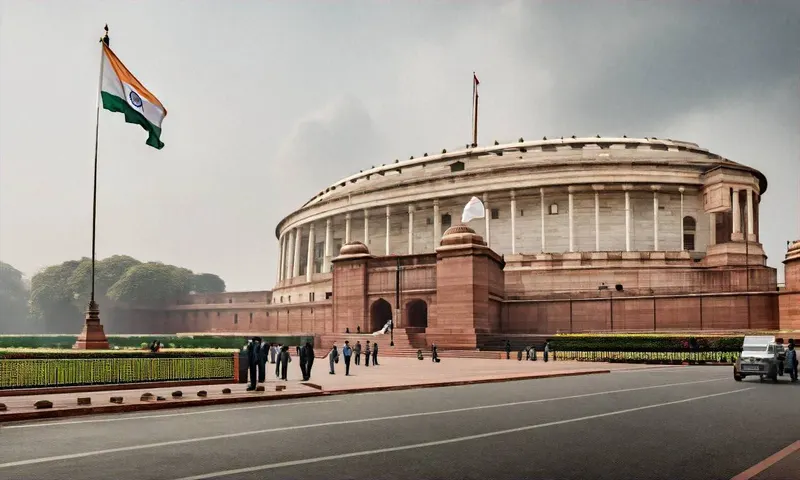
The Finance Minister presented the Union Budget 2026-27 in Parliament on 1 February 2026, outlining the government's fiscal roadmap for the upcoming financial year. The budget focuses on five key pillars: infrastructure development, healthcare and education, digital transformation, tax reform for the middle class, and agricultural modernisation. Here is a comprehensive analysis of the major announcements and their expected impact on the citizens of India.
Infrastructure Development: Record Allocation of 12 Lakh Crore Rupees
The Union Budget 2026-27 has allocated a record 12 lakh crore rupees towards capital expenditure on infrastructure development. This represents a 15 percent increase over the previous year's allocation and underscores the government's commitment to building world-class infrastructure across the country.
The National Highway Authority of India will receive enhanced funding for completing 25,000 kilometres of new national highways. The railway sector has been allocated 2.8 lakh crore rupees for track expansion, electrification of remaining routes, and procurement of new Vande Bharat Express trainsets for regional connectivity.
Urban infrastructure receives a substantial boost with the Smart Cities Mission 2.0 receiving 18,000 crore rupees. The Metro Rail expansion programme covering 27 cities has been allocated 45,000 crore rupees, with new metro corridors approved for Lucknow, Patna, and Bhopal.
"This budget lays the foundation for India's infrastructure to match global standards by 2030. Every rupee invested in infrastructure today will generate multiple returns in economic growth and employment creation." - Finance Minister's Budget Speech, 2026
Income Tax Reforms: Relief for the Middle Class
The most anticipated section of the budget delivered significant relief for salaried individuals and the middle class. Under the new tax regime, which is now the default regime for all taxpayers, the following changes have been announced:
- Income up to 4 lakh rupees per annum is now fully exempt from income tax, increased from the earlier limit of 3 lakh rupees.
- Standard deduction has been increased from 75,000 rupees to 1,00,000 rupees for salaried individuals.
- The tax rate for income between 4 lakh and 8 lakh rupees has been reduced to 5 percent from the earlier 10 percent.
- New 30 percent surcharge threshold raised to income above 5 crore rupees.
- The total tax savings for individuals earning up to 12 lakh rupees per annum is estimated at approximately 25,000 rupees compared to the previous year.
These reforms are expected to put more disposable income in the hands of middle-class families, boosting consumption and economic activity across the country.
Healthcare: Strengthening the Public Health System
The health sector has received a significant budgetary increase with total allocation reaching 98,000 crore rupees for the Ministry of Health and Family Welfare. Key announcements include:
- Ayushman Bharat Pradhan Mantri Jan Arogya Yojana coverage extended to all citizens above 70 years of age, irrespective of income criteria.
- 1,500 new Health and Wellness Centres to be established in underserved rural areas with telemedicine facilities.
- National Cancer Grid Programme launched with 200 new district-level cancer care centres planned over three years.
- Mental Health Programme receives dedicated allocation of 2,500 crore rupees with focus on school and workplace counselling services.
- Medical education expansion through 40 new government medical colleges in underserved districts.
Education and Skill Development
The education sector has been allocated 1.25 lakh crore rupees, reflecting the government's priority on human capital development. Under the National Education Policy 2020 implementation framework:
- The number of Centres of Excellence for research will be increased to 100 across universities.
- Skill India 2.0 programme will train 10 lakh youth in emerging technologies including artificial intelligence, quantum computing, and semiconductor design.
- Digital University project will be expanded to offer degree programmes in partnership with top central universities.
- National Scholarship Portal to be expanded with 50,000 additional scholarships for economically weaker sections.
Agriculture and Rural Development
The agriculture sector continues to receive priority with the total budget for the Ministry of Agriculture reaching 1.32 lakh crore rupees. Notable announcements include:
- Minimum Support Price for major kharif and rabi crops increased by 5-8 percent.
- PM Kisan Samman Nidhi continues with the installment amount remaining at 6,000 rupees per year for eligible farming families.
- Agricultural Infrastructure Fund expanded with additional 20,000 crore rupees for cold storage, warehousing, and food processing units.
- Natural Farming Mission launched to convert 1 crore hectares to natural farming practices by 2028.
- Crop insurance premium subsidies enhanced under Pradhan Mantri Fasal Bima Yojana.
Digital Economy and Technology
The government has reiterated its commitment to digital transformation with allocations for technology-driven governance and economy:
- Digital India 2.0 programme receives 15,000 crore rupees for enhanced e-governance services.
- India Semiconductor Mission receives 10,000 crore rupees for establishing domestic chip manufacturing capabilities.
- National Artificial Intelligence Mission launched with 5,000 crore rupees for research, development, and deployment across sectors.
- Unified digital identity system expansion to cover all government services through a single platform.
Impact on Common Citizens
The Union Budget 2026-27 is expected to have a wide-ranging positive impact on everyday citizens. The tax relief measures will increase disposable income for salaried individuals. Healthcare expansion will improve access to medical services, particularly for senior citizens and rural populations. Infrastructure investment will create employment opportunities and improve connectivity.
For government job aspirants, the continued investment in railway expansion, defence modernisation, healthcare, and education sectors signals sustained recruitment activity across these departments in the coming financial year.
Source: This article is based on information from the Union Budget 2026-27 documents presented in Parliament and the Press Information Bureau (PIB) official release dated 1 February 2026.
Comments 0
Leave a Comment